Line Art Tattoo Designs: A Complete Guide for 2026
The refined elegance of line art tattoo designs has transformed modern body art into a sophisticated medium where simplicity meets profound artistic expression. This minimalist approach to tattooing relies exclusively on clean, continuous lines without shading or color, creating timeless pieces that emphasize form, composition, and precision. As the tattoo industry continues to evolve in 2026, line art has established itself as one of the most sought-after styles among clients who appreciate understated beauty and technical excellence. Understanding the nuances of this art form empowers you to make informed decisions when selecting your next tattoo and choosing the right tattoo artist for your vision.
Understanding Line Art Tattoo Fundamentals
Line art tattoo designs represent a specialized technique where artists create complete images using only outlines and contours. This style demands exceptional technical skill because every line remains permanently visible with no shadows or gradients to mask imperfections. The artist must possess steady hands, precise needle control, and deep understanding of how lines interact with body contours.
The foundation of exceptional line work lies in consistent line weight and smooth execution. Artists must maintain uniform pressure throughout each stroke while accounting for skin texture, body movement, and natural aging processes. Unlike traditional tattoos that incorporate shading to create depth, line art achieves dimension through strategic placement, varying line thickness, and compositional techniques.
Core Characteristics That Define Line Art
Essential elements distinguish professional line art tattoos:
Clean, unbroken lines with consistent width throughout each stroke
Negative space utilization to create visual interest and balance
Geometric precision in patterns requiring mathematical accuracy
Organic flowing lines that complement natural body curves
Minimal to no shading or color fill within designs
The technical demands of creating flawless line work require artists to work with specialized equipment and refined techniques. Single-needle configurations produce the finest lines, while slightly larger groupings create bolder outlines. The healing process also plays a critical role, as line art tattoos must maintain their clarity and sharpness for decades.
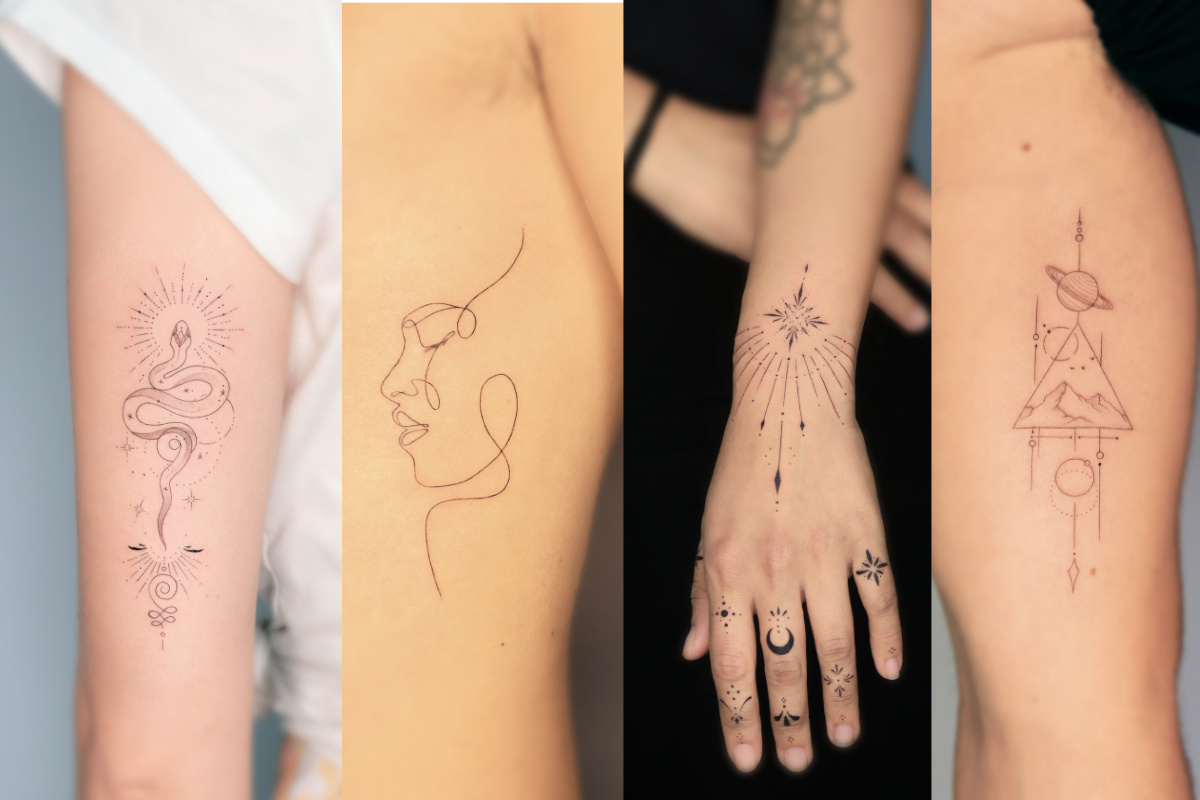
Line art tattoo technique comparison
Popular Line Art Design Categories
The versatility of line art tattoo designs spans countless aesthetic preferences and symbolic meanings. Contemporary clients gravitate toward specific categories that align with their personal style and philosophical outlook.
Minimalist Single-Line Concepts
Single-line drawings represent the ultimate challenge in line art tattooing. These designs feature one continuous line that creates an entire image without lifting the needle, requiring exceptional planning and execution. Common subjects include facial profiles, animal silhouettes, and abstract shapes that flow seamlessly across the skin.
This approach particularly appeals to clients seeking subtle, sophisticated body art that makes a statement through restraint rather than complexity. The diverse collection of line art tattoos demonstrates how artists worldwide interpret minimalist concepts.
Geometric and Sacred Patterns
Geometric line art combines mathematical precision with spiritual symbolism. These designs incorporate shapes like circles, triangles, hexagons, and complex mandalas rendered entirely in clean lines. The precision required for symmetrical patterns demands careful measurement and steady execution.
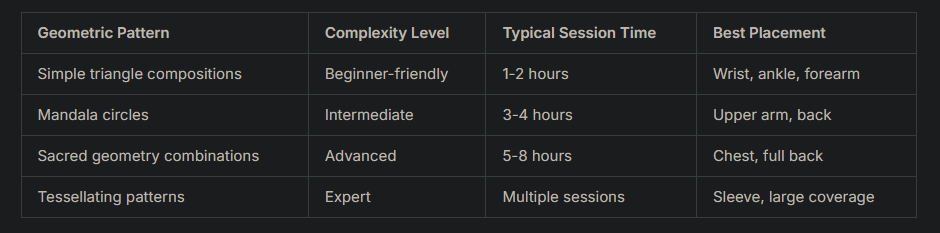
Botanical and Nature-Inspired Designs
Floral line art has emerged as one of the most requested categories in luxury tattoo studios. Roses, peonies, lotus flowers, and wildflowers translate beautifully into line work, with each petal and stem defined by deliberate strokes. The curated selection of line art tattoos showcases how botanical subjects maintain elegance through simplified line rendering.
Nature themes extend beyond flowers to include animals, mountains, waves, and celestial bodies. Each element requires the artist to capture essence rather than photorealistic detail, distilling subjects to their most recognizable forms.
Technical Considerations for Longevity
Selecting line art tattoo designs involves understanding how this style ages and responds to various factors over time. The permanence of tattoos means today's choices affect your appearance for decades.
Line Weight and Aging Factors
Extremely fine lines created with single needles may spread slightly as skin naturally ages and loses elasticity. Professional artists balance current aesthetic preferences with long-term clarity by recommending appropriate line weights based on placement and skin type. What appears delicate and refined initially must remain legible twenty years later.
Critical factors affecting line art longevity include:
Skin elasticity and natural aging processes
Sun exposure and UV damage to tattooed areas
Placement on body parts with significant movement or friction
Individual healing characteristics and immune response
Adherence to proper aftercare protocols
When planning your tattoo placement, consider how skin stretches and moves in different areas. Joints, fingers, and areas prone to weight fluctuation may cause lines to distort more rapidly than stable placements like upper arms or shoulders.
Optimal Placement Strategies
Different body locations offer distinct advantages for line art tattoo designs. Flat, stable areas with minimal fat deposits showcase fine lines with maximum clarity. The forearm provides an ideal canvas for detailed work, while the upper back accommodates larger compositions with geometric precision.
Areas requiring special consideration include ribs (high pain, natural movement), fingers (rapid fading, frequent touching), and feet (friction from footwear). Understanding these nuances helps you select placements that preserve your investment in quality artwork.
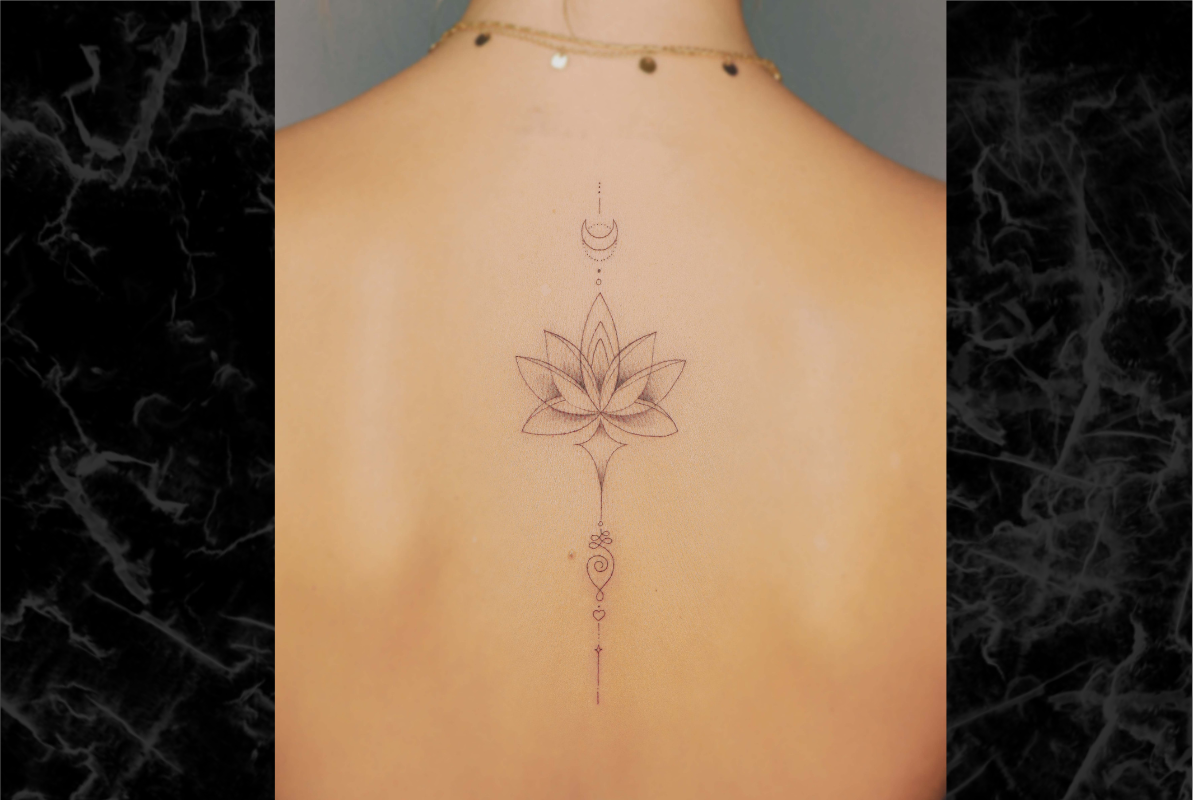
Body placement guide for line art
Design Development Process
Creating custom line art tattoo designs requires collaborative dialogue between client and artist. This process transforms abstract ideas into concrete visual compositions that honor both artistic integrity and personal meaning.
From Concept to Stencil
The journey begins with consultation where you articulate your vision, symbolic preferences, and aesthetic goals. Professional artists ask probing questions about sizing, placement, and long-term satisfaction to ensure designs align with your lifestyle and values. Reference images help communicate style preferences, though the final design should be original artwork.
The development timeline typically includes:
Initial consultation and concept discussion
Artist creates preliminary sketches for review
Revision rounds to refine composition and details
Final stencil preparation and placement approval
Execution during the tattooing session
Many studios now incorporate digital tools that allow real-time adjustments and realistic placement previews. This technology enhances communication and reduces misunderstandings before the needle touches skin.
Collaborative Refinement
Expect multiple revision rounds when developing custom line art. Artists balance your requests with their professional expertise about what works technically and aesthetically. Trust this process, as experienced practitioners understand how designs translate from paper to skin.
The simple tattoo designs for minimalists available online provide inspiration, though commissioning original artwork ensures your tattoo remains unique. Custom designs reflect your individuality while benefiting from professional artistic judgment about proportion, spacing, and composition.
Artistic Styles Within Line Art
Line art tattoo designs encompass diverse artistic movements and cultural influences. Understanding these subcategories helps you articulate preferences and discover artists whose specializations match your vision.
Contemporary Minimalism
Modern minimalist line art embraces negative space and extreme simplification. These designs strip subjects to their absolute essence, often using surprisingly few lines to create recognizable imagery. The style reflects broader design trends favoring clean aesthetics and intentional restraint.
Contemporary artists experiment with unconventional subjects and abstract interpretations. Architectural elements, fragmented portraits, and conceptual symbols push traditional boundaries while maintaining technical precision.
Traditional and Cultural Influences
While line art appears thoroughly modern, the technique draws inspiration from ancient artistic traditions. Japanese irezumi outlines, Polynesian tribal patterns, and Celtic knotwork all rely heavily on skillful line work. Contemporary interpretations honor these roots while adapting them for current aesthetic preferences.
Understanding traditional tattoo styles provides context for how line art fits within broader tattoo history. Many clients appreciate designs that blend cultural heritage with minimalist execution.
Illustrative and Artistic Approaches
Some line art draws directly from illustration traditions, incorporating elements like stippling (created with lines rather than dots), cross-hatching for texture, and artistic rendering techniques. The DotsToLines collection demonstrates how flowing lines harmonize with body curves to create cohesive compositions.
This approach requires artists with fine art backgrounds who understand composition, balance, and visual storytelling. The technical aspects of creating line drawings have even attracted academic research into generating geometry and semantics through line-based methods.
Selecting Your Artist
The success of line art tattoo designs depends entirely on artist skill and specialization. Not all talented tattooists excel at fine line work, making careful selection crucial for achieving desired results.
Evaluating Technical Proficiency
Review portfolios specifically for line art examples that demonstrate consistent quality. Examine line straightness, uniform thickness, clean connections at intersections, and overall composition. Recent work matters more than older pieces, as artists continuously refine techniques.
Red flags indicating insufficient experience include:
Wobbly or inconsistent lines throughout designs
Gaps or overlaps where lines should connect cleanly
Excessive variation in line weight within single elements
Portfolio dominated by other styles with minimal line work
Schedule consultations with multiple artists before committing. Their responses to your questions reveal professionalism, communication style, and whether they genuinely understand your vision.
Studio Environment and Standards
The luxury experience extends beyond artistic talent to encompass cleanliness, professionalism, and client care. Premium studios maintain rigorous sterilization protocols, comfortable environments, and transparent processes. When choosing the right tattoo studio, prioritize establishments that treat tattooing as both art form and medical procedure.
Observe how staff interact with clients, handle equipment, and maintain their workspace. These details indicate overall quality standards and respect for client wellbeing during what should be a positive experience.
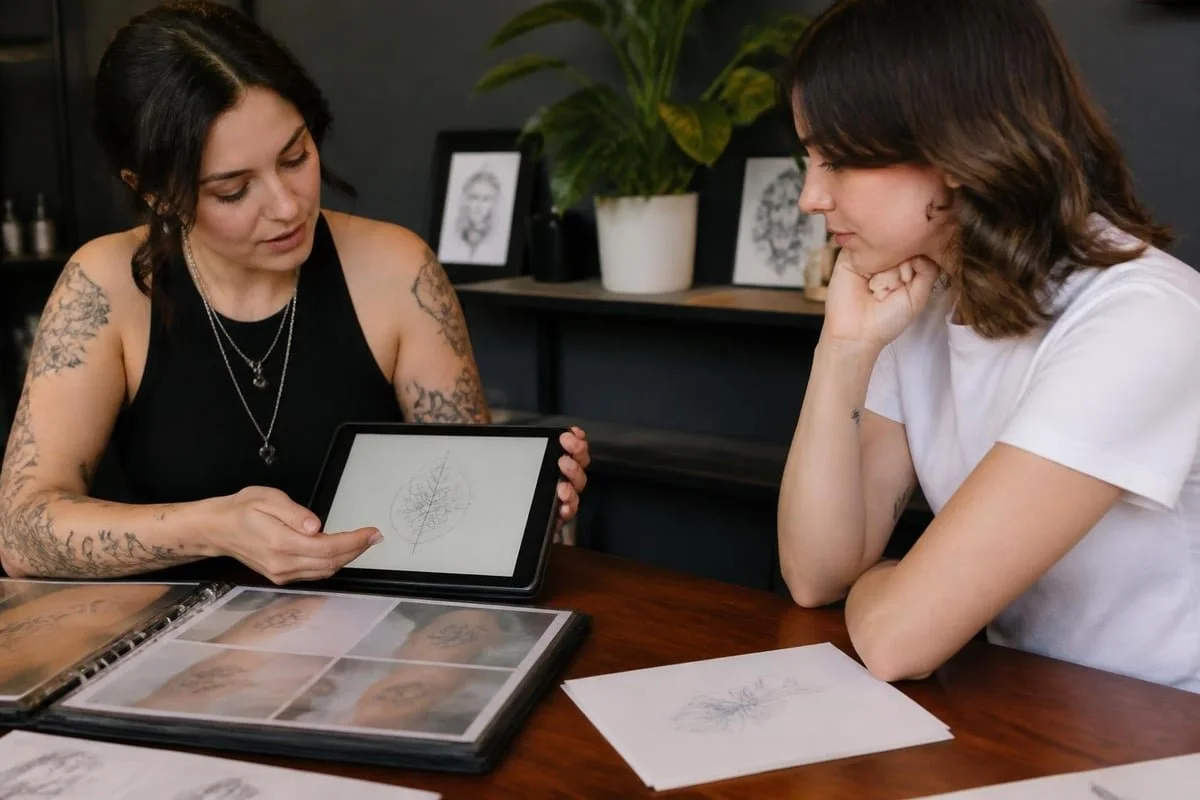
Artist consultation process
Preparation and Aftercare Essentials
Proper preparation and aftercare significantly impact how line art tattoo designs heal and age. Your commitment to these protocols protects your investment and preserves the artist's work.
Pre-Session Preparation
Arrive well-rested, hydrated, and nourished for your appointment. Avoid alcohol, blood-thinning medications, and excessive caffeine that can increase bleeding and complicate the tattooing process. Clean, moisturized skin provides the optimal canvas for precise line work.
Understanding what happens during a tattoo session reduces anxiety and helps you prepare mentally and physically. Line art sessions may progress differently than heavily shaded work, with artists frequently pausing to assess line quality and ensure precision.
Healing Protocol for Fine Lines
Line art requires meticulous aftercare to preserve crispness and prevent blowouts. Follow your artist's specific instructions, which typically include gentle washing, thin moisturizer application, and protection from sun exposure during initial healing.
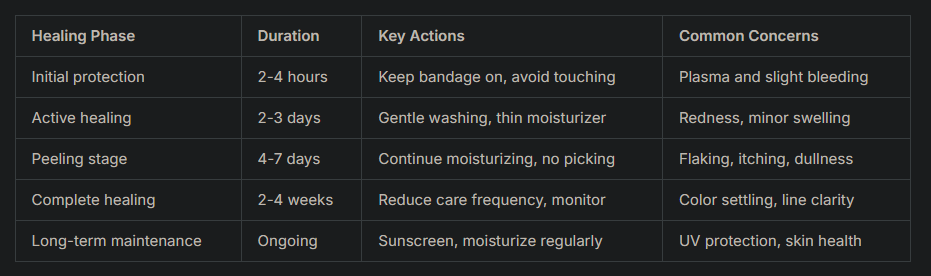
The easier tattoo healing tips and understanding tattoo aftercare essentials provide comprehensive guidance for protecting your new artwork during critical healing phases.
Cost Considerations and Investment
Line art tattoo designs command premium pricing that reflects the technical expertise required and the luxury experience surrounding their creation. Understanding pricing structures helps you budget appropriately and recognize value.
Pricing Factors
Hourly rates vary significantly based on artist reputation, studio location, and design complexity. Established artists specializing in fine line work typically charge higher rates than generalists because their skillset requires years of dedicated practice. Minimum charges often apply even for small designs, reflecting consultation time, custom drawing, and setup costs.
Price influences include:
Artist experience level and demand for their work
Design complexity and required drawing time
Session duration and technical difficulty
Studio overhead in premium locations
Custom artwork versus flash designs
While tempting to seek budget options, line art particularly suffers from inexperienced execution. Poorly executed lines cannot be easily corrected without compromising the minimalist aesthetic. View this as a lifetime investment in wearable art rather than a discretionary expense.
Value Beyond Initial Cost
Quality line art tattoos maintain their appearance for decades when properly cared for, unlike cheaper alternatives requiring frequent touch-ups or cover-ups. The custom line tattoo designs showcased in professional galleries demonstrate the enduring appeal of well-executed line work.
Consider total lifetime cost including potential touch-ups, the emotional value of loving your tattoo, and the confidence derived from wearing exceptional art. Premium studios offer consultations that ensure you receive exactly what you envision rather than settling for close approximations.
Symbolic Meaning and Personal Expression
Beyond aesthetic appeal, line art tattoo designs carry deep personal significance for many clients. The minimalist approach often reflects philosophical values and life perspectives.
Minimalism as Philosophy
Choosing line art frequently aligns with broader lifestyle preferences for simplicity, intentionality, and quality over quantity. These tattoos make deliberate statements about valuing essential elements while eliminating unnecessary complexity. The visual restraint mirrors mindful living approaches popular in contemporary culture.
Many clients report their line art tattoos serve as daily reminders of core values, significant relationships, or transformative experiences. The symbolism behind tattoo designs extends beyond obvious imagery to encompass stylistic choices themselves.
Timeless Appeal
Unlike trend-dependent styles, well-executed line art transcends temporary fashions. The classical nature of clean lines ensures designs remain aesthetically relevant regardless of shifting cultural preferences. This longevity matters when considering artwork you'll wear permanently.
The enduring quality also reduces regret risk associated with more elaborate or culturally specific designs. Minimalist line work offers versatility that adapts as your personal style evolves throughout life stages.
Combining Line Art With Other Techniques
While pure line art maintains distinct appeal, some clients incorporate these designs into mixed-media tattoos. Understanding combination possibilities expands creative options while preserving line work integrity.
Strategic Color Integration
Adding selective color to line art designs creates visual interest while maintaining compositional clarity. Watercolor washes, subtle dot shading, or limited color fills can enhance specific elements without overwhelming the linear foundation. Artists must carefully balance these elements to avoid muddying the clean aesthetic.
The technical considerations for user-guided colorization in digital art provide insights into how color enhances line-based compositions. Similar principles apply when planning tattoo color integration.
Layering With Existing Tattoos
Line art provides excellent framework for future additions or coordinates beautifully with existing body art. The style's flexibility allows it to stand alone or integrate into larger pieces. When planning multi-session projects, communicate your long-term vision so artists can design with expansion possibilities in mind.
Some clients begin with simple line art and gradually add elements over years, creating evolving compositions that document different life chapters. This approach requires selecting artists who understand cohesive design development across multiple sessions.
Regional and Cultural Variations
Line art tattoo designs manifest differently across global tattoo cultures, with regional preferences and technical approaches creating distinct subcategories within the broader style.
Bangkok's Fine Line Specialization
Bangkok has emerged as a premier destination for fine line and detailed tattoo work, with specialized studios attracting international clientele. The city's tattoo culture emphasizes technical precision and artistic refinement, making it ideal for clients seeking exceptional line art execution.
The concentration of highly skilled artists creates competitive excellence where practitioners continuously refine techniques. Studios invest in advanced equipment and maintain rigorous standards that ensure consistently superior results.
International Style Influences
European minimalism brings geometric precision and architectural influences, while American traditional line work emphasizes bold outlines and classic imagery. Asian aesthetics contribute delicate nature themes and philosophical symbolism. Understanding these variations helps articulate your stylistic preferences during consultations.
Contemporary artists often blend influences, creating hybrid styles that transcend geographic boundaries. This cross-cultural exchange enriches the art form while maintaining technical foundations that define quality line work.
Touch-Ups and Long-Term Maintenance
Even perfectly executed line art tattoo designs may require periodic maintenance to preserve their original appearance. Understanding when and why touch-ups become necessary helps you plan for comprehensive care.
Normal Aging Versus Problematic Healing
Minor line spreading over decades represents normal skin aging rather than poor execution. However, significant blurring, gaps, or fading within the first year indicates healing complications or technical issues. Reputable studios typically offer complimentary touch-ups for healing-related problems within specified timeframes.
Schedule professional assessment if you notice:
Unexpected fading or lightening of lines
Sections that appear incomplete or interrupted
Asymmetry not present in original design
Blurring that exceeds normal aging patterns
Most artists recommend first touch-up appointments approximately 6-8 weeks after initial session, once healing completes and you can accurately assess the final result.
Protective Measures
Daily sunscreen application on tattooed areas significantly extends line clarity and prevents premature fading. Quality moisturizers maintain skin elasticity, helping preserve line definition as you age. These simple habits dramatically impact long-term appearance and reduce touch-up frequency.
Avoid weight fluctuations when possible, particularly in tattooed areas, as skin stretching and contracting stresses line work. While life changes happen, maintaining stable weight when feasible protects your investment.