

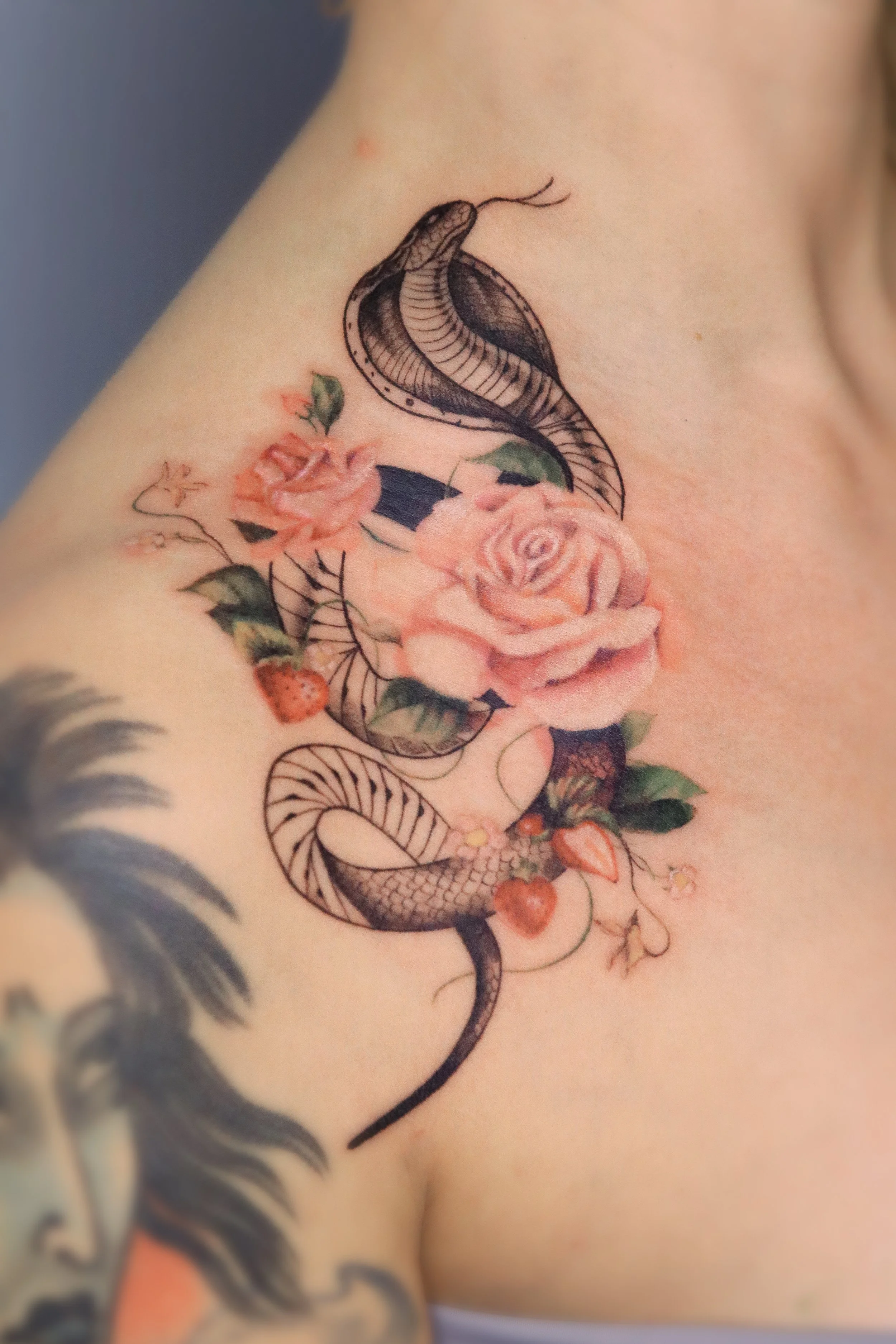
Cover Up
A cover-up hides an old tattoo by blending new ink into the old. Since ink is translucent, they combine rather than stack.
Dealing with Dark Tattoos
Color Rule: You can't cover dark ink with light colors. You must use deeper, more saturated tones (navy, forest green, deep purple).
Size: The new piece must be significantly larger to distract the eye.
The "Laser" Fix: If it’s too dark, a few laser sessions can fade it enough to allow for a better new design.
Understanding the Process
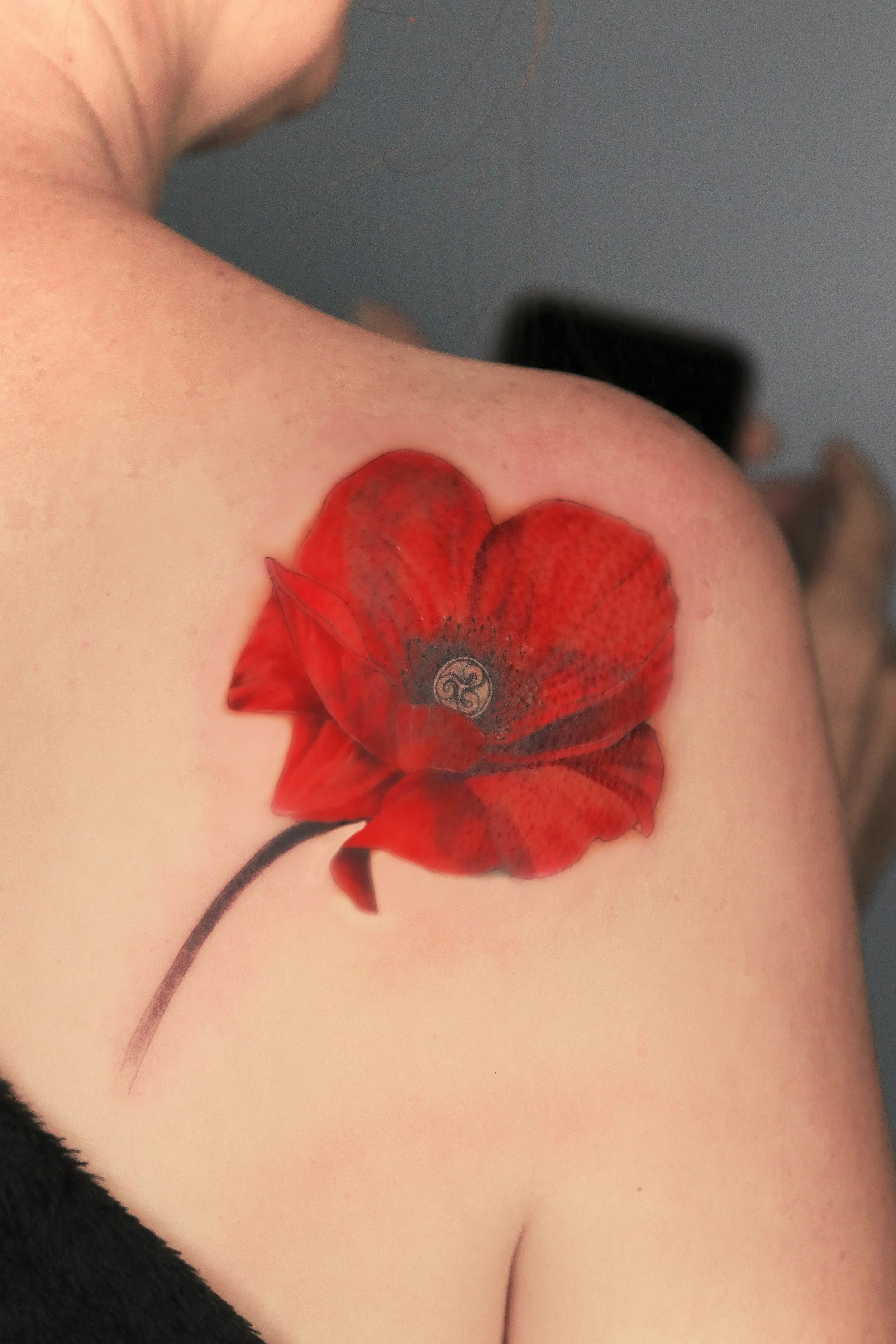
When you get a cover-up, the artist uses color theory and visual distraction to hide the old work. Darker pigments are used to neutralize the old lines, while busy textures (like leaves, feathers, or scales) are used to "break up" the silhouette so your eye no longer recognizes the old shape.
Dealing with Dark Tattoos
If your old tattoo is very dark, heavy, or solid black, there are a few realities to prepare for:
The Blend Factor: You cannot put light colors over dark ones. To hide black ink, your artist will use deep, saturated tones like midnight blue, forest green, or dark plum.
The Size Increase: A cover-up almost always needs to be significantly larger than the original. This provides "negative space" around the old tattoo, which tricks the eye into seeing the new image rather than the old "blob."
The Laser Option: If your tattoo is "too dark," many professional artists will suggest 2–3 sessions of laser lightening. You don't need to remove it completely, but fading it to a light grey gives you 10x more options for your new design.
Frequently Asked Questions
Q: Can’t you just use skin-colored ink or white to cover it?
A: Unfortunately, no. Tattoo ink is translucent. Putting white over black results in a muddy, chalky grey. Dark ink will always win against light ink.
Q: Why do I need a specific "Cover-Up Artist"?
A: Cover-ups are technically difficult. They require an artist who understands how colors will mix under the skin over time. An inexperienced artist might hide the tattoo today, but the old lines may "ghost" back through as it heals.
Q: Does it hurt more the second time?
A: It can. Because the artist is often working over existing scar tissue and "packing" ink more densely to ensure coverage, the area may be more sensitive than it was the first time.
Q: How do I pick the right design?
A: Be flexible. You might want a portrait, but the old tattoo might require a large floral piece to be hidden correctly. Trust your artist’s advice on what shapes will provide the best camouflage.
Turn your tattoo regret into a masterpiece with a professional cover-up that expertly camouflages old, dark ink using bold designs and deep, saturated colors. Stop hiding your skin and replace that unwanted piece with art you’ll be proud to show off.