Realistic Bee Tattoo: Design Guide & Symbolism (2026)
Realistic Bee Tattoo: Design Guide & Symbolism (2026)
A realistic bee tattoo represents one of the most intricate and symbolically rich choices in contemporary tattoo artistry. These designs capture the delicate beauty and powerful symbolism of bees through meticulous attention to anatomical detail, shading techniques, and artistic precision. Whether you're drawn to the bee's representation of community, hard work, or personal transformation, understanding the elements that create a truly lifelike design will help you collaborate effectively with your tattoo artist to achieve stunning results.
Understanding the Symbolism Behind Bee Tattoos
The symbolic significance of bee tattoos extends across multiple cultures and historical contexts. Bees have represented industriousness, loyalty, and community cooperation for thousands of years. In ancient Egypt, bees symbolized royalty and divine power, while Celtic traditions viewed them as messengers between our world and the spirit realm.
Modern interpretations of realistic bee tattoo designs often emphasize personal growth and transformation. The bee's lifecycle, from egg to adult worker, mirrors human journeys of development and self-improvement. Many clients choose these designs to commemorate overcoming challenges or entering new life phases.
Cultural and Spiritual Meanings
Different cultural perspectives add layers of meaning to your realistic bee tattoo choice:
Protection and defense: The bee's natural defensive instincts symbolize personal boundaries
Fertility and abundance: Connection to pollination and agricultural prosperity
Organization and structure: Reflection of the complex hive hierarchy
Sacrifice for community: Worker bees' dedication to collective survival
Resurrection and renewal: Ancient associations with rebirth cycles
The choice between a solitary bee, queen bee, or worker bee can communicate distinct personal narratives. Understanding these variations in bee tattoo meanings helps ensure your design aligns with your intended message.
Essential Design Elements for Realism
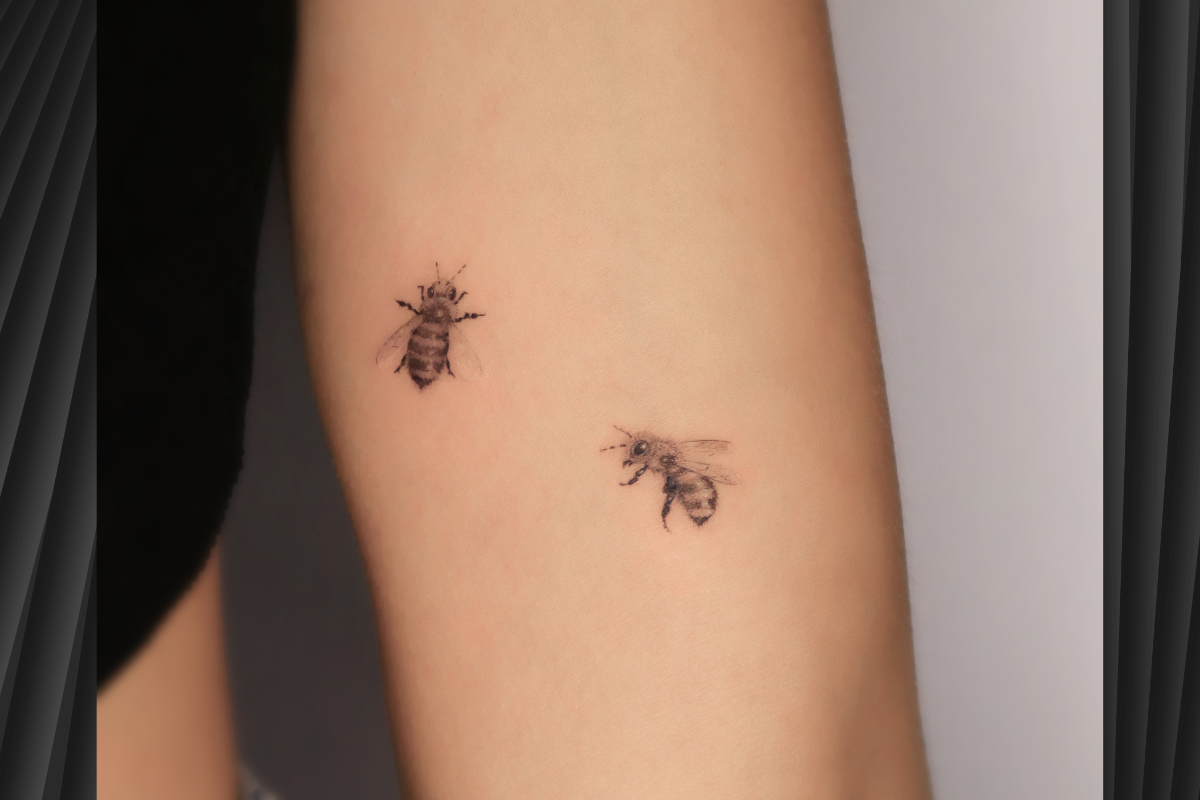
Bee Anatomy Breakdown for tattoo design
Creating an authentic realistic bee tattoo requires understanding the biological features that distinguish bees from other insects. Expert artists study these elements to produce designs that capture the essence of these remarkable creatures.
Anatomical Accuracy
The foundation of any realistic bee tattoo lies in proper anatomical proportions and details:
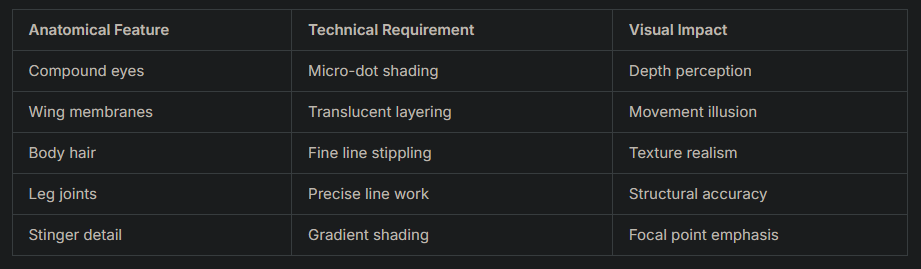
Wing structure demands particular attention, as bee wings feature distinct venation patterns that catch light differently than surrounding body segments. Translucent effects achieved through skilled shading create depth and movement within the design.
Body segmentation includes three distinct parts: the head with compound eyes and antennae, the thorax where wings and legs attach, and the abdomen with its characteristic striping. Each segment requires different shading approaches to convey realistic texture.
Fine hair coverage across the bee's body presents a technical challenge that separates exceptional realistic bee tattoo work from average attempts. These microscopic hairs collect pollen and give bees their fuzzy appearance, requiring stippling or fine line techniques.
Color Palette and Shading Techniques
While bees naturally display golden yellows and deep blacks, the realistic bee tattoo offers opportunities for artistic interpretation within naturalistic boundaries. Professional artists at luxury studios understand how different colors interact with various skin tones to maintain visual impact over time.
Traditional Bee Coloring
Honeybees typically feature warm amber and golden tones contrasting with rich browns and blacks. Achieving realistic color requires layering multiple shades to create natural gradients. The thorax often appears darker than the abdomen, while legs transition from brown to near-black at the extremities.
Bumble bees present different color challenges with their characteristic black and yellow banding patterns interspersed with rust-orange tones. The fuzzy texture appears more prominent in bumble bee designs, requiring specialized shading approaches.
Black and Gray Realism
Many collectors prefer black and gray realistic bee tattoo designs for their timeless aesthetic and aging characteristics. This approach emphasizes form, shadow, and texture without the variables introduced by color ink. Black and gray work often appears more dramatic and can incorporate stronger contrast ranges.
The technique demands exceptional skill in:
Smooth gradient transitions between highlights and shadows
Texture differentiation across body segments
Strategic use of negative space for wing translucency
Precise line work for anatomical details
Consistent pressure control for even saturation
Size Considerations and Placement Options
The realistic bee tattoo scales effectively across various sizes, though certain dimensions better support the detail level required for true realism. Choosing the right tattoo placement significantly impacts both the design's visibility and its long-term appearance.
Optimal Size Ranges
Small-scale designs (2-3 inches) work for minimalist realistic bee tattoo concepts focusing on essential features. These placements suit wrists, behind ears, or ankles but require sacrificing some fine detail elements.
Medium-scale designs (4-6 inches) represent the sweet spot for realistic bee tattoo work, allowing sufficient space for anatomical accuracy while remaining versatile for placement. Forearms, shoulders, and calf locations accommodate this size effectively.
Large-scale designs (7+ inches) enable maximum detail inclusion and often incorporate environmental elements like flowers, honeycomb, or multiple bees. These pieces transform into statement artworks suitable for backs, thighs, or full sleeves.
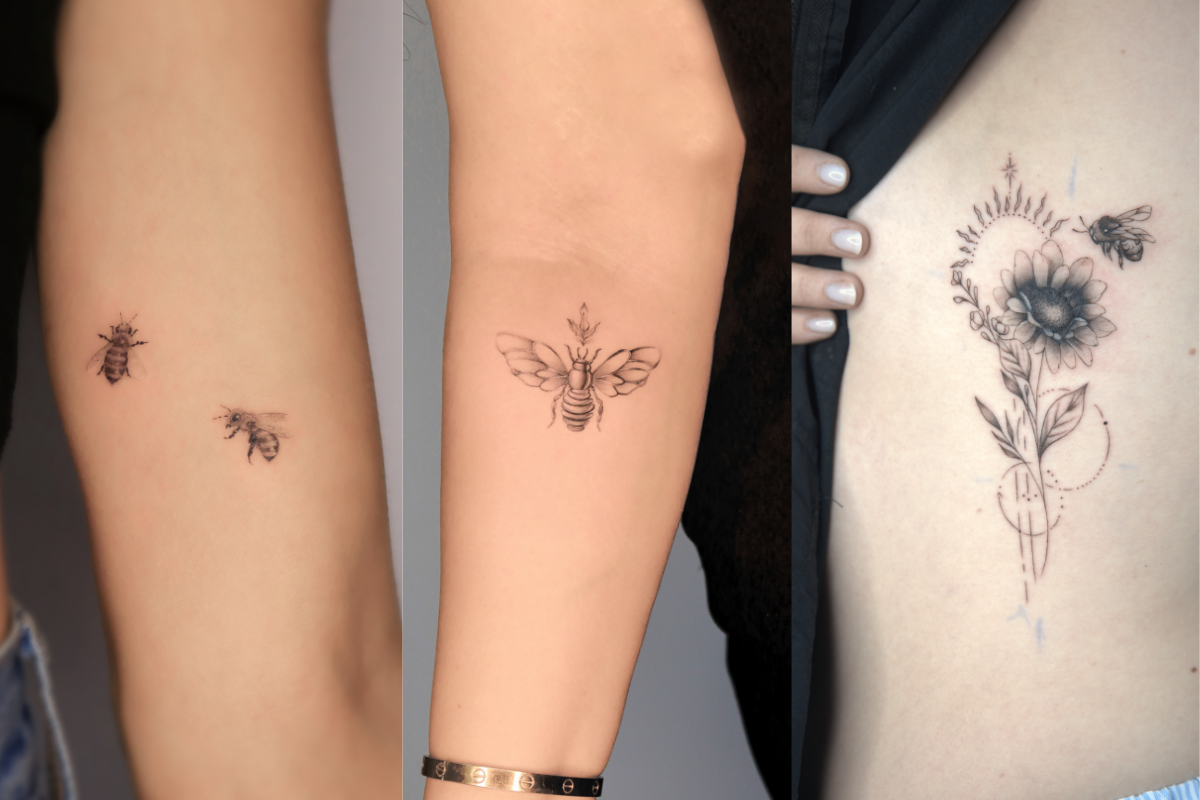
Bee Tattoo Placement Guide
Body Placement Considerations
Different body areas present unique challenges and opportunities for realistic bee tattoo designs:
Forearm: Excellent visibility, relatively flat surface, minimal distortion during movement
Shoulder/Upper arm: Larger canvas space, good for incorporating surrounding elements
Back: Maximum space for elaborate compositions with multiple design elements
Calf: Curved surface requiring design adaptation, good visibility when desired
Ribcage: High detail retention but more painful application process
The body's natural contours should complement the bee's orientation rather than fight against realistic proportions. Experienced artists consider muscle movement, skin elasticity, and aging effects when recommending placement.
Complementary Design Elements
While a standalone realistic bee tattoo creates powerful visual impact, many designs incorporate additional elements that enhance meaning and aesthetic appeal. These additions should maintain the realistic style to preserve visual cohesion.
Botanical Additions
Flowers provide natural context for bee imagery, as these insects' primary role involves pollination. Popular choices include:
Lavender: Adds vertical movement and purple color contrast
Sunflowers: Creates bold, cheerful compositions with scale variety
Cherry blossoms: Introduces delicate, temporary beauty themes
Roses: Combines classic tattoo symbolism with natural bee habitat
Wildflower clusters: Suggests meadow settings and natural abundance
The botanical elements should exhibit the same realistic rendering as the central bee, requiring research into petal structure, leaf venation, and natural color variations.
Honeycomb Patterns
Geometric honeycomb structures contrast beautifully with the organic bee form while reinforcing themes of community and productivity. These patterns work particularly well as:
Background elements creating context
Transitional designs connecting to other tattoo work
Framing devices around the central bee figure
Symbolic additions representing structure and organization
Environmental Context
Some realistic bee tattoo designs place the subject within broader environmental scenes. Hive entrances, wooden textures, or sky backgrounds add narrative depth. However, these additions increase complexity and size requirements substantially.
Technical Execution and Artist Selection
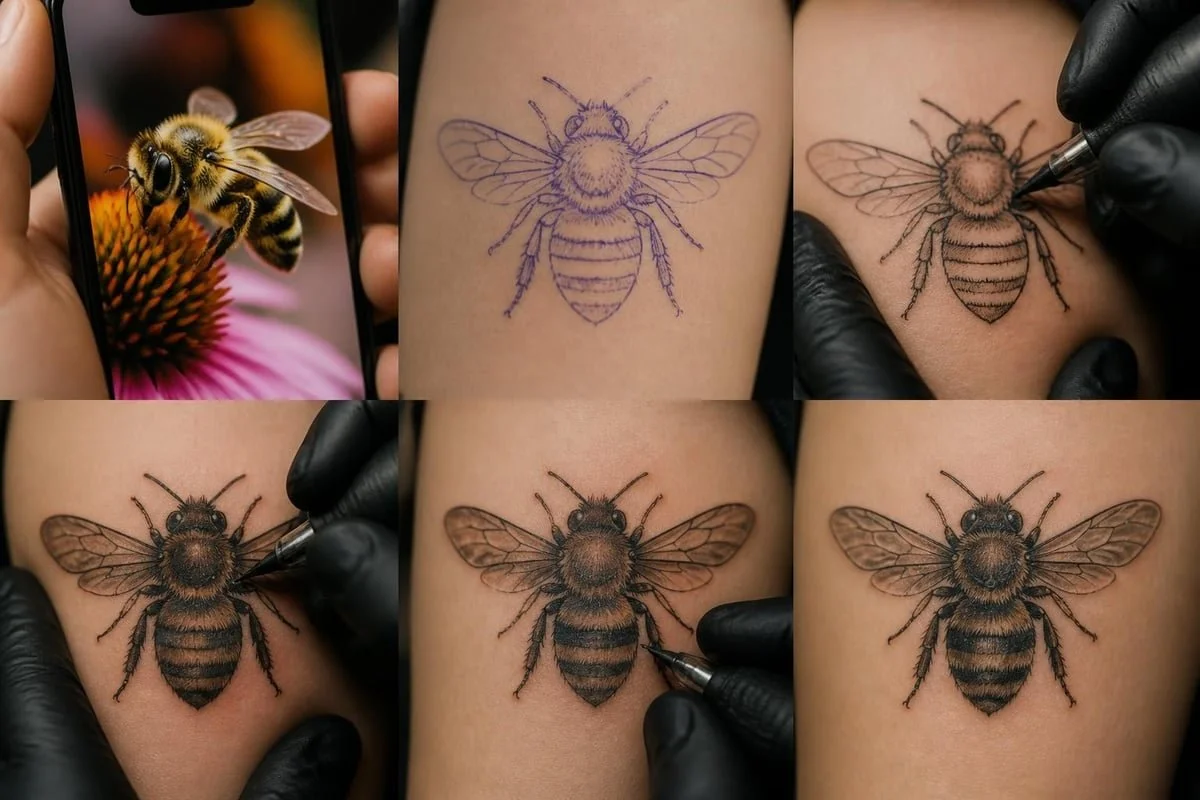
Realistic tattoo creation process
The gap between an adequate bee tattoo and an exceptional realistic bee tattoo lies primarily in artist expertise and technical execution. Selecting the right tattoo artist requires evaluating their specific experience with realistic wildlife and insect designs.
Portfolio Evaluation Criteria
When reviewing potential artists' portfolios, examine their realistic work for these quality indicators:
Detail retention in healed tattoos demonstrates the artist's understanding of how ink settles and spreads over time. Fresh tattoos may appear crisp, but healed examples reveal true skill levels.
Consistent line quality throughout the design, especially in curved sections and fine details, indicates steady hand control and technical proficiency essential for realistic bee tattoo work.
Effective contrast management creates depth without muddiness, with clear distinction between highlights, midtones, and shadows that maintain visibility as the tattoo ages.
Studio Environment and Standards
Professional luxury tattoo studios maintain equipment and hygiene standards that directly impact your realistic bee tattoo outcome. Understanding what happens during a tattoo session helps set appropriate expectations for the process.
Modern rotary machines offer superior control for the detailed shading work realistic designs demand. Needle configurations vary throughout the session, with liners creating outlines and shaders building tonal depth. Premium studios invest in equipment that enables artists to execute their vision without technical limitations.
Preparing for Your Tattoo Session
Success with your realistic bee tattoo begins before entering the studio. Proper preparation ensures optimal conditions for both artist execution and healing outcomes.
Reference Materials
Providing your artist with quality reference images accelerates the design process and ensures accurate results. Multiple angles of your preferred bee species help capture anatomical details correctly. Professional nature photography offers superior reference quality compared to illustrations or stylized images.
Consider exploring various bee tattoo design approaches to identify which realistic style resonates most strongly with your aesthetic preferences. Different bee species present distinct visual characteristics that might better suit your intended symbolism.
Physical Preparation
The realistic bee tattoo session duration varies based on size and complexity, typically ranging from two to six hours for detailed work. Arriving well-rested, hydrated, and having eaten a substantial meal helps maintain focus and reduces discomfort during longer sessions.
Avoid alcohol and blood-thinning medications for 24-48 hours before your appointment, as these substances increase bleeding that interferes with ink retention and visual clarity. Your artist will provide specific pre-session instructions during consultation.
Aftercare for Optimal Healing
Premium realistic bee tattoo work requires diligent aftercare to preserve detail and color vibrancy. The healing process directly impacts how your tattoo appears once fully settled, typically requiring 2-4 weeks for surface healing and 3-6 months for complete settling.
Initial Healing Phase
The first three days prove critical for establishing proper healing patterns:
Keep the bandage on for the duration recommended by your artist
Wash gently with fragrance-free soap after bandage removal
Apply thin layers of recommended healing ointment
Avoid submersion in water (pools, baths, ocean)
Wear loose clothing that won't rub against the fresh tattoo
Long-term Maintenance
Protecting your realistic bee tattoo investment extends beyond initial healing. Sun exposure represents the primary threat to color vibrancy and detail clarity over time. Apply broad-spectrum SPF 50+ sunscreen to your tattoo whenever exposed to sunlight, beginning once the tattoo has fully healed.
Moisturizing regularly keeps skin healthy and prevents the dryness that can dull tattoo appearance. Quality, fragrance-free lotions maintain skin elasticity without interfering with ink retention. For comprehensive guidance, review our tattoo aftercare essentials for maintaining your artwork's pristine condition.
Style Variations Within Realism
While maintaining realistic proportions and detail, artists can incorporate subtle stylistic variations that personalize your realistic bee tattoo. These approaches maintain biological accuracy while introducing artistic interpretation.
Hyperrealistic Approach
The hyperrealistic technique pushes detail to extraordinary levels, creating tattoos that could pass as photographs from a distance. This style emphasizes:
Extreme detail in texture rendering
Photographic color matching
Dramatic lighting effects
Environmental context inclusion
Achieving this level requires exceptional artist skill and typically demands larger sizing to accommodate intricate details.
Realistic with Geometric Elements
Some contemporary realistic bee tattoo designs juxtapose lifelike bee rendering with geometric shapes, sacred geometry patterns, or mandala elements. This fusion style maintains anatomical accuracy in the bee while introducing abstract components that add symbolic depth.
The contrast between organic and geometric forms creates visual interest and can represent the intersection of nature and human understanding or the mathematical precision found in natural systems.
Neo-realistic Interpretation
Neo-realistic styles take biological accuracy as a starting point but introduce enhanced color saturation, stylized backgrounds, or slight proportional adjustments that create more dynamic compositions. These various tattoo styles offer different aesthetic experiences while maintaining realistic foundations.
Common Design Mistakes to Avoid
Even experienced collectors sometimes overlook crucial considerations that impact their realistic bee tattoo satisfaction. Awareness of these pitfalls helps ensure your design achieves its full potential.
Proportion Errors
Bees possess specific body proportions that immediately appear "wrong" when altered, even to viewers without entomological knowledge. The head typically measures smaller than many people expect, while wings extend beyond the abdomen length at rest. Working with an artist who researches bee anatomy prevents these accuracy issues.
Inadequate Size for Detail
The most frequent realistic bee tattoo regret involves choosing dimensions too small to support the detail level desired. Wings particularly suffer when compressed, losing the delicate venation that creates realistic translucency. Discuss minimum size requirements with your artist before finalizing design scale.
Placement That Distorts Features
Body areas with significant stretching or compression during movement can distort realistic details over time. Hands, feet, and certain torso locations may not preserve the precision realistic bee tattoo work requires. Consider how your body's natural movement patterns interact with the chosen placement.
Cost Considerations for Quality Work
Realistic bee tattoo pricing reflects the specialized skill, time investment, and equipment quality required for exceptional results. Understanding fee structures helps budget appropriately for the quality level your vision deserves.
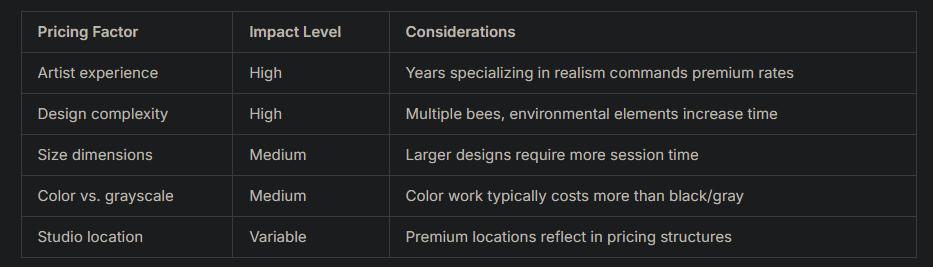
Luxury tattoo studios in major cities like Bangkok offer world-class artistry at competitive international rates. The investment in quality realistic bee tattoo work pays dividends through superior appearance, better aging characteristics, and reduced need for future touch-ups.
Session Structure and Payment
Complex realistic bee tattoo designs may require multiple sessions, particularly for larger pieces exceeding six inches or incorporating elaborate color work. Studios typically structure payment as either:
Hourly rates ranging from moderate to premium based on artist expertise
Flat project fees for designs with clearly defined scopes
Deposit requirements securing your appointment slot
Discuss payment expectations during initial consultation to avoid surprises and ensure transparent financial planning.
Seasonal Timing Considerations
While you can receive a realistic bee tattoo year-round, certain seasons offer advantages for the healing process. Bangkok's climate presents unique considerations for tattoo aftercare and healing optimization.
Cooler, drier months (November through February) typically provide ideal healing conditions with reduced sweating and lower UV exposure concerns. Clothing coverage feels more comfortable during healing phases when Bangkok temperatures moderate.
Rainy season considerations (May through October) require extra vigilance against excessive moisture exposure but remain viable with proper aftercare attention. Avoiding beach trips and pool activities during initial healing proves easier when planned accordingly.
The realistic bee tattoo timeline from consultation through final healing typically spans 2-4 months when accounting for design development, session scheduling, and complete healing. Planning around major life events, tropical vacations, or athletic competitions ensures your tattoo receives optimal care during critical healing phases.
Exploring Additional Symbolism Options
Beyond the bee itself, incorporating specific symbolic elements can deepen your realistic bee tattoo meaning. These additions should maintain stylistic consistency while introducing layered interpretation possibilities.
Understanding the symbolism behind different tattoo designs helps identify elements that resonate with your personal narrative. Queen bees represent leadership and feminine power, worker bees symbolize dedication and community contribution, while drone bees can signify purpose-driven existence.
Environmental elements carry additional meaning layers. Clover suggests luck and Irish heritage, while specific flowers introduce Victorian language of flowers symbolism. These thoughtful additions transform your realistic bee tattoo from beautiful imagery into a personal emblem reflecting your values and experiences.