Eyeball Tattoo Design: Artistic Vision & Safety Guide
The world of body art continues to evolve, pushing boundaries and exploring new frontiers of self-expression. Among the most striking and conversation-starting designs is the eyeball tattoo design, a powerful artistic motif that captures attention and carries deep symbolic meaning. Before diving into this bold aesthetic choice, it's essential to understand the distinction between artistic eyeball imagery tattooed on skin and the dangerous practice of actual scleral tattooing. This comprehensive guide explores the creative possibilities, design variations, symbolic significance, and critical safety considerations surrounding eyeball tattoo designs for those seeking meaningful and impactful body art.
Understanding Eyeball Tattoo Design Artistry
Eyeball tattoo design refers to the artistic representation of eyes, irises, pupils, and ocular imagery permanently inked onto the skin. These designs range from hyperrealistic depictions to abstract interpretations, each carrying unique aesthetic and symbolic weight.
The popularity of eyeball imagery in tattoo culture stems from multiple factors. Eyes represent perception, awareness, consciousness, and the soul in countless cultural traditions. An eyeball tattoo design can symbolize protection, spiritual insight, or the idea of being watched over by a higher power. Many clients choose these designs to commemorate significant life changes or to represent their personal philosophy about observation and understanding.
Design Categories and Variations
Different eyeball tattoo design styles offer distinct visual impacts:
Hyperrealistic portraits: Detailed, photographic eye renderings with intricate iris patterns and light reflection
Traditional bold outlines: Classic tattoo styling with strong black lines and limited color palette
Surrealist interpretations: Abstract or impossible eye configurations that challenge perception
Geometric and mandala eyes: Structured patterns incorporating sacred geometry
Horror and dark art: Disturbing or supernatural eye imagery for gothic aesthetics
Third eye symbolism: Spiritual representations placed on the forehead or other body locations
The choosing the right tattoo studio is particularly important for complex designs requiring exceptional technical skill and artistic vision.
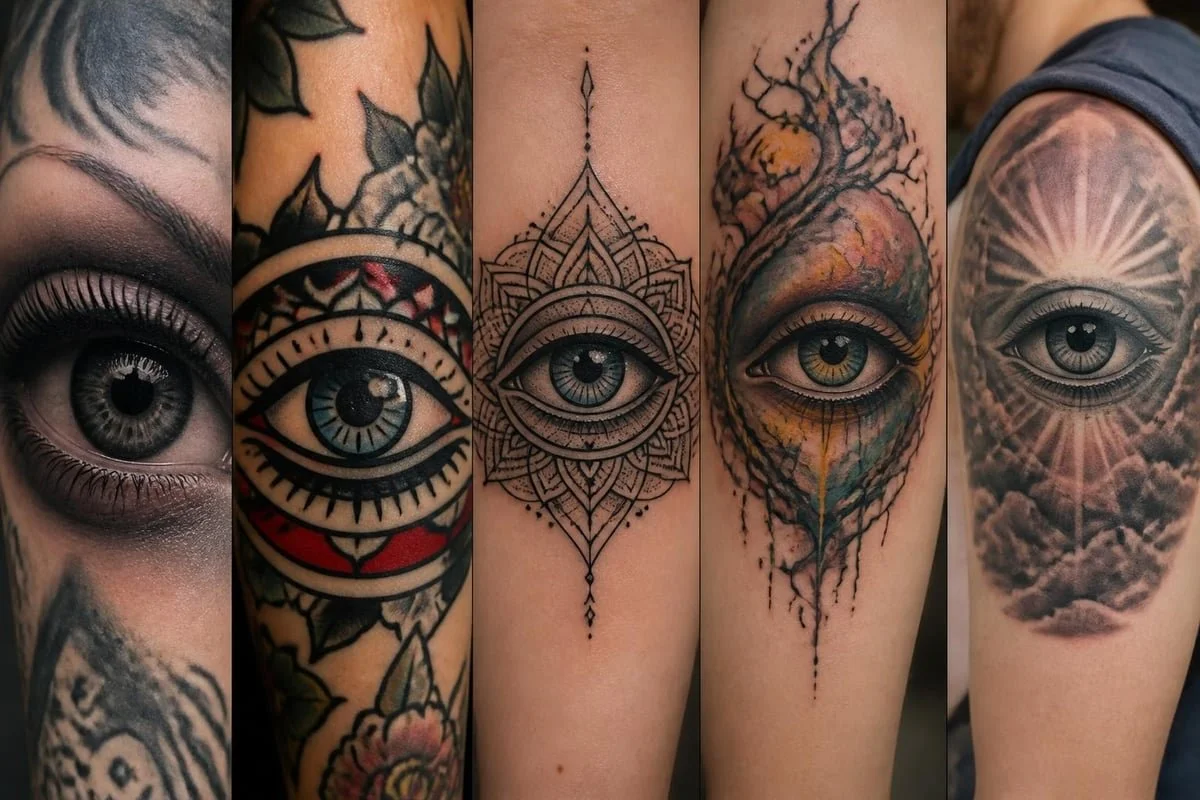
Eye ball tattoo style variations
Technical Execution and Placement Considerations
Creating a compelling eyeball tattoo design demands advanced technical proficiency. The human eye contains subtle gradations, complex light interactions, and delicate details that separate mediocre work from exceptional artistry.
Critical Technical Elements
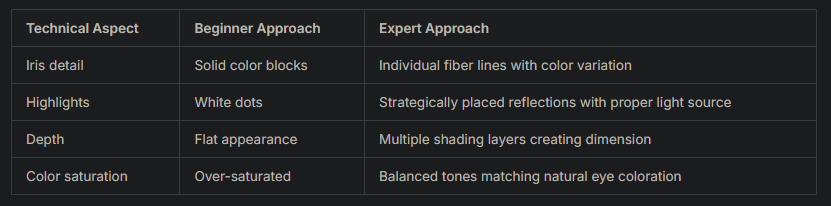
Fine line work defines the quality of eyeball tattoo designs. The iris alone contains dozens of radial lines, color variations, and textural elements. Professional artists specializing in detailed work understand how to layer colors, create depth through shading, and capture the wet appearance characteristic of living eyes.
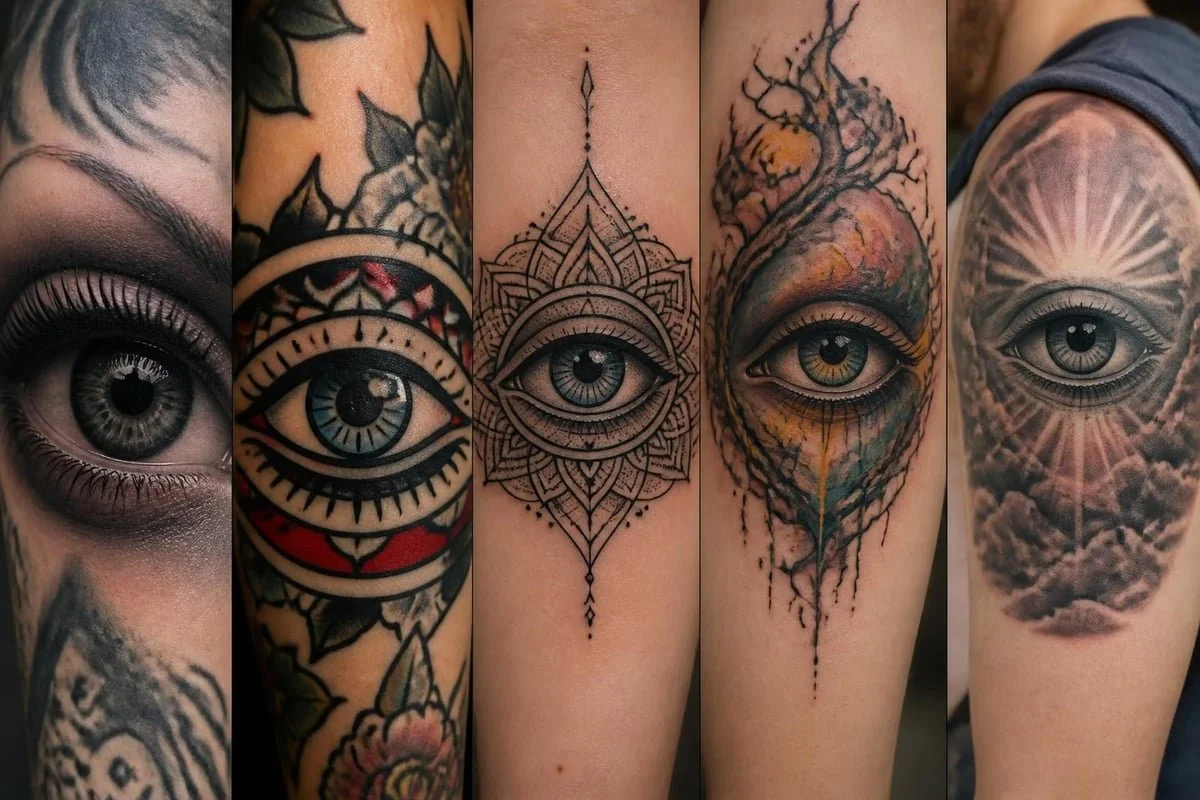
Eyeball tattoo design style variations
Technical Execution and Placement Considerations
Creating a compelling eyeball tattoo design demands advanced technical proficiency. The human eye contains subtle gradations, complex light interactions, and delicate details that separate mediocre work from exceptional artistry.
Critical Technical Elements
Fine line work defines the quality of eyeball tattoo designs. The iris alone contains dozens of radial lines, color variations, and textural elements. Professional artists specializing in detailed work understand how to layer colors, create depth through shading, and capture the wet appearance characteristic of living eyes.
Placement significantly impacts the final result. Larger placements such as forearms, thighs, or back allow for greater detail and complexity. Smaller locations require design simplification while maintaining recognizability. The tattoo placement perfect spot guide offers additional insights into selecting optimal body locations for detailed designs.
Ink Selection and Longevity
Quality pigment selection determines how well an eyeball tattoo design ages over time. Recent research on trace metals in commercial tattoo inks highlights the importance of selecting professionally formulated pigments from reputable manufacturers. High-quality inks maintain color vibrancy and resist fading, particularly important for the subtle color gradations in realistic eye designs.
Artists working with eyeball tattoo designs typically use a broader palette than many other tattoo styles. Blues, greens, browns, and grays must be carefully selected to match the client's vision while ensuring long-term color stability. The best colours for your tattoo resource provides valuable information about pigment selection and skin tone compatibility.
Cultural and Symbolic Significance
Beyond aesthetic appeal, eyeball tattoo design carries profound symbolic meaning across cultures and spiritual traditions. Understanding these associations helps clients select designs that resonate with personal beliefs and values.
Protection and Watchfulness
The "evil eye" concept appears in Mediterranean, Middle Eastern, and Latin American cultures. These protective eye symbols ward off malicious intent and negative energy. When incorporated into eyeball tattoo design, these motifs serve as permanent talismans. The symbolism typically includes specific color choices-blue being most traditional-and may incorporate additional protective elements like geometric patterns or sacred text.
Spiritual Awakening and Consciousness
The third eye concept from Hindu and Buddhist traditions represents enlightenment, intuition, and spiritual sight. Third eye eyeball tattoo designs often appear on the forehead (in artistic renderings, not actual foreheads) or as part of larger spiritual compositions. These designs frequently incorporate lotus flowers, mandalas, or other sacred geometry.
Common symbolic interpretations include:
All-seeing eye: Divine providence, omniscience, spiritual guidance
Eye of Horus: Ancient Egyptian protection, royal power, good health
Eye of Providence: Christian symbolism representing God's watchful care
Inner vision: Personal insight, self-awareness, psychological depth
Memory and remembrance: Honoring deceased loved ones who "watch over" the living
The symbolism behind tattoo designs offers deeper exploration of meaningful imagery in contemporary body art.
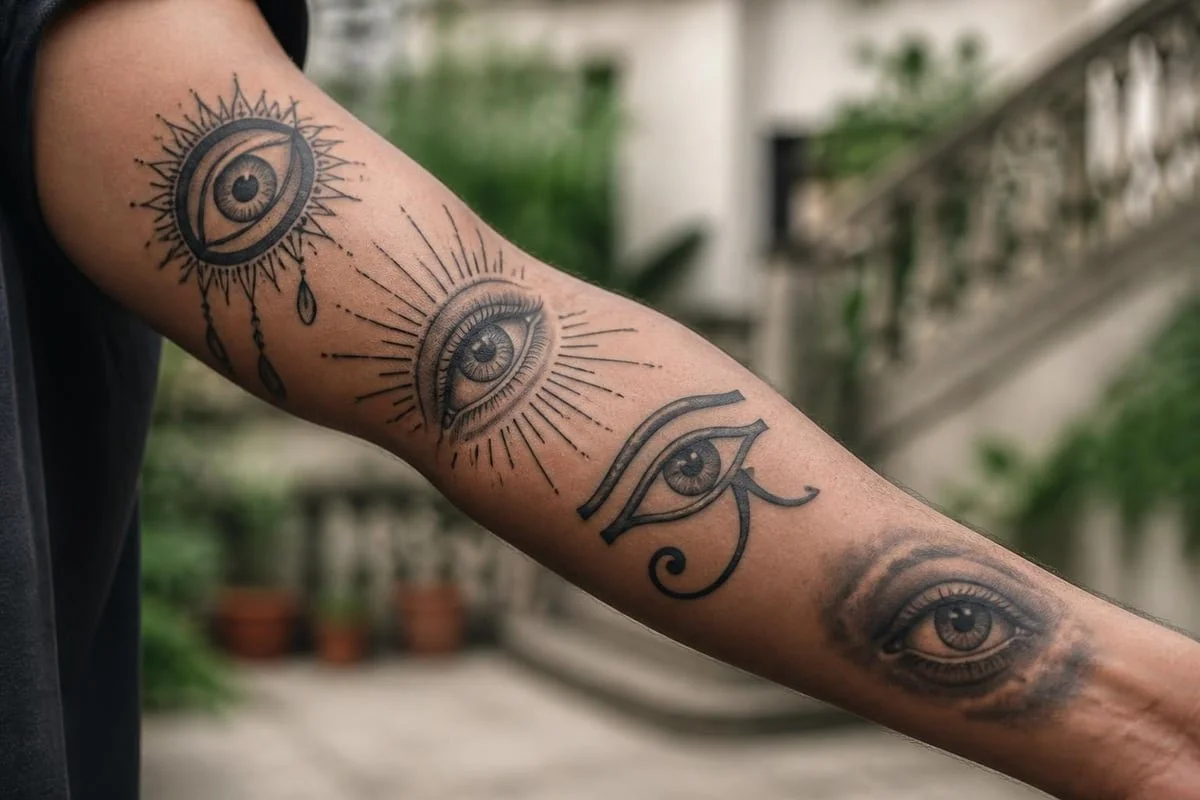
cultural eyeball symbolism
Critical Safety Distinctions
The term "eyeball tattoo" unfortunately also refers to an extremely dangerous procedure: scleral tattooing, the injection of ink directly into the white of the actual eye. This practice carries severe medical risks and requires urgent clarification.
The Dangerous Reality of Scleral Tattooing
Scleral tattooing involves injecting pigment between the conjunctiva and sclera of the actual eyeball-a procedure with no legitimate medical purpose and significant risk of permanent damage. The American Academy of Ophthalmology's overview of eye tattooing documents numerous complications including pain, infection, retinal damage, and vision loss.
A systematic review of ocular and periocular tattoo adverse effects reveals the serious nature of these complications. Cases include chronic inflammation, pigment migration, conjunctival tears, and irreversible visual impairment. One BMC Ophthalmology case report details a patient who experienced persistent pain and cosmetic disfigurement following scleral tattooing.
Legal and Regulatory Response
Recognizing these dangers, jurisdictions worldwide have begun prohibiting scleral tattooing. Nebraska's legislative supplement exemplifies state-level responses, defining and penalizing this practice. Similar regulations exist in Oklahoma, Indiana, and several Canadian provinces.
Key differences between safe artistic practice and dangerous procedures:
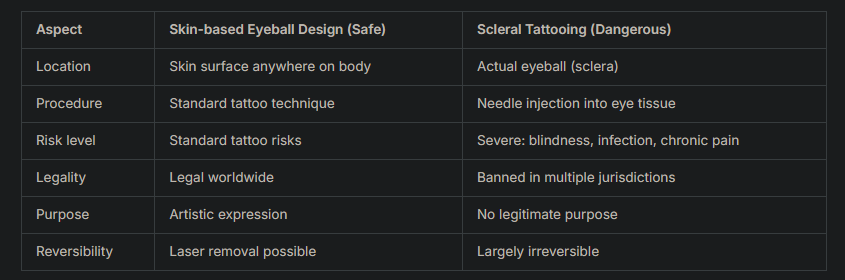
Professional tattoo studios refuse scleral tattooing and focus exclusively on artistic designs applied to skin. When choosing a tattoo artist, verify they practice only legitimate skin-based tattooing and maintain strict safety protocols.
Design Development Process
Creating a custom eyeball tattoo design involves collaboration between artist and client. This process ensures the final artwork captures the intended aesthetic while working within technical constraints.
Initial Consultation Elements
Symbolic intention discussion: What meaning should the eye convey?
Style preference identification: Realistic, traditional, abstract, or hybrid approach?
Placement and size determination: Where on the body and how large?
Color palette selection: Monochromatic, limited color, or full spectrum?
Reference gathering: Photographic examples, artistic inspiration, personal photos
Understanding what to expect during your first tattoo session helps new clients prepare mentally and physically for the experience.
Sketch Refinement and Approval
Professional artists create preliminary sketches based on consultation notes. These initial designs undergo revision until achieving client approval. For eyeball tattoo design specifically, artists pay particular attention to:
Iris pattern authenticity and detail density
Pupil size and positioning for desired emotional impact
Highlight placement creating realistic light reflection
Surrounding elements (eyelashes, eyelids, background integration)
Overall composition balance within the chosen placement
The iterative design process may require multiple revisions. Premium studios prioritize this collaborative refinement, ensuring complete satisfaction before permanent application begins.

Eyeball tattoo design process
Composition and Integration Techniques
Standalone eyeball tattoo designs create powerful focal points, but integration with complementary elements enhances overall impact and storytelling potential.
Standalone Eye Designs
Isolated eye imagery works particularly well for:
Inner forearm placement: Visible yet professional, easily covered when necessary
Upper arm or shoulder: Larger canvas allowing maximum detail
Hand or finger: Bold statement pieces for committed enthusiasts
Behind the ear: Subtle yet striking placement for smaller designs
Standalone designs emphasize the eye itself, with minimal background distraction. These work best when technical execution is flawless, as there's nothing to hide imperfections.
Integrated Compositions
Many clients prefer eyeball tattoo design as part of larger thematic pieces:
Nature integration: Eyes emerging from flowers, trees, or landscapes
Animal combinations: Predator eyes within realistic animal portraits
Clock and time themes: Eyes representing the passage of time or mortality
Religious imagery: Eyes incorporated into crosses, mandalas, or sacred geometry
Portrait work: Hyperrealistic eye detail within larger face portraits
When considering unusual tattoo ideas, integrated eyeball designs offer unique creative possibilities that transcend conventional approaches.
Aftercare and Long-term Maintenance
Proper healing ensures eyeball tattoo design retains its visual impact for decades. Fine detail work requires particularly diligent aftercare to prevent color loss or line blurring.
Initial Healing Protocol
The first two weeks prove critical for optimal healing:
Keep the area clean: Gentle washing with unscented antibacterial soap twice daily
Apply thin moisturizer layers: Fragrance-free lotion or specialized tattoo balm
Avoid sun exposure: UV radiation damages fresh ink and delays healing
Don't scratch or pick: Allow scabs to fall naturally to preserve detail
Wear loose clothing: Prevent friction against the healing tattoo
Detailed understanding of tattoo aftercare essentials provides comprehensive guidance through the healing process.
Long-term Preservation Strategies
Maintaining the crisp detail characteristic of quality eyeball tattoo design requires ongoing attention:
Daily SPF application: Sun exposure causes significant fading over time
Moisturize regularly: Hydrated skin maintains color vibrancy
Consider touch-ups: Small detail restoration every 5-10 years maintains crispness
Avoid harsh chemicals: Chlorine, harsh soaps, and chemical exposure degrades pigment
The easier tattoo healing tips resource offers practical strategies for minimizing discomfort and maximizing results.
Selecting the Right Artist
Not all tattoo artists possess the technical skill required for exceptional eyeball tattoo design execution. Selecting an artist with specific expertise in realistic portraiture and fine detail work proves essential.
Portfolio Assessment Criteria
When evaluating potential artists, examine their portfolio for:
Detail density: Can you see individual iris fibers in their eye tattoos?
Realistic light reflection: Do highlights appear natural and correctly positioned?
Color blending: Are color transitions smooth or abrupt?
Symmetry and proportion: Do the eyes appear anatomically correct?
Healed work examples: Fresh tattoos always look better; healed work reveals true quality
Many exceptional artists specialize in specific styles. An artist creating brilliant traditional work may not excel at photorealistic eyes. Prioritize specialists whose existing work aligns with your vision.
Studio Environment and Professionalism
Beyond artistic skill, studio cleanliness and professional standards determine safety and satisfaction. Premium facilities maintain:
Sterilization protocols: Autoclave sterilization of reusable equipment, single-use needles, and barrier protection for all surfaces
Licensing and certification: Current health department permits, bloodborne pathogen training, and professional association membership
Consultation processes: Thorough design discussions, medical history review, and realistic expectation setting
Portfolio transparency: Willingness to show healed work, client references, and honest assessment of design feasibility
Studios specializing in fine line and detailed work, like those focusing on top tattoo styles to explore, often possess the technical infrastructure supporting complex eyeball tattoo design projects.
Common Design Mistakes and How to Avoid Them
Even experienced artists occasionally encounter challenges with eyeball tattoo design. Understanding common pitfalls helps clients make informed decisions and set realistic expectations.
Proportion and Anatomy Errors
Eyes have specific anatomical relationships that, when violated, create unsettling results. Common mistakes include:
Oversized pupils: Creating an unintentionally disturbing or drugged appearance
Incorrect iris-to-sclera ratio: Making eyes appear too large or too small
Misaligned highlights: Suggesting multiple light sources or incorrect perspective
Asymmetrical features: Particularly problematic in paired eye designs
Technical Execution Issues
Insufficient detail: Simplified iris patterns lacking realism
Poor color saturation: Washed-out appearance from inadequate ink deposit
Blown lines: Ink spread beyond intended boundaries, blurring detail
Inconsistent depth: Flat areas adjacent to dimensional sections
Avoiding these issues requires selecting an artist with proven expertise in realistic portraiture and setting appropriate size expectations. Extremely small eyeball tattoo designs cannot accommodate the detail level of larger pieces.
Pricing Considerations
Eyeball tattoo design pricing varies significantly based on size, complexity, artist experience, and geographic location. Understanding market rates helps clients budget appropriately and recognize value.
Pricing Factors
Several elements influence final cost:
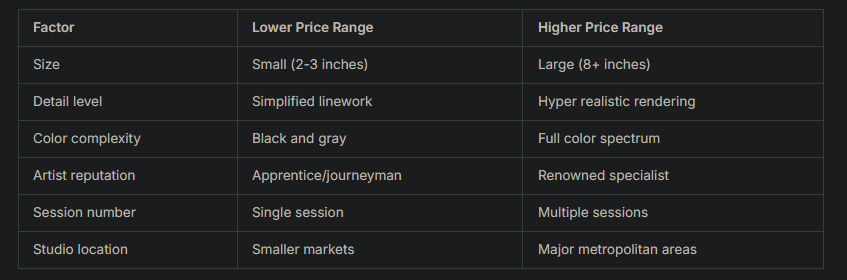
Premium studios with specialized expertise command higher rates, but the investment ensures superior technical execution and long-term satisfaction. Budget considerations should never compromise safety or quality standards.
Investment Perspective
Viewing eyeball tattoo design as a permanent art investment rather than a commodity purchase helps frame appropriate budget expectations. A well-executed piece provides decades of satisfaction and serves as a conversation piece, personal talisman, or artistic statement. Underpaying for rushed work or inexperienced artists frequently leads to expensive laser removal and cover-up procedures later.