Chinese Tattoo Artists: Mastering Traditional & Modern Art
The world of Chinese tattoo artists represents a fascinating intersection where ancient artistic traditions meet contemporary body art innovation. These skilled practitioners draw upon thousands of years of cultural heritage, transforming classical calligraphy, brush painting techniques, and symbolic imagery into permanent artwork on skin. As the global tattoo industry continues to evolve, chinese tattoo artists have emerged as influential figures who bring unique perspectives, technical mastery, and deep cultural knowledge to their craft. Their work demonstrates how traditional Chinese aesthetics can be beautifully adapted to modern tattooing, creating pieces that resonate with both cultural authenticity and contemporary artistic sensibilities.
The Cultural Foundation of Chinese Tattoo Artistry
Chinese tattoo artists build their practice upon centuries-old artistic traditions that predate modern tattooing by millennia. The foundation of their work often stems from classical Chinese painting, calligraphy, and symbolic art forms that have been refined over generations. Understanding this cultural context is essential for appreciating the depth and sophistication these artists bring to their work.
Traditional Chinese Art Techniques in Modern Tattooing
The brushwork techniques used in traditional Chinese ink painting translate remarkably well to tattoo application. Chinese tattoo artists often study classical painting methods to master the fluid, expressive strokes that characterize their work. Sansa, a notable artist, has developed a distinctive style directly inspired by traditional Chinese ink painting, creating abstract brushstroke tattoos that capture the essence of this ancient art form.
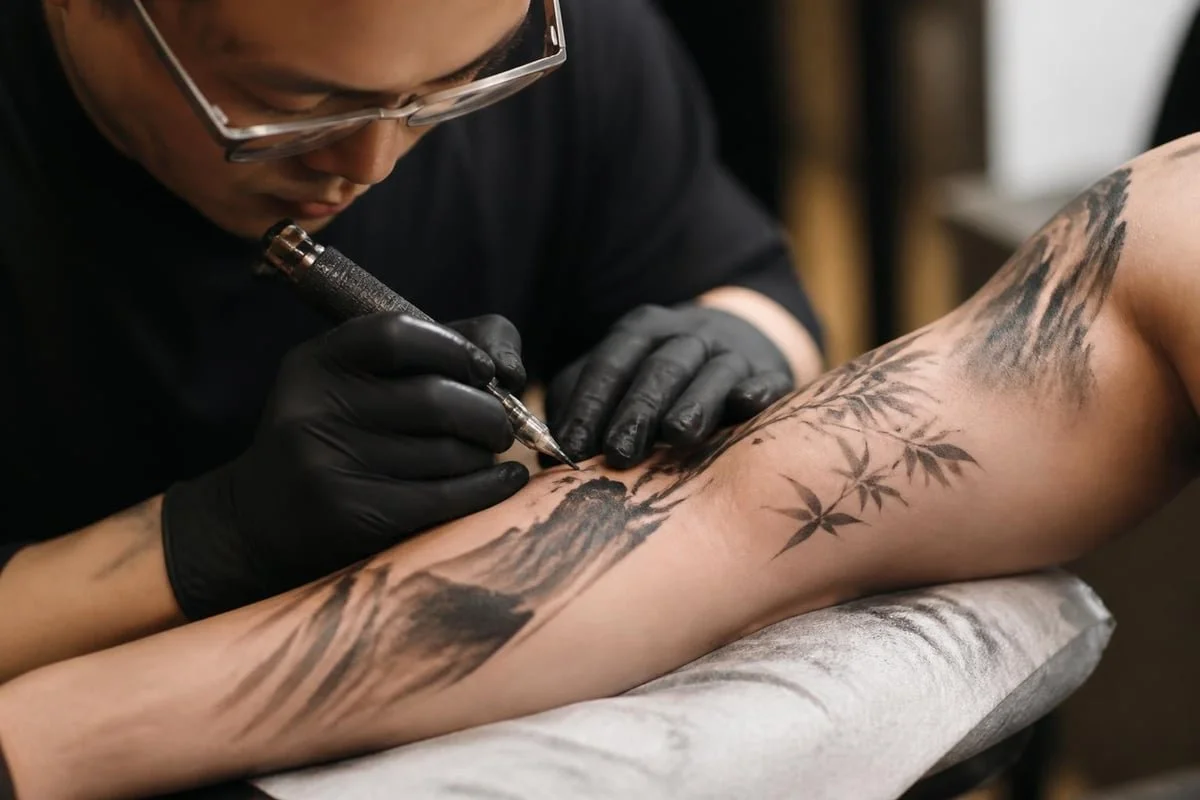
Traditional Chinese ink painting technique
Key elements these artists incorporate include:
Brushstroke fluidity: Mimicking the organic flow of traditional brush painting
Negative space utilization: Strategic use of un-inked skin to create balance
Tonal gradation: Achieving depth through varying ink saturation
Compositional harmony: Following classical principles of visual balance
The integration of calligraphy into tattoo design represents another significant aspect of Chinese artistic tradition. Lán Ink Studio specializes in this approach, emphasizing the elegance and individuality that Chinese calligraphy brings to permanent body art. When choosing the right tattoo studio, clients seeking authentic Chinese-inspired work should look for artists with demonstrated knowledge of these traditional techniques.
Contemporary Chinese Tattoo Artists Leading the Industry
Several chinese tattoo artists have gained international recognition for their exceptional work and innovative approaches. These professionals demonstrate how traditional techniques can be elevated through modern equipment, contemporary design sensibilities, and cross-cultural influences.
Notable Artists and Their Signature Styles
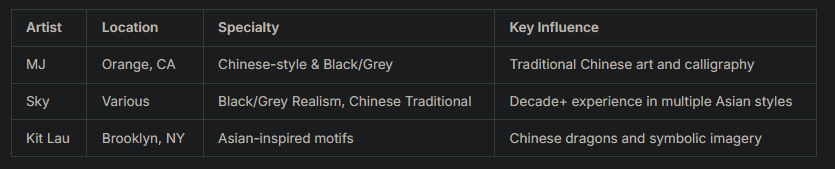
MJ, based in Orange, California, has built a reputation for authentic Chinese-style tattoos that honor traditional aesthetics while incorporating modern precision. The artist's work demonstrates how chinese tattoo artists can specialize in both cultural authenticity and technical excellence, creating pieces that appeal to clients seeking genuine Chinese artistic representation.
Sky's work showcases the versatility that experienced Chinese tattoo artists bring to their practice. With over ten years of experience across Black and Grey Realism, Japanese Traditional, and Chinese Traditional styles, Sky represents the modern generation of artists who can seamlessly blend multiple Asian artistic traditions.
The Dragon Motif and Symbolic Imagery
Chinese tattoo artists often specialize in culturally significant symbols, with the dragon being among the most requested designs. Kit Lau's focus on dragon motifs at Nine Dragons Tattoo demonstrates how a single symbolic element can become a signature specialization. These artists understand the cultural meanings, historical variations, and proper compositional approaches for such imagery.
When exploring symbolism behind tattoo designs, clients discover that Chinese symbolic elements carry layers of meaning that skilled artists must understand and respect.
Technical Excellence and Training Methods
The technical proficiency of chinese tattoo artists stems from rigorous training that often begins long before they touch a tattoo machine. Many artists spend years mastering traditional painting and calligraphy before transitioning to tattooing, bringing a level of artistic foundation that enhances their technical capabilities.
From Traditional Media to Skin Canvas
The transition from paper or canvas to skin requires significant adaptation, yet chinese tattoo artists with traditional art backgrounds often demonstrate superior control and compositional awareness. Their training in brush control translates to exceptional needle work, particularly in styles requiring fine lines and subtle gradations.
Training methods typically include:
Classical art education: Years studying traditional Chinese painting and calligraphy
Apprenticeship: Learning tattoo-specific techniques from experienced practitioners
Cross-cultural study: Understanding how Chinese aesthetics interact with other tattoo traditions
Continuous practice: Regular refinement of both traditional and modern skills
Technical innovation: Adapting classical techniques to contemporary equipment
Understanding what happens during a tattoo session becomes particularly important when working with artists who employ traditional Chinese techniques, as their approach may differ from conventional Western tattooing methods.
The Intersection of Technology and Tradition
Modern chinese tattoo artists increasingly leverage technology while maintaining their connection to traditional art forms. This combination creates exciting possibilities for design development, client collaboration, and artistic innovation.
Digital Tools and Traditional Aesthetics
Recent research has explored how artificial intelligence and digital tools can support traditional Chinese art forms. The CalliGAN research demonstrates methods for generating Chinese calligraphy characters through image-to-image translation, showing how technology can aid in preserving and adapting traditional forms. Similarly, studies on Chinese painting style transfer using deep learning models reveal new possibilities for applying traditional aesthetics to contemporary contexts.
While these technological advances offer tools for design exploration, chinese tattoo artists emphasize that human artistry, cultural understanding, and technical skill remain irreplaceable. Technology serves as an aid rather than a replacement for traditional knowledge and practiced expertise.
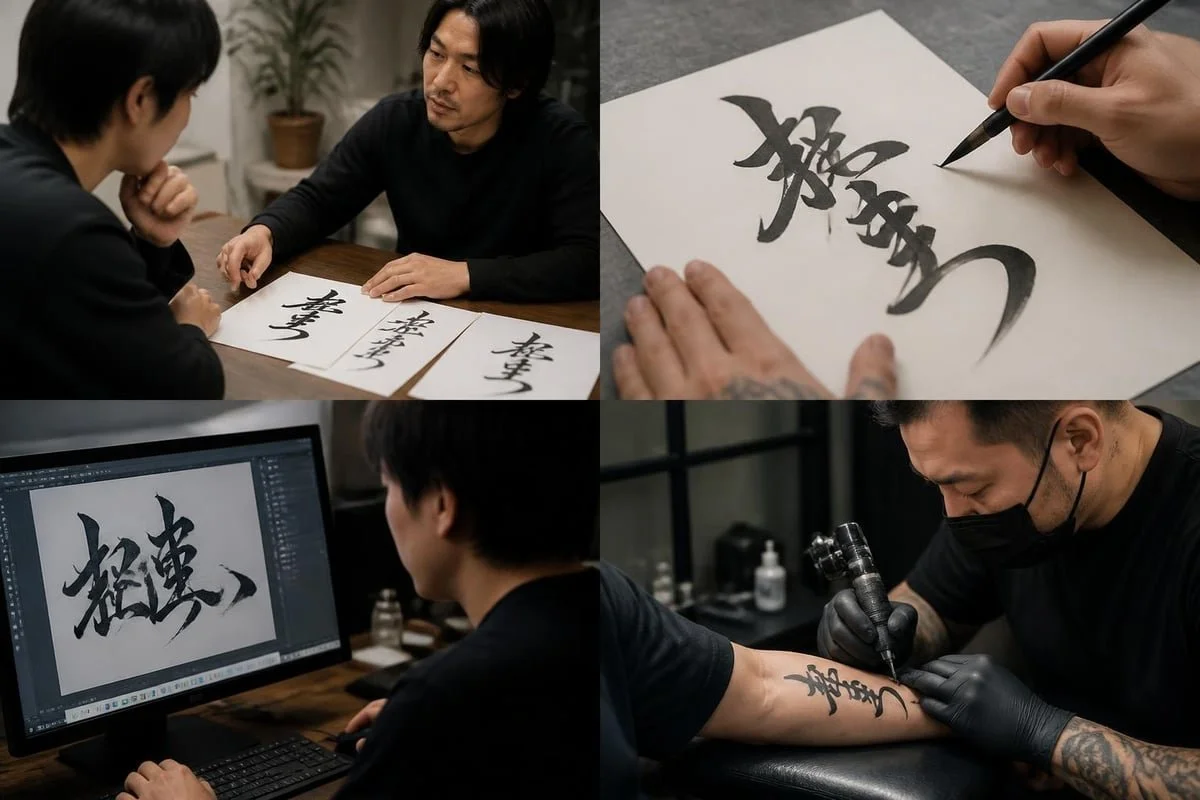
Design process for Chinese tattoos
Choosing Chinese-Inspired Designs for Your Tattoo
Clients seeking work from chinese tattoo artists should approach the process with cultural awareness and clear communication. Understanding the significance of design elements, proper placement considerations, and artistic styles ensures a satisfying result that honors both the art form and the wearer's intentions.
Popular Chinese Tattoo Elements and Their Meanings
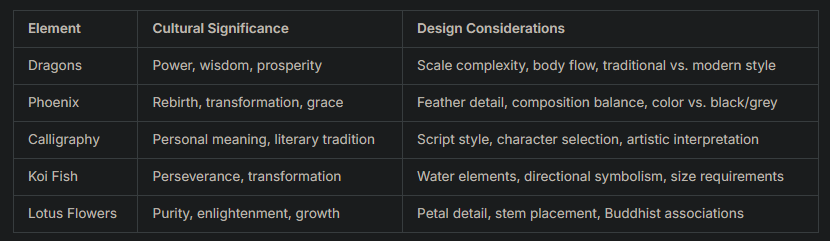
When considering tattoo placement for the perfect spot, chinese tattoo artists often recommend locations that complement the natural flow of traditional Chinese compositions. Many designs work best when they can extend along the body's natural lines, following principles established in classical Chinese art.
Cultural Sensitivity and Authentic Representation
Working with authentic chinese tattoo artists ensures proper cultural representation and avoids appropriation concerns. These artists bring firsthand cultural knowledge and can guide clients toward designs that honor Chinese traditions while remaining personally meaningful.
Important considerations include:
Character accuracy: Ensuring calligraphy and text convey the intended meaning
Symbolic appropriateness: Understanding which symbols align with your personal values
Compositional integrity: Following traditional aesthetic principles
Style consistency: Maintaining coherence across design elements
Fine Line Work and Chinese Aesthetics
The precision required in Chinese calligraphy and brush painting aligns naturally with fine line tattooing techniques. Chinese tattoo artists who specialize in detailed work often excel at creating intricate designs that require exceptional control and steady hands.
The Marriage of Precision and Tradition
Fine line techniques allow chinese tattoo artists to capture the delicate nuances of traditional Chinese art. The subtle variations in line weight, the graceful curves of calligraphic strokes, and the refined details of classical imagery all benefit from precision tattooing approaches. This style resonates particularly well with clients seeking sophisticated, elegant designs that showcase artistic subtlety rather than bold statement pieces.
For studios like Vital Luxury Tattoo Studio Bangkok that specialize in fine line and detailed tattoo designs, understanding Chinese artistic principles can enhance the studio's ability to serve clients seeking Asian-inspired work. The attention to detail and commitment to precision that defines Chinese traditional art aligns perfectly with luxury tattoo experiences.
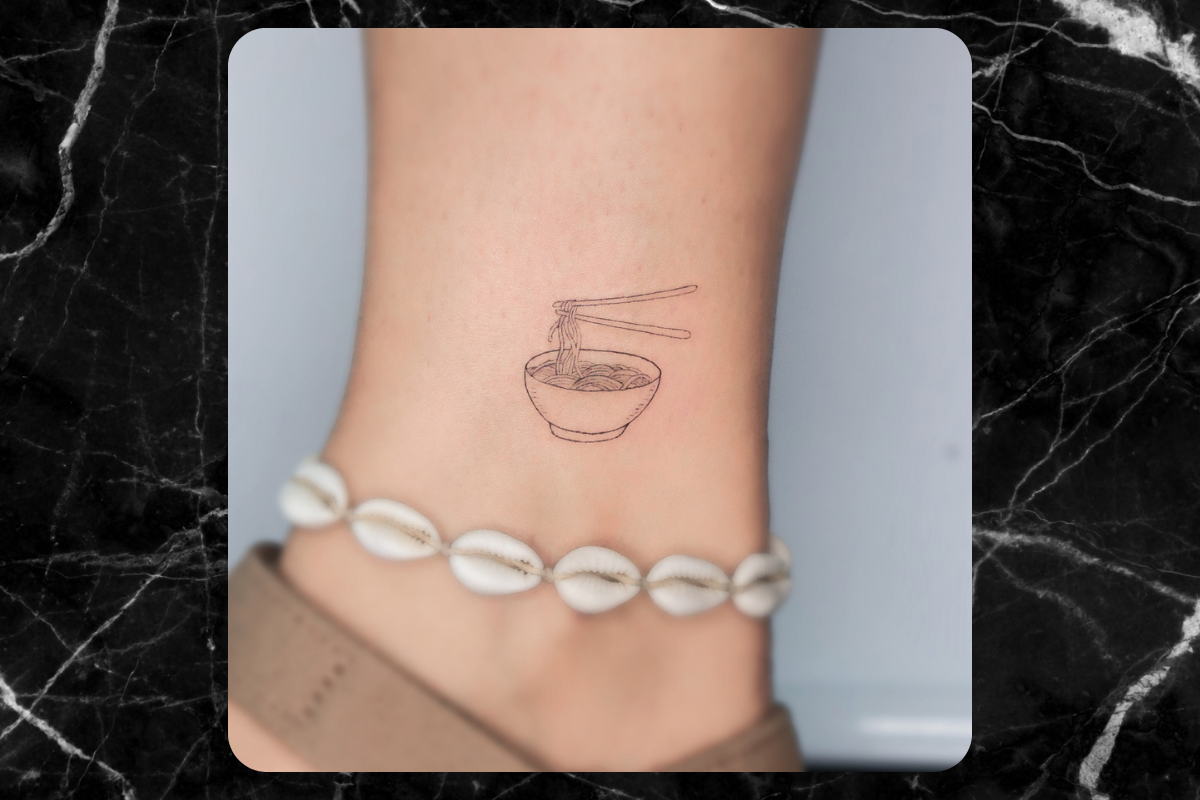
Fine line Chinese tattoo techniques
Color Theory in Chinese Tattoo Art
While many associate Chinese tattoo work with black ink and grey wash techniques, color plays a significant role in traditional Chinese art. Chinese tattoo artists who incorporate color draw upon cultural color symbolism and traditional painting palettes to create vibrant, meaningful pieces.
Traditional Color Significance
Chinese culture assigns specific meanings to colors, and knowledgeable chinese tattoo artists incorporate this symbolism into their work:
Red: Luck, joy, celebration, prosperity
Gold: Wealth, imperial power, divine connection
Blue/Green: Growth, harmony, balance, spring
Black: Sophistication, formality, depth
White: Purity, mourning, transition (context-dependent)
Understanding tattoo colors for skin tones becomes especially important when working with traditional Chinese color palettes, as some hues may appear differently on various skin tones. Experienced artists can adjust their approach to ensure colors maintain their intended vibrancy and symbolic impact.
The Global Influence of Chinese Tattoo Artists
The impact of chinese tattoo artists extends far beyond China's borders, influencing tattoo culture worldwide. Their techniques, aesthetic principles, and cultural contributions have enriched the global tattoo community, inspiring artists across cultures and creating new hybrid styles.
Cross-Cultural Artistic Exchange
Modern chinese tattoo artists often work internationally, bringing their expertise to diverse markets while absorbing influences from other tattooing traditions. This exchange creates dynamic artistic environments where Eastern and Western techniques merge, producing innovative styles that honor multiple cultural traditions simultaneously.
The presence of accomplished Chinese artists in major tattoo centers worldwide demonstrates the universal appeal of their work. From California to New York, Bangkok to London, these artists prove that excellence in tattooing transcends cultural boundaries while remaining rooted in authentic tradition.
Career Paths and Professional Development
Aspiring chinese tattoo artists face unique challenges and opportunities as they develop their careers. The path requires dedication to both traditional art forms and modern tattooing techniques, creating a demanding but rewarding professional journey.
Building Expertise and Reputation
Successful chinese tattoo artists typically invest years in developing their skills before establishing independent practices. This investment includes:
Formal art training: University education in fine arts or traditional Chinese painting
Tattoo apprenticeship: Learning industry standards, health protocols, and technical skills
Portfolio development: Creating diverse work showcasing range and expertise
Continuous education: Attending conventions, workshops, and cultural studies
Community engagement: Participating in exhibitions, collaborations, and cultural events
For those choosing a tattoo artist, examining an artist's educational background and commitment to traditional study provides insight into their depth of knowledge and artistic capabilities.
Client Experience and Consultation Practices
Working with chinese tattoo artists often involves more in-depth consultation processes than conventional tattoo appointments. These artists typically invest significant time ensuring clients understand the cultural context, symbolic meanings, and artistic considerations of their chosen designs.
The Consultation Process
A thorough consultation with accomplished Chinese tattoo artists typically covers:
Cultural education: Explaining symbolism, historical context, and traditional meanings
Design development: Collaborating on composition, style, and personalization
Technical discussion: Reviewing size, placement, color options, and timeline
Reference materials: Sharing examples of traditional art, calligraphy styles, or symbolic variations
Expectations alignment: Ensuring clear communication about artistic vision and outcomes
Understanding what to expect during your first tattoo session helps clients prepare for the collaborative process that characterizes working with culturally-informed artists.
Preserving Tradition While Embracing Innovation
The most successful chinese tattoo artists balance respect for traditional art forms with openness to contemporary innovation. This balance ensures the preservation of cultural heritage while keeping the art form dynamic and relevant to modern audiences.
Innovation Within Traditional Frameworks
Progressive chinese tattoo artists explore new applications of traditional techniques without abandoning the principles that make their work culturally authentic. They might incorporate traditional brushwork into contemporary compositions, blend Chinese aesthetics with other artistic traditions, or use modern equipment to achieve effects previously impossible with traditional methods.
This innovative approach attracts clients who appreciate cultural authenticity but seek designs that reflect contemporary sensibilities and personal style preferences. The result is a vibrant, evolving art form that honors its roots while remaining accessible and appealing to diverse audiences.