Thai Sak Yant Tattoos: Sacred Art, Meaning & Modern Appeal
Thai sak yant tattoos represent one of the most spiritually significant tattoo traditions in the world, blending ancient Buddhist and Hindu beliefs with intricate artistic expression. Originating centuries ago in Southeast Asia, these sacred tattoos were traditionally applied by Buddhist monks and spiritual masters using bamboo needles, accompanied by prayers and blessings. Today, this revered art form has captured global attention, drawing enthusiasts who seek not only stunning body art but also the protective and empowering qualities these tattoos are believed to provide. Understanding the depth of meaning, cultural significance, and proper approach to receiving a sak yant tattoo ensures respect for the tradition while creating a meaningful personal connection to this ancient practice.
The Ancient Origins and Cultural Significance of Sak Yant
The practice of sak yant dates back more than 2,000 years, with historical roots stretching across Southeast Asia through Cambodia, Laos, Myanmar, and Thailand. The term "sak yant" combines two Thai words: "sak" meaning "to tap" or "to tattoo," and "yant" derived from the Sanskrit word "yantra," which refers to sacred geometric designs.
These tattoos emerged from a fusion of animistic beliefs, Hinduism, and Buddhism. Warriors, monks, and royalty sought these sacred markings for protection in battle, spiritual enlightenment, and divine favor. Each design incorporates ancient Khom script, a sacred language derived from Khmer and Pali, which contains prayers, blessings, and magical formulas believed to activate the tattoo's power.
Traditional Application Methods
Authentic thai sak yant tattoos were historically applied using a long bamboo rod or metal spike called a "khem sak." The master, known as an ajarn or ruesi, would manually tap the needle into the skin with rhythmic precision, creating the design one dot at a time. This method differs significantly from modern tattoo machines, offering a unique sensation and deeper ritualistic experience.
The traditional process includes:
Consultation with the spiritual master to determine appropriate designs
Blessing ceremony before the tattooing begins
Manual application using bamboo or steel rod
Prayers and mantras recited throughout the session
Final blessing to activate the tattoo's spiritual properties
The connection between traditional Thai tattooing and cultural heritage has maintained relevance even as modern techniques have evolved, preserving sacred knowledge passed down through generations.
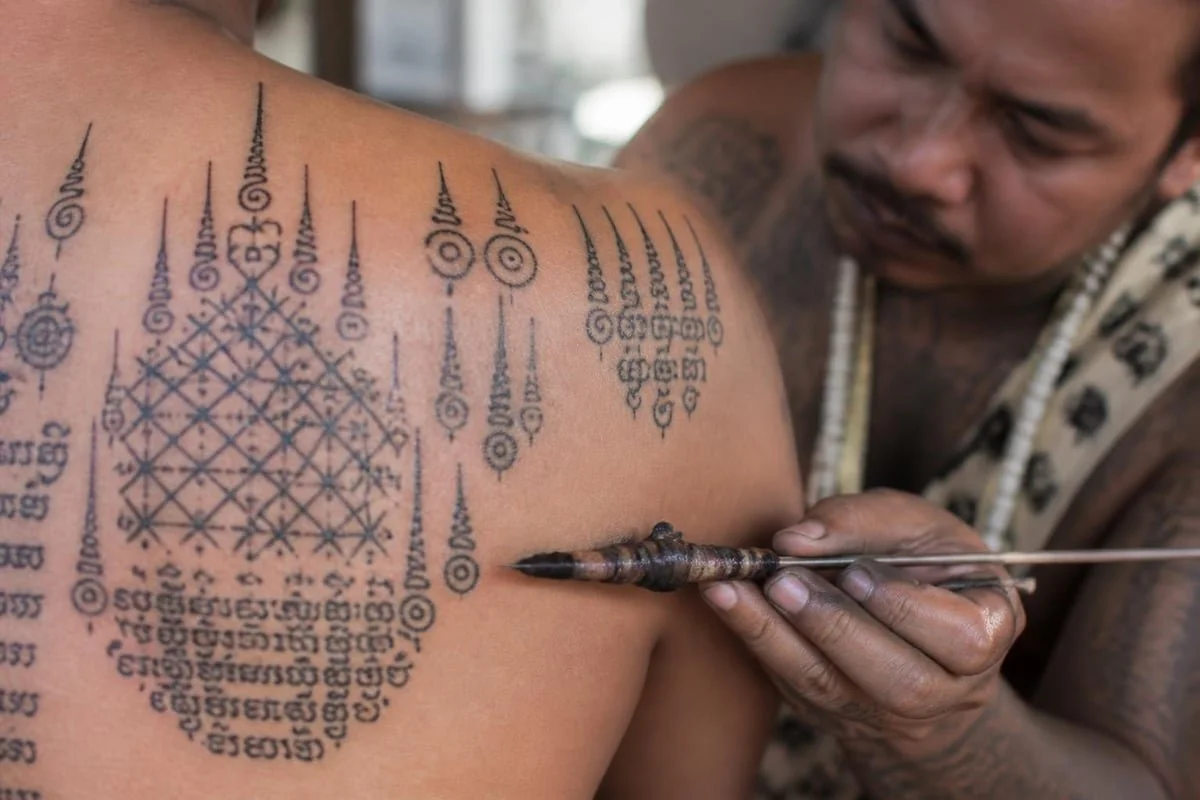
Sacred geometry in Sak Yant designs
Popular Sak Yant Designs and Their Meanings
Thai sak yant tattoos feature numerous designs, each carrying distinct meanings and purposes. The most sought-after patterns have become iconic symbols of Thai spiritual artistry.
Hah Taew (Five Lines)
The Hah Taew consists of five vertical lines of ancient script, each representing different blessings:
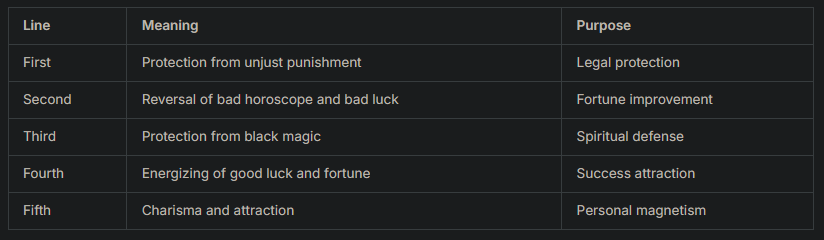
This design gained international fame when actress Angelina Jolie received it from a Thai ajarn in 2003, sparking widespread interest in authentic sak yant tattoos.
Gao Yord (Nine Spires)
The Gao Yord represents Mount Meru from Buddhist cosmology, featuring nine peaks arranged in a geometric pattern. This master yant symbolizes the center of the universe and offers comprehensive protection. The nine spires provide blessings for good fortune, protection from danger, and spiritual strength.
Paed Tidt (Eight Direction)
The Paed Tidt features eight directional points radiating from a central core, offering protection from harm coming from all directions. This design appeals to those seeking comprehensive spiritual armor against negative energies, accidents, and ill intentions.
Animal Yants
Animal designs harness specific characteristics and powers:
Suea (Tiger): Power, strength, fearlessness, and authority
Hongsa (Swan): Success, grace, and spiritual evolution
Khong (Monkey): Intelligence, agility, and cleverness
Nakhorn (Serpent): Wisdom, protection, and healing
Understanding the symbolism behind these tattoo designs helps ensure your choice aligns with your personal intentions and spiritual journey.
The Spiritual Dimensions and Sacred Protocols
Thai sak yant tattoos extend beyond decorative body art into the realm of sacred talismans. Traditional believers regard them as spiritual tools similar to Thai amulets, requiring respect and adherence to certain spiritual guidelines.
Activation and Empowerment
A sak yant tattoo receives its power through two primary elements:
The Master's Blessing: During application, the ajarn recites specific mantras and prayers that infuse the design with spiritual energy
The Wearer's Faith: Belief in the tattoo's protective qualities activates and maintains its power
Many recipients return annually for "recharging" ceremonies where the master re-blesses the tattoo, strengthening its spiritual potency.
Traditional Observances
Recipients of authentic thai sak yant tattoos traditionally follow certain behavioral guidelines, or "khor," to maintain the tattoo's effectiveness:
Respect parents and elders
Avoid speaking ill of others
Refrain from stealing or harming others
Maintain honesty and integrity
Avoid specific foods or behaviors (varies by master and design)
While not universally enforced, especially for modern recipients, understanding these traditions demonstrates respect for the cultural heritage.
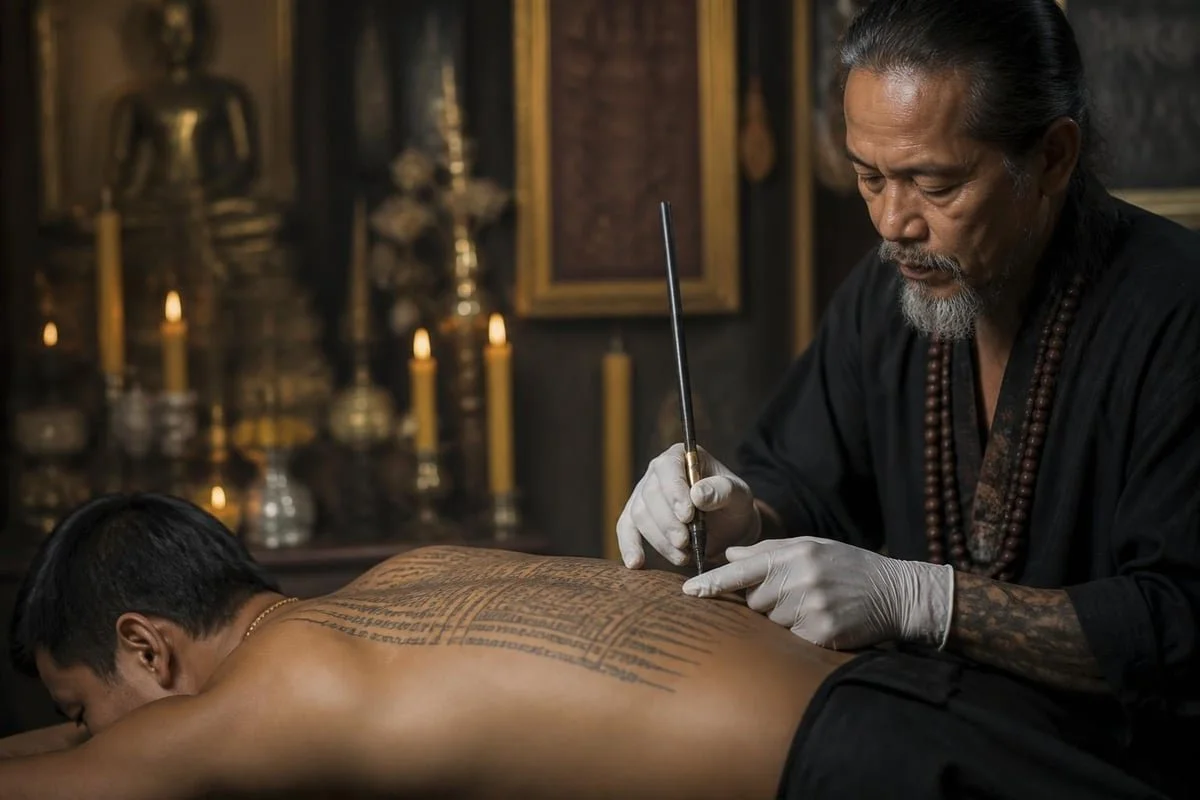
Contemporary Sak Yant experience
Modern Adaptations in Luxury Tattoo Studios
As thai sak yant tattoos have gained international popularity, the practice has evolved to meet contemporary expectations while preserving traditional elements. Professional luxury studios now offer sak yant designs that honor the sacred tradition with modern execution standards.
The Contemporary Approach
Modern interpretations maintain the spiritual essence while incorporating several key improvements:
Technical Excellence: Professional tattoo machines deliver cleaner lines and more consistent shading than traditional hand-poke methods, resulting in artwork that ages beautifully while maintaining intricate detail.
Hygiene Standards: Contemporary studios follow strict sterilization protocols, using single-use needles and medical-grade equipment that exceeds traditional temple safety measures.
Artistic Customization: Skilled artists can adapt traditional sak yant elements into personalized compositions that reflect individual stories while respecting sacred geometry principles.
Comfort and Experience: Luxury environments provide privacy, climate control, and professional aftercare guidance that enhance the overall experience without diminishing spiritual significance.
When choosing the right tattoo studio for your sak yant design, consider facilities that demonstrate both cultural knowledge and technical expertise.
Respecting Cultural Authenticity
The growing popularity of thai sak yant tattoos has raised important questions about cultural appropriation versus appreciation. Responsible engagement with this tradition requires:
Education: Learning about the meanings, history, and significance before getting a sak yant
Intention: Choosing designs that resonate with personal values rather than purely aesthetic appeal
Respect: Acknowledging the sacred nature and avoiding placement on inappropriate body areas
Quality: Working with artists who understand traditional compositions and symbolism
Understanding what happens during a professional tattoo session helps set appropriate expectations for receiving detailed sacred geometry work.
Placement Considerations and Design Selection
The location of thai sak yant tattoos carries significance both practically and spiritually. Traditional placements follow specific guidelines based on the design's purpose and the body's spiritual map.
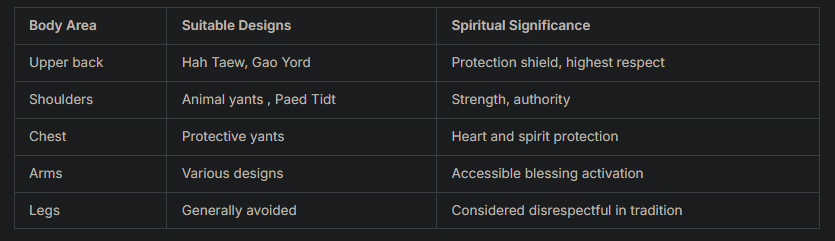
Modern interpretations allow more flexibility, though many choose to honor traditional placement principles. Consulting about tattoo placement for the perfect spot ensures your design suits both aesthetic preferences and cultural sensitivity.
Size and Complexity Considerations
Thai sak yant tattoos range from small, discrete designs to elaborate full-back compositions:
Small designs (3-5 inches): Single yants, simple geometric patterns, suitable for first-timers
Medium designs (6-10 inches): Animal yants, detailed Gao Yord, moderate complexity
Large designs (full back or chest): Master yants, combined patterns, comprehensive protection
The intricate nature of sacred geometry and ancient script requires skilled execution. Fine line and detailed tattoo work preserves the crisp clarity essential to sak yant aesthetics.
Preparing for Your Sak Yant Experience
Receiving a thai sak yant tattoo represents a significant personal journey that benefits from thoughtful preparation. Whether choosing traditional bamboo application or modern machine technique, several considerations ensure a meaningful outcome.
Research and Consultation
Begin by thoroughly researching sak yant meanings and selecting designs that align with your intentions. Authentic masters or knowledgeable artists can guide appropriate choices based on your circumstances and goals.
Key discussion points include:
Personal intentions and desired blessings
Design authenticity and traditional accuracy
Size, placement, and composition details
Artistic style preferences (traditional black or subtle enhancements)
Timeline and session structure
Understanding what to expect during your first tattoo session reduces anxiety and enhances the experience.
Physical and Mental Preparation
The detailed nature of sak yant work requires extended sitting sessions. Physical preparation includes:
Hydration: Well-hydrated skin accepts ink more readily
Rest: Adequate sleep supports pain tolerance and healing
Nutrition: Eating beforehand maintains blood sugar during long sessions
Skin condition: Ensuring clean, healthy skin in the tattoo area
Mental readiness: Approaching the experience with calm, focused intention
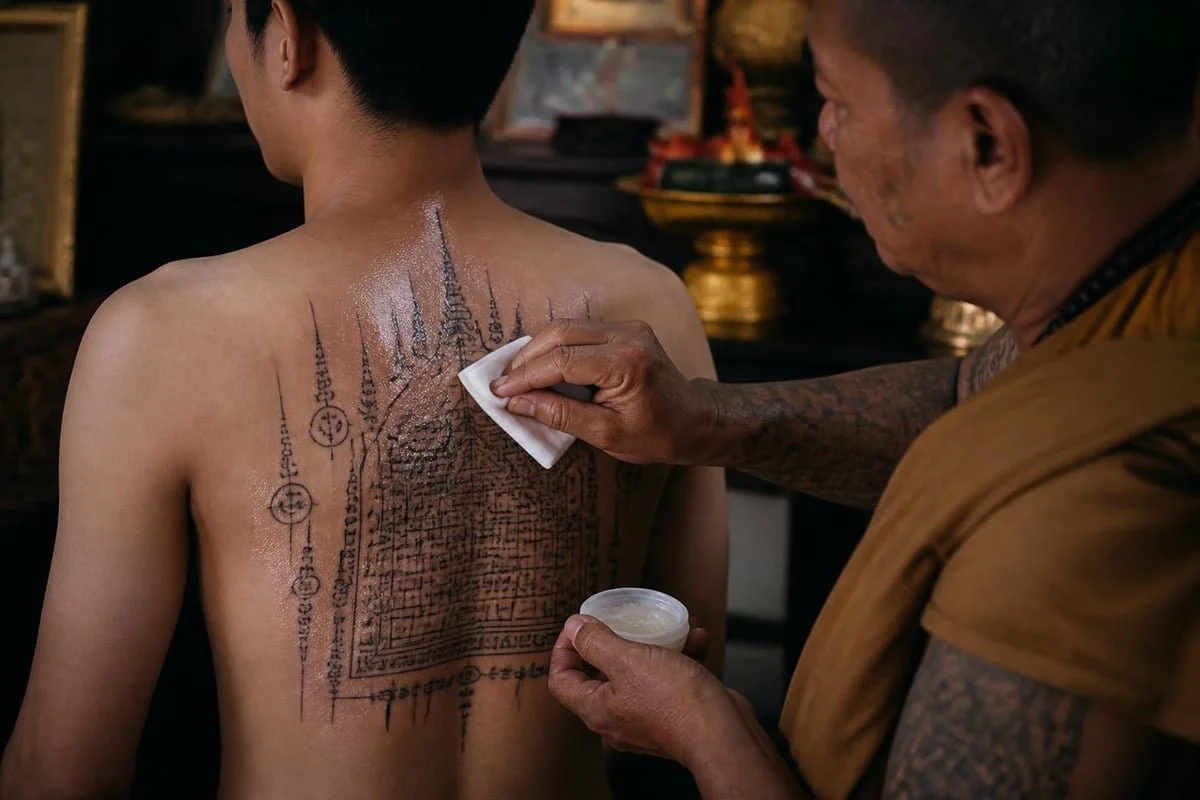
Sak Yant aftercare process
Aftercare for Sacred Geometry Work
The intricate linework and dense script in thai sak yant tattoos require meticulous aftercare to preserve detail and ensure proper healing. Professional aftercare practices protect both the artistic and spiritual investment in your tattoo.
Initial Healing Phase (Days 1-14)
Follow these essential steps for optimal healing:
Keep the area clean with fragrance-free antibacterial soap
Apply thin layers of recommended healing ointment 2-3 times daily
Avoid submerging in water (swimming, hot tubs, long baths)
Wear loose, breathable clothing over the tattoo
Resist picking or scratching at forming scabs
Stay out of direct sunlight during initial healing
The detailed nature of sak yant geometry makes proper care critical for maintaining crisp lines. Comprehensive guidance on understanding tattoo aftercare essentials ensures your sacred artwork heals beautifully.
Long-Term Maintenance
After initial healing, ongoing care preserves your sak yant's visual clarity and spiritual significance:
Sun Protection: UV exposure fades black ink over time. Apply high-SPF sunscreen to exposed tattoos, especially important for the intricate details in sacred geometry.
Moisturization: Regular application of quality, unscented lotion maintains skin health and tattoo vibrancy.
Touch-ups: Eventually, even well-maintained tattoos may benefit from minor touch-ups to refresh fine lines and restore original crispness.
Finding Authentic Artists and Studios
The surge in thai sak yant tattoo popularity has created a spectrum of practitioners, from traditionally trained masters to contemporary artists specializing in this style. Identifying qualified artists ensures both cultural authenticity and technical excellence.
Evaluation Criteria
When selecting an artist or studio for your sak yant tattoo, assess these factors:
Cultural Knowledge: Does the artist demonstrate understanding of traditional meanings, placement significance, and sacred protocol? Can they explain the symbolism in your chosen design?
Technical Skill: Review portfolios specifically for sak yant work. Examine line quality, symmetry, and the crispness of geometric patterns and script.
Studio Standards: Professional facilities maintain stringent hygiene protocols, use modern sterilization equipment, and provide comfortable, private spaces.
Client Communication: Quality artists invest time in consultation, ensuring design choices align with your intentions while respecting traditional principles.
Resources on choosing a qualified tattoo artist provide additional guidance for making informed decisions.
Traditional Versus Contemporary Settings
You may choose between receiving your sak yant from a traditional ajarn in a temple setting or from a professional artist in a luxury studio. Each offers distinct advantages:
Traditional Temple Experience:
Direct connection to spiritual lineage
Authentic bamboo application method
Blessing ceremony included
Variable hygiene standards
Limited design customization
Professional Studio Experience:
Superior technical execution and detail
Medical-grade hygiene protocols
Customizable artistic interpretation
Comfortable, private environment
Comprehensive aftercare support
Neither approach is inherently superior. Your choice depends on whether spiritual authenticity or technical perfection holds greater priority for your personal journey.
The Global Influence and Contemporary Significance
Thai sak yant tattoos have transcended their Southeast Asian origins to become globally recognized symbols of spiritual protection and cultural appreciation. This expansion has brought both opportunities and challenges to preserving authentic tradition.
Celebrity Influence and Popular Culture
High-profile celebrities including Angelina Jolie, Brad Pitt, and various professional athletes have prominently displayed their sak yant tattoos, introducing millions to this sacred art form. This visibility has generated tremendous interest while also raising concerns about commodification and superficial engagement.
The cultural impact of traditional Thai tattoo practices extends beyond individual artwork to influence broader tattoo culture worldwide, inspiring greater appreciation for meaning-driven designs.
Muay Thai and Warrior Traditions
Thai sak yant tattoos maintain particularly strong connections to Muay Thai, Thailand's national combat sport. Fighters traditionally receive protective yants before major competitions, seeking courage, invulnerability, and strategic advantage. This relationship between sak yant and Muay Thai culture continues to influence both practices today.
Ethical Considerations and Cultural Sensitivity
The increasing commercialization of thai sak yant tattoos raises important ethical questions:
Commercialization: Should sacred religious symbols be marketed as trendy body art?
Appropriation: Can non-Buddhists respectfully engage with these deeply spiritual practices?
Authenticity: What constitutes "real" sak yant in modern contexts?
Accessibility: How can tradition adapt without losing essential meaning?
Thoughtful engagement requires balancing personal expression with cultural respect. Learning about sacred yantra patterns and their restrictions demonstrates commitment to honoring the tradition rather than merely appropriating its aesthetics.
Integration with Modern Tattoo Styles
Contemporary tattoo artists have begun incorporating sak yant elements into fusion designs that blend traditional sacred geometry with other artistic styles. This creative evolution offers new possibilities while raising questions about maintaining spiritual integrity.
Fusion Approaches
Skilled artists can integrate sak yant elements with:
Fine Line Work: Combining delicate contemporary line techniques with traditional geometry
Dotwork: Using stippling methods to create subtle sacred patterns
Geometric Modernism: Blending ancient yant structures with contemporary geometric design
Script Integration: Incorporating Khom or Sanskrit text into personalized compositions
Exploring various tattoo styles reveals how traditional elements can enhance modern artwork when executed thoughtfully.
Maintaining Spiritual Essence
Successful fusion work preserves the core spiritual intention while allowing artistic innovation. This requires:
Understanding the traditional form and meaning
Respecting essential geometric proportions and sacred arrangements
Maintaining clarity and precision in execution
Creating compositions that honor rather than dilute the original significance