Tattoo With Face: Everything You Need to Know in 2026
A tattoo with face placement represents one of the most bold and permanent forms of self-expression in body art. Whether it involves placing ink directly on the facial area or incorporating facial imagery into a design, this choice carries significant weight in both personal and professional spheres. As facial tattoos have gained mainstream visibility through celebrities, artists, and cultural movements, more individuals are considering this dramatic form of body modification. Understanding the implications, cultural context, and artistic possibilities becomes essential before making such a life-changing decision.
Understanding the Cultural Significance of Facial Tattoos
Facial tattoos carry deep cultural significance across various communities, from the traditional Māori tā moko to indigenous practices spanning continents. These markings historically served as identifiers of status, lineage, achievements, and spiritual connections within societies.
Traditional Versus Modern Context
In many indigenous cultures, a tattoo with face placement functions as a sacred rite of passage rather than mere decoration. The historical and contemporary meanings vary dramatically depending on geographic location and cultural traditions.
Traditional facial tattoo purposes:
Marking tribal affiliation and family lineage
Demonstrating social status or warrior achievements
Protecting against evil spirits
Celebrating coming-of-age ceremonies
Displaying personal accomplishments
Contemporary facial tattoos often disconnect from these traditional meanings, focusing instead on aesthetic preferences, rebellion against social norms, or personal symbolism. Understanding this distinction helps contextualize the decision within your own cultural framework.
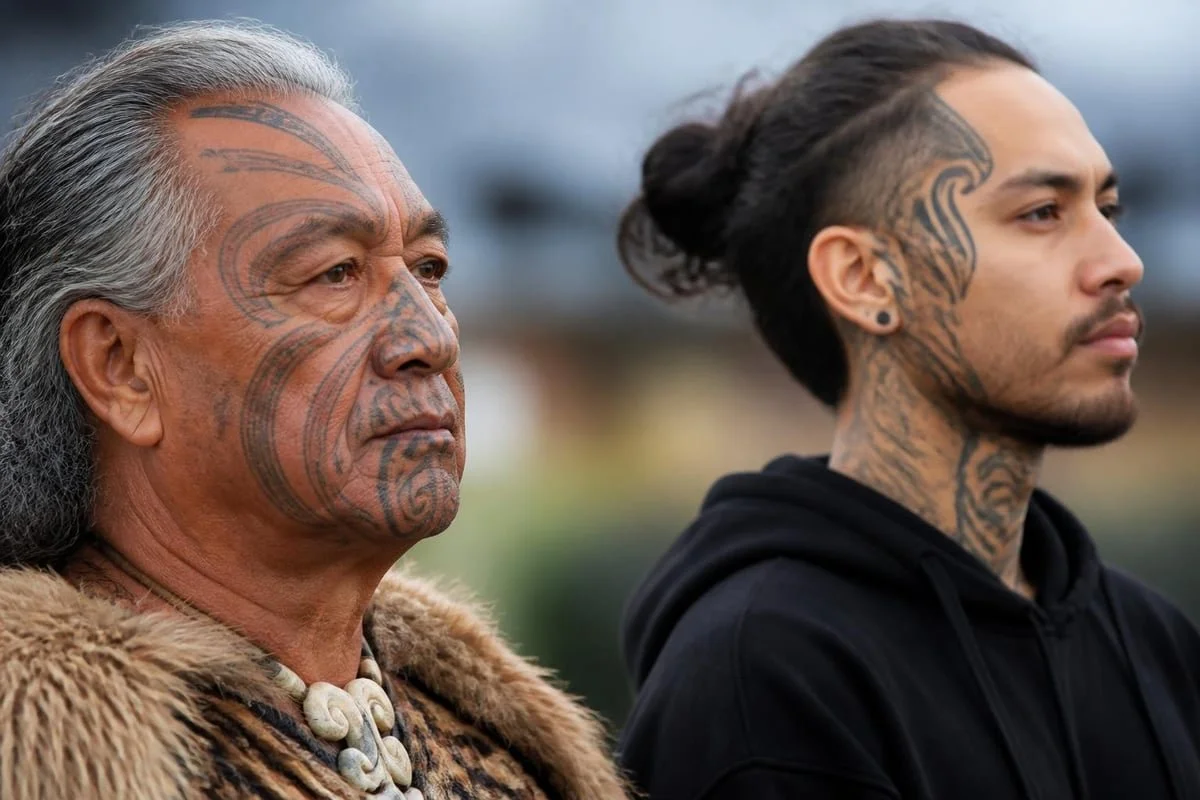
Cultural evolution of facial tattoo
Types of Tattoo With Face Designs
When considering facial ink, the design categories span from subtle to dramatic. Each approach carries different visual impacts and social implications.
Placement Options and Their Impact
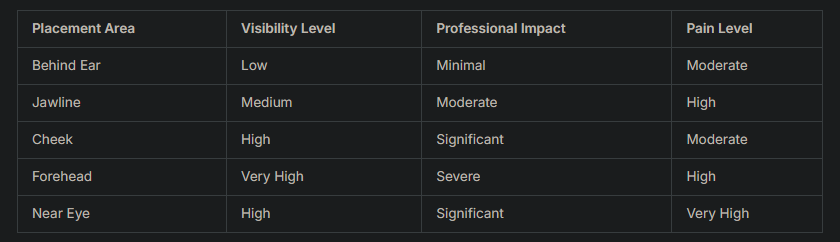
Significant
Very High
Small, delicate designs behind the ear or along the hairline offer discretion while maintaining the uniqueness of facial placement. These subtle approaches work particularly well with fine line and detailed tattoo designs, allowing for intricate patterns without overwhelming visibility.
Portrait and Face Imagery Tattoos
Beyond tattooing directly on the face, many clients choose portraits or facial imagery as design elements for other body areas. These memorial pieces, artistic interpretations, or cultural icons require exceptional technical skill to execute properly.
Considerations for portrait tattoos:
Artist specialization in realism and facial proportions
High-quality reference photographs
Adequate size for detail capture
Proper placement for natural viewing angles
Long-term aging and touch-up requirements
When selecting an artist for facial imagery work, expertise matters significantly. Choosing the right tattoo artist ensures your vision translates accurately onto skin.
Medical and Health Considerations
The facial area presents unique medical challenges compared to other body parts. Skin thickness varies, nerve density increases sensitivity, and proximity to sensory organs requires extra precaution.
Potential Health Risks
Understanding potential side effects and risks becomes critical when considering facial placement. The face contains more nerve endings and thinner skin than most body areas, potentially increasing discomfort during application.
Specific facial tattoo risks:
Increased swelling and bruising
Higher infection potential near mucous membranes
Allergic reactions more visible and concerning
Keloid scarring on visible areas
Delayed healing in high-movement zones
The health risks of tattoos multiply when working near eyes, nose, and mouth. Professional studios implement strict hygiene protocols, but client responsibility in aftercare determines ultimate success.
Aftercare Challenges for Facial Tattoos
Facial skin requires specialized aftercare protocols. Constant movement through talking, eating, and facial expressions complicates the healing process compared to stationary body parts.
Initial 24-48 hours: Keep the area clean using gentle, fragrance-free cleansers
First week: Apply thin layers of recommended ointment without over-moisturizing
Weeks 2-4: Transition to fragrance-free lotion as peeling occurs
Ongoing: Protect from sun exposure with high-SPF sunscreen
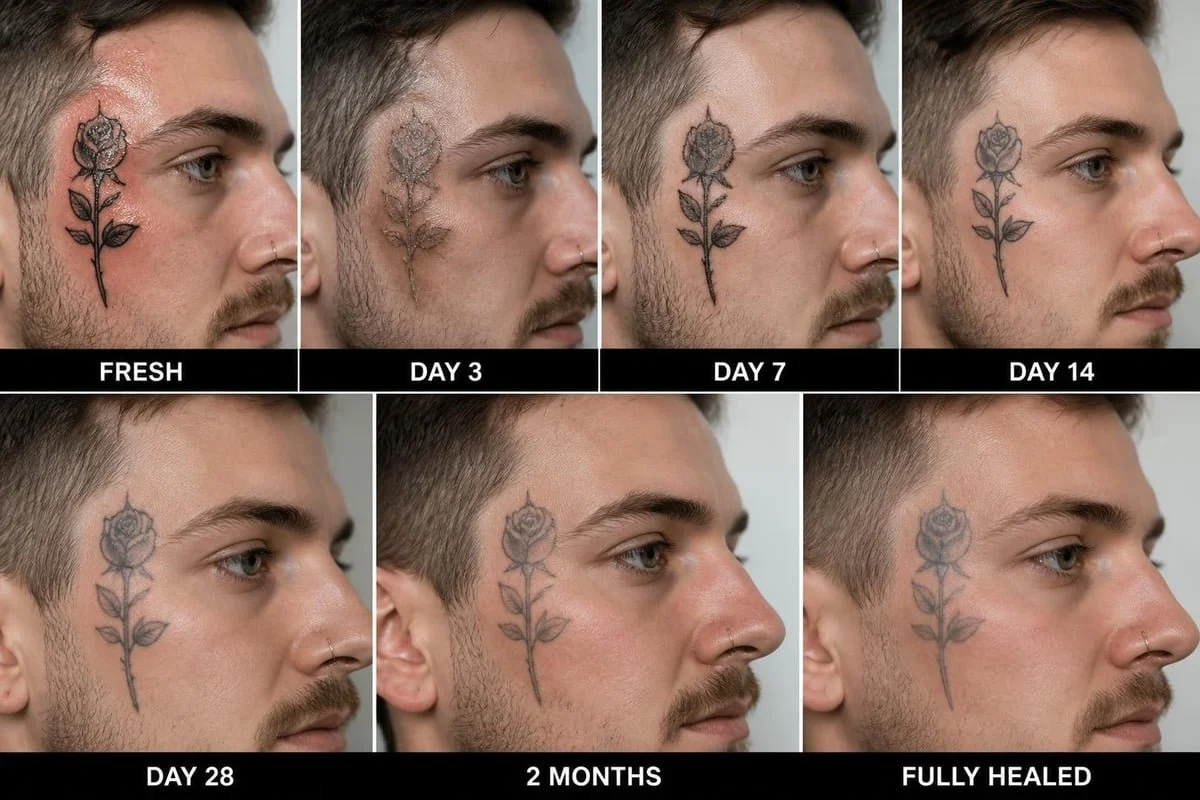
Facial tattoo healing stages
Following proper tattoo aftercare essentials prevents complications and preserves artwork quality. Facial placement demands even more vigilance than standard body tattoos.
Social and Professional Implications
A tattoo with face placement carries undeniable social consequences in 2026, despite growing acceptance of body art. Professional environments, cultural contexts, and personal relationships all factor into this decision.
Employment Considerations
Many industries maintain conservative appearance policies that exclude visible facial tattoos. While attitudes continue evolving, certain sectors remain restrictive.
Industries with facial tattoo restrictions:
Corporate finance and banking
Traditional legal practices
Healthcare and medicine
Education and childcare
Customer-facing retail management
Government and military positions
Creative industries, technology sectors, and entrepreneurial ventures generally demonstrate more acceptance. However, individual company policies vary significantly within these fields.
Social Perception and Relationships
Research on face tattoos as a form of self-expression reveals the delicate balance between personal statement and social acceptance. Family dynamics, romantic relationships, and community interactions may shift following facial tattoo acquisition.
Before committing to facial ink, consider:
Long-term relationship goals and partner preferences
Family cultural values and potential conflicts
Geographic location and local social norms
Future aspirations and lifestyle changes
Removal or cover-up limitations
The permanence of a tattoo with face placement exceeds other body locations due to removal challenges and cover-up difficulties. What to consider before you commit extends beyond aesthetic preferences into life trajectory planning.
Design Selection and Artist Collaboration
Choosing the appropriate design for facial placement requires careful consideration of scale, style, and symbolic meaning. This permanent addition to your most visible feature deserves thorough planning.
Size and Scale Considerations

Smaller designs offer more professional flexibility while maintaining the uniqueness of facial placement. Larger pieces make bold statements but severely limit concealment options.
Working With Specialized Artists
Not every tattoo artist accepts facial work. Many professionals refuse these commissions due to ethical concerns about long-term client wellbeing and professional reputation impacts.
Finding an artist willing to execute facial tattoos requires:
Extensive portfolio review showing facial work
Multiple consultations to ensure commitment
Psychological readiness assessment
Legal documentation and extended consent forms
Potential waiting periods for reflection
Choosing the perfect tattoo artist involves verifying their experience with facial anatomy and fine detail work. Studios specializing in precision work, like those offering luxury tattoo experiences, bring technical expertise crucial for facial placement success.
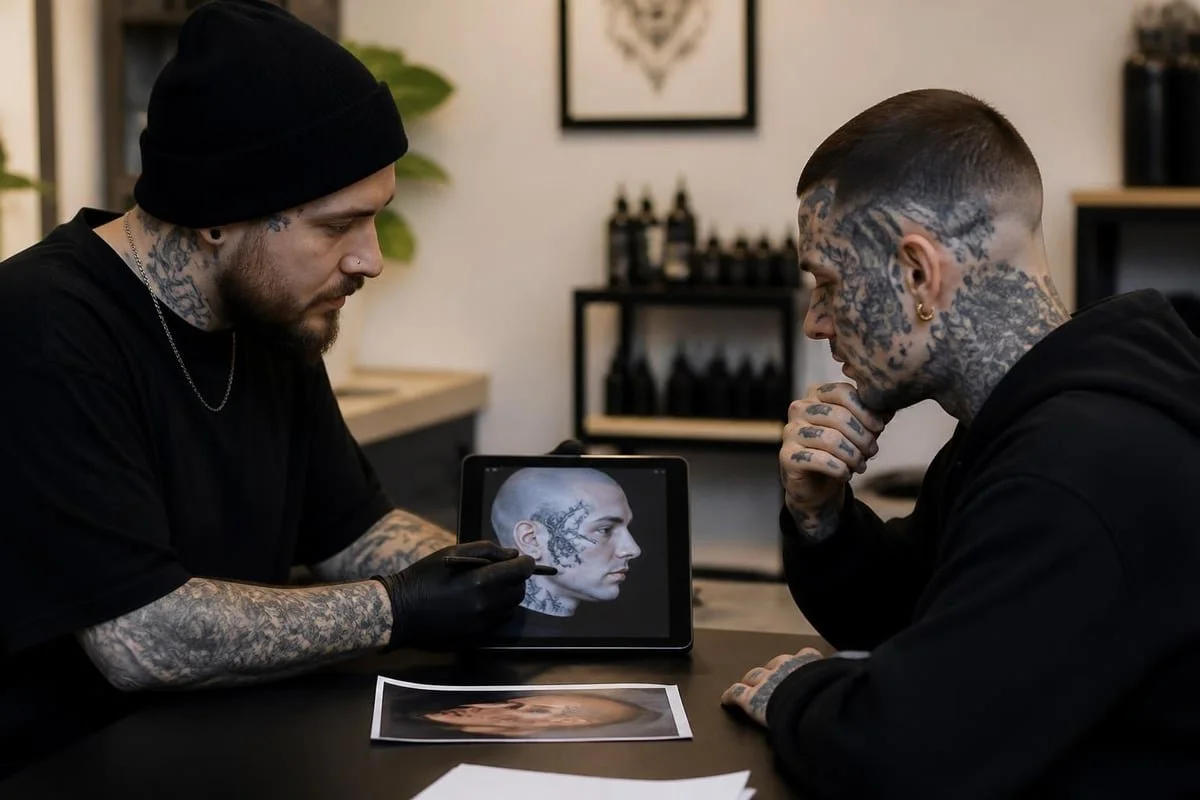
Facial tattoo consultation process
Pain Management and Session Expectations
Facial tattoos generally rank among the more painful body modification experiences due to thin skin, bone proximity, and dense nerve networks. Understanding pain levels helps set realistic expectations.
Pain Levels by Facial Area
Different facial zones produce varying discomfort levels during tattooing. Bone proximity significantly influences pain intensity.
High pain zones:
Directly over cheekbones
Temple regions
Areas near eyes
Jawbone and chin
Moderate pain zones:
Fleshy cheek areas
Below ears
Neck transition areas
Knowing what happens during a tattoo session helps prepare mentally and physically for the experience. Facial work typically requires shorter sessions with more frequent breaks due to intensity.
Session Duration and Recovery
Most facial tattoos complete in single sessions unless incorporating extensive coverage. Small designs finish within 30-90 minutes, while larger pieces may require 2-4 hours.
Recovery timelines for a tattoo with face placement:
Days 1-3: Maximum swelling, potential bruising, social discomfort
Days 4-7: Peeling begins, itching intensifies, reduced swelling
Weeks 2-3: Surface healing completes, color settling occurs
Months 1-3: Deep tissue healing finalizes, true color reveals
The facial area heals relatively quickly due to rich blood supply, but visible location makes the process more socially challenging than hidden placements.
Alternative Options and Gradual Approaches
Those uncertain about permanent facial ink can explore alternative pathways before making irreversible commitments.
Testing the Waters
Temporary options allow experimentation with facial aesthetics without lifetime commitment:
High-quality temporary tattoos lasting 1-2 weeks
Henna applications for natural, fading designs
Makeup techniques creating tattoo illusions
Facial piercings as removable modifications
Digital photo editing to visualize potential designs
Starting with less visible placements like behind-the-ear locations provides experience with facial tattoo maintenance while maintaining professional flexibility.
Progressive Commitment Strategy
Rather than immediately choosing bold facial placement, consider a gradual approach:
Begin with easily concealable neck or behind-ear designs
Progress to small, subtle facial elements
Evaluate professional and social impacts
Expand coverage only after confirming comfort levels
Reserve prominent placement for established lifestyle compatibility
This methodical progression allows assessment of rare but real health risks while building confidence in your decision.
Technical Considerations for Face Recognition
Modern technology adds another dimension to facial tattoo decisions. Facial recognition systems increasingly influence daily life, from smartphone unlocking to security checkpoints.
Research on facial tattoos and face recognition systems demonstrates that extensive facial ink can interfere with automated identification technologies. While not universally problematic, this factor deserves consideration for frequent travelers or those relying on biometric security.
Potential technical impacts:
Smartphone face unlock complications
Airport security delays
Banking biometric verification issues
Social media auto-tagging disruptions
Law enforcement identification challenges
These concerns particularly affect designs near eyes, across cheekbones, or covering significant facial real estate. Minimal, subtle placements generally avoid technological complications.
Color Selection and Longevity
Facial skin presents unique challenges for color retention and long-term tattoo appearance. Sun exposure, facial movement, and skin type all influence how designs age.
Color Choices for Facial Tattoos

Black and gray work generally ages better on facial skin than vibrant colors. Understanding the best colors for your tattoo helps make informed decisions about long-term appearance.
Aging and Touch-Up Requirements
Facial tattoos require more frequent touch-ups than body placements due to constant sun exposure and skin movement. Budgeting for maintenance ensures designs remain crisp throughout years.
Expected touch-up schedule:
Years 1-5: Minimal maintenance unless significant sun exposure
Years 5-10: First major touch-up for color refresh
Years 10+: Regular touch-ups every 3-5 years depending on design
Protecting facial tattoos from sun damage through daily SPF application significantly extends time between touch-ups and preserves design integrity.
Making the Final Decision
Committing to a tattoo with face placement requires comprehensive evaluation of personal, professional, and practical factors. This decision impacts daily life more significantly than any other body modification.
Questions to Ask Yourself
Before scheduling your facial tattoo appointment, honestly answer these critical questions:
Can I accept potential professional limitations in my career field?
Have I thoroughly researched removal options and costs if I change my mind?
Do I understand the cultural context of my chosen design?
Am I financially prepared for proper aftercare and potential touch-ups?
Have I waited sufficient time to ensure this isn't an impulsive decision?
Does my support system understand and accept this choice?
Am I prepared for increased attention and judgment from strangers?
Taking time to reflect on these considerations prevents regrettable decisions. Many reputable studios require waiting periods specifically for facial work, allowing clients to confirm their commitment.
Selecting the Right Studio
Premium tattoo studios offering luxury experiences provide the expertise, hygiene standards, and artistic skill essential for facial work. The importance of choosing the right studio multiplies when working on your most visible feature.
Evaluate potential studios based on:
Specialized experience with facial tattoos
Portfolio demonstrating fine detail work
Client testimonials specifically about facial pieces
Hygiene certifications and safety protocols
Consultation thoroughness and artist communication
Aftercare support and follow-up services
Studios specializing in fine line work bring precision crucial for facial applications where every detail remains constantly visible. Bangkok's luxury tattoo scene offers world-class artists trained in techniques ideal for delicate facial designs.