Flower Tattoo on Hand: Design Guide & Care Tips 2026
A flower tattoo on hand represents one of the most visible and expressive forms of body art available today. Hand tattoos have surged in popularity throughout 2026, with floral designs leading the trend due to their versatility, aesthetic appeal, and rich symbolic meanings. Unlike tattoos placed on more concealed areas, a hand tattoo serves as a constant statement piece that demands careful consideration regarding design, placement, and long-term commitment. Whether you're drawn to delicate cherry blossoms, bold roses, or intricate lotus patterns, understanding the unique challenges and opportunities of hand placement ensures your floral artwork remains stunning for years to come.
Why Choose Hand Placement for Floral Tattoos
Hand tattoos occupy a unique position in tattoo culture, offering maximum visibility while presenting specific challenges that differ significantly from other body locations. The decision to place a flower tattoo on hand requires thoughtful consideration of both aesthetic and practical factors.
Visibility serves as the primary advantage of hand placement. Your tattoo remains visible in most professional and social situations, creating a permanent accessory that complements your personal style. This constant visibility makes hand tattoos particularly appealing for individuals who want their body art to form an integral part of their identity.
Professional and Social Considerations
Before committing to a flower tattoo on hand, evaluate your career trajectory and industry norms. While tattoo acceptance has grown significantly across professional environments in 2026, certain industries maintain conservative appearance standards.
Corporate finance and traditional law firms often require concealed tattoos
Creative industries, hospitality, and tech sectors generally embrace visible body art
Medical and healthcare positions vary by institution and regional culture
Education roles depend on grade level and school district policies
Research from the Indian Journal of Dermatology indicates that placement visibility correlates strongly with both satisfaction and regret rates among tattoo recipients, making professional consideration essential before choosing hand placement.

Carrier and lifestyle factors for hand tattoo decisions
Pain and Healing Characteristics
Hand skin contains numerous nerve endings and minimal fat cushioning, making the tattooing process more intense than areas with greater muscle or fat coverage. The top of the hand, knuckles, and finger sides register higher on the pain scale compared to the palm-side fingers or wrist areas.
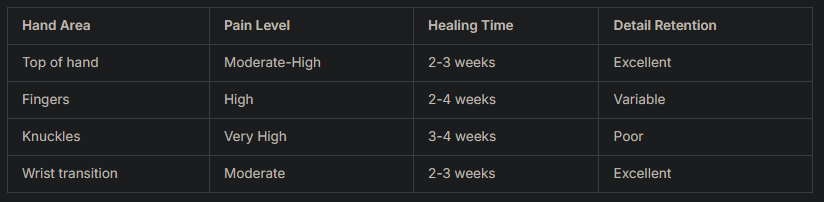
Hand tattoos require diligent aftercare due to constant use and exposure. Understanding what happens during a tattoo session helps prepare you mentally and physically for the experience.
Popular Floral Designs for Hand Tattoos
Floral imagery offers endless variation, from minimalist single-stem designs to elaborate botanical compositions. The key to successful hand placement involves selecting designs that complement the hand's natural contours and movement.
Delicate Fine-Line Flowers
Fine-line floral tattoos have dominated luxury tattoo studios throughout 2026, particularly for hand placement. These designs feature thin, precise lines that create elegant, understated artwork suitable for clients seeking refined aesthetics.
Rose designs remain perennially popular, symbolizing love, beauty, and passion. Fine-line roses on the top of the hand can extend from wrist to knuckles, with petals following the hand's natural curves. Single rose designs work beautifully on individual fingers or the thumb side of the hand.
Cherry blossoms represent transience and beauty in Japanese culture. These delicate flowers translate exceptionally well to hand placement, with small clusters creating ethereal compositions. The lightweight nature of cherry blossom designs prevents overwhelming smaller hands while maintaining visual impact.
Lotus flowers carry deep spiritual significance across Asian cultures, symbolizing purity, enlightenment, and rebirth. A flower tattoo on hand featuring a lotus can be positioned centrally on the hand's top or wrapped around the wrist, extending onto the hand. The symbolism behind tattoo designs explores how cultural meanings enhance personal significance.
Bold and Colorful Options
While fine-line work dominates hand tattoo trends, bold colorful florals create striking statements for clients seeking maximum impact. Color choices significantly affect the tattoo's longevity and visibility on hands due to sun exposure and frequent washing.
Peonies offer lush, dimensional possibilities with their layered petals
Sunflowers provide vibrant yellow tones that symbolize positivity and strength
Hibiscus flowers deliver tropical aesthetics with bold color saturation
Wildflower medleys combine multiple species for eclectic, nature-inspired designs
Color retention on hands varies based on pigment choice and skin tone. Learning about the best colours for your tattoo helps ensure your floral design maintains its vibrancy.
Strategic Placement Options
The hand's complex anatomy offers multiple placement zones, each creating different visual effects and presenting unique challenges for both artist and client.
Top of Hand Coverage
Full or partial top-of-hand coverage represents the most popular choice for a flower tattoo on hand. This placement provides ample canvas space for detailed compositions while remaining highly visible.
Centered medallion designs position a primary floral element in the hand's center, with optional extensions toward fingers or wrist. This approach creates balanced, symmetrical artwork that draws the eye naturally.
Asymmetrical flowing designs follow the hand's natural lines and tendons, creating organic movement. Vines, stems, and trailing flowers can wrap around the hand's contours, emphasizing graceful hand gestures.
Finger and Knuckle Placement
Individual finger tattoos require specialized techniques due to limited space and high friction. Small floral elements on finger sides or tops create delicate accents, though these areas experience faster fading than the hand's top.
Single small flowers on ring or middle fingers
Vine wrapping around multiple fingers
Matching floral elements across both hands
Knuckle letters framed by small botanical details
Finger tattoos demand more frequent touch-ups than other placements. Understanding tattoo placement considerations ensures realistic expectations about maintenance requirements.
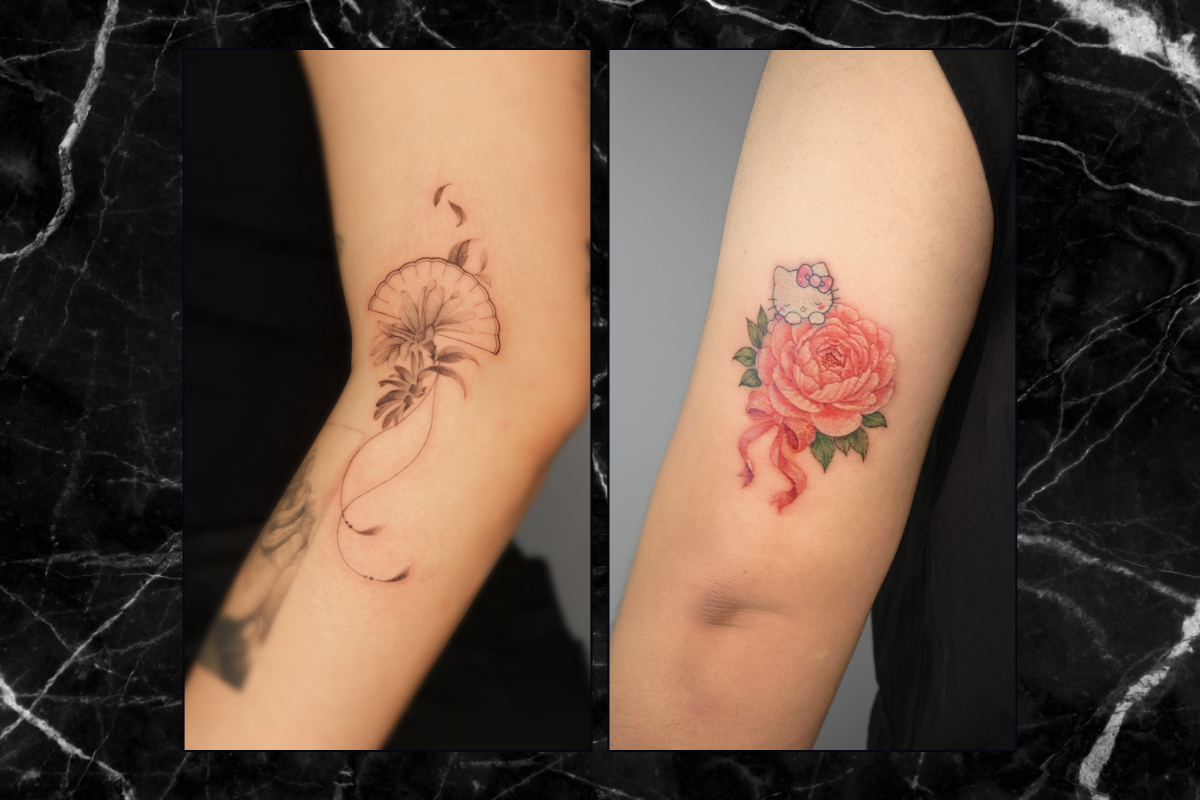
Hand tattoo placement zones
Wrist-to-Hand Transitions
Designs flowing from wrist onto the hand create cohesive, extended compositions that leverage both areas' advantages. The wrist offers more stable skin for intricate details, while hand placement provides visibility.
Bracelet-style designs encircle the wrist with floral elements extending onto the hand's top like trailing vines. This approach works particularly well for flower arm tattoo concepts that continue upward.
Technical Considerations for Hand Tattoos
Hands present unique technical challenges that require experienced artists specializing in detailed work. The skin's texture, constant movement, and accelerated aging affect both the tattooing process and long-term appearance.
Skin Characteristics and Ink Retention
Hand skin differs substantially from other body areas due to constant exposure, frequent washing, and minimal subcutaneous fat. These factors influence how ink settles and ages within the dermal layer.
Ink dispersal occurs more readily in hand skin due to increased cell turnover and sun exposure. Quality pigments and proper depth application by skilled artists minimize this effect, though some fading remains inevitable.
Touch-up requirements for a flower tattoo on hand typically occur within 1-2 years for color work and 3-5 years for black ink. Frequent hand washing, sanitizer use, and sun exposure accelerate fading compared to protected body areas.
The NHS guidance on tattoos emphasizes proper healing protocols, particularly for high-use areas like hands.
Artist Expertise Requirements
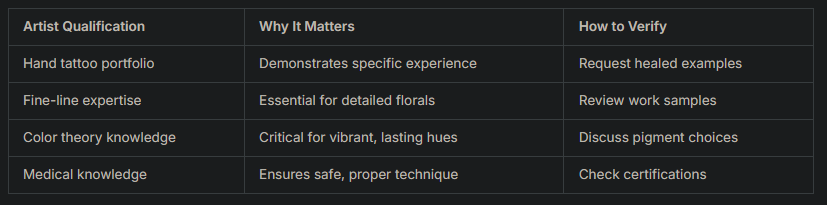
Not all tattoo artists possess the specialized skills required for successful hand tattoos. Fine-line work on hands demands steady technique, understanding of skin behavior, and experience with challenging placements.
When choosing the right tattoo studio, prioritize establishments with demonstrated hand tattoo portfolios. Review healed work, not just fresh tattoos, to assess an artist's long-term results.
Aftercare for Hand Tattoos
Proper aftercare significantly impacts healing quality and long-term appearance. Hands pose unique aftercare challenges due to constant use, making disciplined care protocols essential.
Initial Healing Phase
The first two weeks determine your tattoo's foundation quality. During this critical period, your flower tattoo on hand requires meticulous attention to prevent infection, promote proper healing, and establish optimal color retention.
Cleaning protocols for hand tattoos require increased frequency compared to other placements. Wash gently with fragrance-free antibacterial soap 4-5 times daily, particularly after using restrooms, handling food, or touching potentially contaminated surfaces.
Pat dry with clean paper towels, never rubbing
Apply thin moisturizer layer 3-4 times daily
Avoid submerging in water (no swimming, prolonged baths)
Keep hands away from face to prevent bacteria transfer
Detailed guidance on understanding tattoo aftercare essentials provides comprehensive protocols for optimal healing.
Long-Term Maintenance
Beyond initial healing, hand tattoos require ongoing maintenance to preserve appearance and vibrancy. Sun protection represents the single most important long-term care factor.
Daily SPF application prevents premature fading and color degradation. Apply broad-spectrum SPF 30 or higher to hand tattoos whenever spending time outdoors, reapplying every two hours during extended sun exposure.
Moisturization maintains skin health and tattoo clarity. Quality, fragrance-free lotions applied twice daily keep skin supple and ink vibrant. Dry, cracked skin distorts tattoo appearance and accelerates fading.
Health considerations matter long-term as well. Recent research reviewed by Harvard Health Publishing examines potential health connections, though evidence suggests proper aftercare and reputable studios minimize risks.
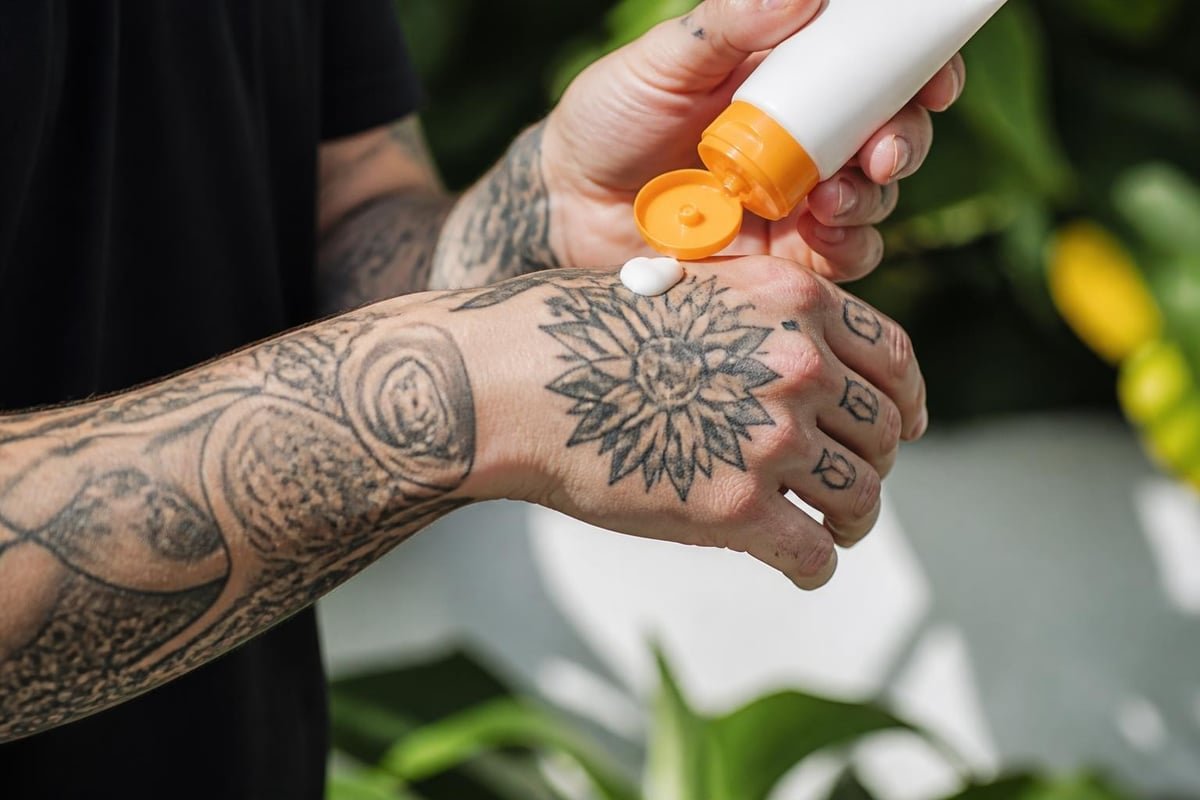
Daily hand care tattoo routine
Design Customization and Personal Meaning
The most successful flower tattoos on hands combine aesthetic appeal with personal significance. Working collaboratively with your artist ensures your design reflects individual meaning while maintaining technical excellence.
Incorporating Symbolic Elements
Flowers carry diverse meanings across cultures, allowing rich personalization opportunities. Selecting blooms that resonate with your experiences, values, or aspirations adds depth beyond visual beauty.
Birth flowers represent an increasingly popular choice, connecting tattoos to personal identity through birth month symbolism. January's carnations, May's lily of the valley, or October's marigolds create meaningful connections while offering distinct aesthetic qualities.
Cultural significance adds layers of meaning. Understanding traditional symbolism enriches your design's personal narrative, whether drawing from Victorian flower language, Asian botanical traditions, or indigenous plant meanings.
Scale and Proportion Considerations
Hand size and structure significantly influence design success. Proportional awareness ensures your flower tattoo on hand enhances rather than overwhelms your natural features.
Larger hands accommodate more complex compositions with multiple elements, shading variations, and intricate details. Full top-of-hand coverage with elaborate floral scenes works well for those with broader, longer hands.
Smaller or more delicate hands benefit from simplified designs featuring single focal flowers, minimal background elements, and strategic negative space. Fine-line techniques particularly suit smaller hands, creating elegant impact without visual congestion.
Color Theory for Floral Hand Tattoos
Color selection dramatically affects your tattoo's visual impact, longevity, and compatibility with your skin tone. Understanding pigment behavior on hands helps ensure satisfying long-term results.
Pigment Durability on Hands
Hand placement challenges certain colors more than others due to sun exposure and friction. Selecting durable pigments designed for high-exposure areas extends your tattoo's vibrancy between touch-ups.
Black and gray work demonstrates exceptional longevity on hands. Traditional black ink maintains clarity and contrast longer than most colors, making it ideal for clients prioritizing low-maintenance artwork.
Earth tones including browns, deep greens, and muted oranges show superior hand durability compared to bright primary colors. These hues complement natural skin tones while resisting sun-induced fading.
Vibrant colors require realistic maintenance expectations. Reds, purples, and yellows create stunning initial impact but typically need refreshing within 12-18 months to maintain saturation. Guidance on tattoo colours for skin tones helps optimize color choices.
Seasonal and Lighting Considerations
Hand tattoos exist in constantly changing lighting conditions throughout daily activities. Color choices should remain visually appealing across varied environments and seasonal light qualities.
Consider how your design appears in office fluorescent lighting, natural outdoor sun, evening artificial light, and varying seasonal conditions. Testing color combinations on temporary applications helps visualize real-world appearance before permanent commitment.
Managing Expectations and Potential Regret
Hand tattoos carry higher visibility and permanence than most placements, making realistic expectation-setting crucial for long-term satisfaction.
Social and Professional Evolution
Life circumstances change over decades. A flower tattoo on hand chosen at 25 may face different professional contexts at 45. While societal acceptance continues expanding, considering long-term scenarios prevents future conflict.
Career transitions may introduce unexpected visibility concerns. Even tattoo-friendly industries can have client-facing roles or leadership positions with different expectations. Planning for potential scenarios helps ensure sustained satisfaction.
Relationship changes and personal evolution affect symbolic tattoos differently. Floral designs generally carry universal appeal without specific personal references, making them relatively safe long-term choices compared to names or relationship-specific imagery.
Removal Considerations
While choosing a flower tattoo on hand should involve commitment to permanence, understanding removal options provides realistic perspective. The American Academy of Dermatology explains that hand tattoos present removal challenges due to thinner skin and proximity to bones, requiring more sessions and carrying higher complication risks than other areas.
Laser removal effectiveness varies by ink color, with black showing best results and certain colors proving resistant. Multiple sessions spaced weeks apart gradually fade tattoos, though complete removal remains difficult, particularly for color work.
Cover-up alternatives offer options for tattoos that no longer align with personal preferences. Skilled artists can incorporate existing hand tattoos into new designs, though hand placement limits cover-up possibilities compared to larger body areas. Information on covering scars with tattoos demonstrates similar reworking principles.
Preparing for Your Hand Tattoo Session
Thorough preparation enhances comfort, improves healing outcomes, and ensures optimal artistic results. Understanding session expectations reduces anxiety while promoting productive artist collaboration.
Pre-Session Requirements
Your artist will provide specific pre-session instructions, typically including hydration, adequate sleep, and proper nutrition before your appointment. These factors directly affect pain tolerance and healing capacity.
Avoid blood thinners including alcohol, aspirin, and certain supplements for 24-48 hours before your session. Blood thinning increases bleeding during tattooing, which disperses ink and complicates the artist's work.
Hand conditioning matters more than with other placements. Moisturize hands thoroughly for several days before your appointment to ensure supple, healthy skin that accepts ink optimally. Reviewing what to expect during your first tattoo session provides comprehensive preparation guidance.
Session Day Strategies
Hand tattoo sessions typically last 2-4 hours depending on design complexity. Bringing entertainment, snacks, and staying well-hydrated helps manage extended sessions comfortably.
Eat a substantial meal 1-2 hours before your appointment
Wear comfortable clothing with easy hand access
Bring glucose tablets or candy for blood sugar management
Plan transportation if you prefer not driving immediately after
Clear your schedule for rest following the session
Post-session hand use requires careful management during initial healing. Plan ahead for tasks requiring extensive hand use, arranging assistance if needed during the critical first week.