Gray Tattoo Ink: Complete Guide for Black & Gray Tattoos
Gray tattoo ink represents the foundation of black and gray tattoo artistry, serving as the essential medium for creating depth, dimension, and realistic shading in monochromatic designs. Unlike colored inks, gray tones offer artists a nuanced palette that ranges from subtle whispers of shadow to bold, dramatic contrasts. Understanding the properties, variations, and applications of gray tattoo ink elevates the quality of fine line work and detailed designs, making it an indispensable tool for artists specializing in photorealistic portraits, architectural pieces, and intricate shading techniques. Whether you're a tattoo enthusiast preparing for your next session or simply exploring the technical aspects of tattoo artistry, comprehending how gray ink functions within the skin opens a new appreciation for this timeless aesthetic.
Understanding Gray Tattoo Ink Composition
Gray tattoo ink consists of black pigment diluted with a carrier solution to achieve various tones along the grayscale spectrum. Professional-grade formulations contain carefully measured ratios of pigment to carrier, ensuring consistent application and healing results.
The quality of gray tattoo ink directly impacts how your tattoo ages over time. Premium inks maintain their tonal integrity, resisting the tendency to fade unevenly or develop unwanted color shifts. Artists who prioritize choosing the right tattoo studio understand that ink quality determines longevity and visual appeal.
Pigment Safety and Composition Standards
Modern gray tattoo ink formulations undergo rigorous testing to ensure biocompatibility with human skin. Research has shown that toxic metals and hazardous substances in tattoo inks require careful monitoring, making it essential for reputable studios to source inks from manufacturers who prioritize safety standards.
Key composition elements include:
Carbon-based black pigments diluted to specific percentages
Medical-grade carrier solutions (glycerin, water, witch hazel)
Preservatives to prevent bacterial contamination
pH balancers for skin compatibility
The concentration ratio determines the final shade, with higher percentages producing darker tones and lower percentages creating lighter washes. Professional artists maintain sets ranging from 10% to 100% black dilution, allowing precise tonal control during application.
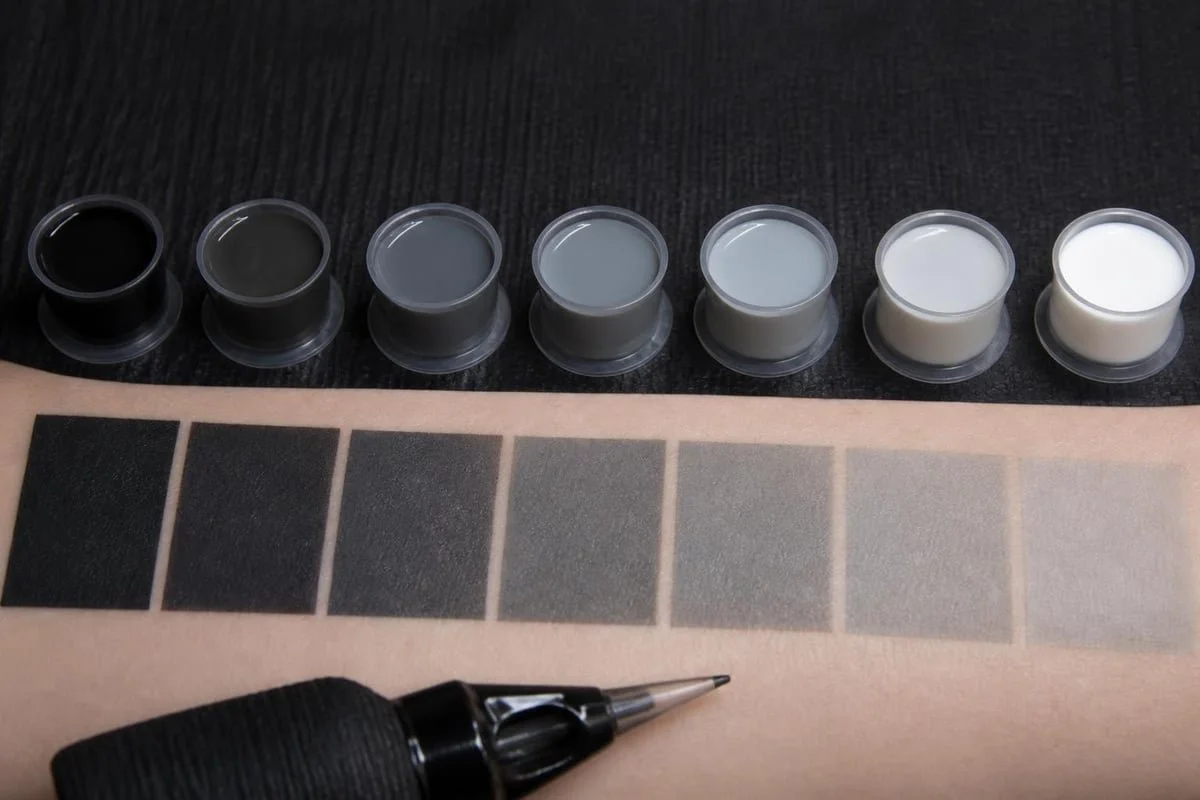
Gray Ink Dilution Ratios
The Grayscale Spectrum in Tattoo Artistry
Artists working with gray tattoo ink typically organize their palettes into distinct shade categories, each serving specific purposes within a design. This systematic approach enables seamless transitions and controlled depth creation.
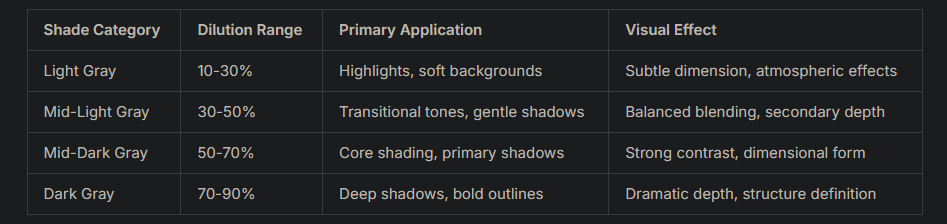
Light Gray Applications
Products like Opaque Gray #1 exemplify light gray formulations designed for delicate transitions and soft background work. These subtle tones create atmospheric effects in portraits and provide the foundation for realistic skin tones in black and gray pieces.
Light gray tattoo ink proves particularly valuable for artists specializing in fine line tattoo work, where gentle gradations define intricate details without overwhelming delicate linework. The restraint required for light gray application demands technical precision and confident needle control.
Mid-Tone Gray Versatility
Mid-range grays form the workhorse shades of any black and gray palette. Eternal Neutral Gray 60 represents this category, offering a balanced tone that bridges highlights and shadows seamlessly.
These intermediate shades enable artists to build dimensional forms gradually, layering passes to achieve smooth gradations. When understanding tattoo aftercare essentials, clients discover that mid-tone grays heal most predictably, maintaining their intended value with minimal color shift.
Mid-tone applications include:
Portrait facial features and contouring
Architectural shading and perspective
Floral petal depth and texture
Realistic fabric folds and drapery
Dark Gray for Contrast and Definition
Dark gray tattoo ink creates the bold contrasts necessary for dimensional realism. Battleship Gray 60% delivers medium-dark tones perfect for controlled shading, while Battleship Gray 80% provides deep gray suitable for high-contrast work.
These darker formulations establish structural elements within designs, defining edges and creating separation between compositional elements. Artists layer dark grays strategically, building density without jumping immediately to pure black, which preserves the organic quality that distinguishes exceptional black and gray work.
Application Techniques for Gray Tattoo Ink
Professional application of gray tattoo ink requires understanding how different needle configurations and hand techniques affect tonal distribution within the skin. Mastery over these variables separates competent execution from exceptional artistry.
Needle Configuration Selection
Shader configurations for gray work:
Round shaders (5RS-9RS): Tight groupings for smooth gradations and controlled blending
Magnum configurations (7M1-15M1): Wider coverage for large area shading and atmospheric effects
Curved magnums (7CM-15CM): Ergonomic needle arrangement for comfortable skin contact during extended shading sessions
Single needles (1RL): Ultra-precise detail work and delicate highlight placement
The relationship between needle selection and gray tattoo ink consistency determines saturation quality. Thicker ink formulations require more aggressive needle configurations to achieve proper skin deposit, while thinner grays flow more readily with gentler setups.
Hand Speed and Needle Depth
Consistent hand speed ensures even ink distribution across shaded areas. Experienced artists maintain rhythmic movements, avoiding the stop-start patterns that create blotchy healing results. Proper depth control keeps the needle working within the dermis layer, preventing both insufficient deposit and excessive trauma.
When clients research what happens during a tattoo session, they learn that gray shading requires multiple passes at controlled depths rather than aggressive single-pass saturation. This layered approach produces smoother healing and more accurate final tones.
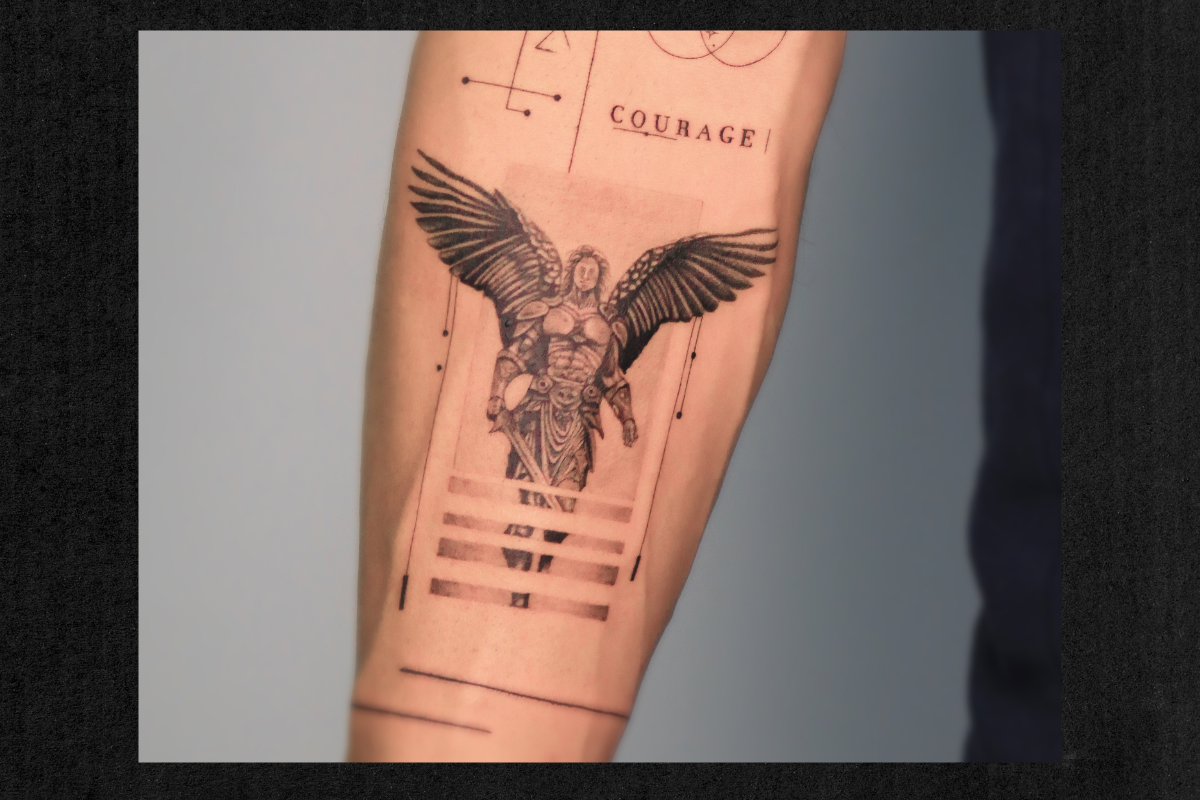
Shading Technique Progression
Building a Professional Gray Ink Set
Establishing a comprehensive gray tattoo ink collection requires strategic selection across the tonal spectrum. Professional artists curate sets that provide complete coverage from lightest highlights to near-black shadows.
Quantum Tattoo Ink's gray range offers sets and individual shades suitable for various shading techniques, allowing artists to build customized palettes matching their specific style requirements. The availability of pre-diluted grays eliminates mixing inconsistencies that can compromise tonal accuracy.
Essential Gray Shades for Any Palette
Minimum recommended gray set:
20% dilution for highlight work
40% dilution for light shadows
60% dilution for mid-tone transitions
80% dilution for deep shadows
100% black for pure line work and darkest values
This five-shade system provides sufficient range for most black and gray applications while remaining manageable during sessions. Artists specializing in hyperrealistic tattoo work often expand to eight or ten discrete values for enhanced control over subtle tonal shifts.
Specialty Gray Formulations
Beyond standard dilution sets, specialty gray formulations address specific artistic challenges. Opaque Gray #2 provides mid-light balance optimized for blending, while Opaque Gray #3 delivers mid-dark depth with superior shadow control.
Products like Eternal Gray Tattoo Ink feature neutral midtone gray with subtle warmth, addressing the tendency of pure carbon grays to heal slightly cool. These temperature-adjusted formulations prove particularly valuable for portrait work, where skin tone accuracy determines realism quality.
Healing Characteristics of Gray Tattoo Ink
Gray tattoo ink heals differently across the tonal spectrum, with lighter shades requiring more careful aftercare attention than darker values. Understanding these healing patterns helps both artists and clients set realistic expectations for final appearance.
Light Gray Healing Considerations
Lighter gray tattoo ink faces higher risk of fading during the healing process. The lower pigment concentration means less particle density within the dermis, making proper aftercare critical for retention. Clients must avoid sun exposure, maintain consistent moisturization, and resist picking at healing skin.
Artists compensate for expected light gray fading by saturating these tones more aggressively during application. This strategic oversaturation accounts for the 15-25% value loss common during healing, ensuring the final result matches the intended design.
Dark Gray Stability
Darker gray formulations heal more reliably, maintaining their intended values with minimal shift. The higher pigment concentration provides greater particle density, creating more stable color retention. However, overpacking dark grays can cause blowout and scarring, requiring balanced application technique.
When discussing best colors for your tattoo with clients, experienced artists explain that gray tones offer superior aging characteristics compared to many colored inks, maintaining clarity and definition over decades with proper care.
Gray Ink in Different Tattoo Styles
Gray tattoo ink serves as the primary medium for black and gray work while also supporting various other tattoo styles as a complementary element. Its versatility extends across traditional, contemporary, and experimental approaches.
Black and Gray Realism
Photorealistic portraits and nature scenes rely entirely on gray tattoo ink's tonal range to create dimensional forms. Artists build value structures through careful observation of light behavior, translating three-dimensional subjects into two-dimensional skin canvases.
The success of realistic black and gray work depends on smooth transitions between values. Opaque Gray Dark by Xtreme Inks formulates specifically for smooth gradients and precise shading, enabling the seamless blending essential for convincing realism.
Realism applications include:
Portrait facial features with accurate bone structure
Wildlife fur and feather texture rendering
Architectural perspective and dimensional accuracy
Still life compositions with complex lighting
Fine Line and Detailed Work
Fine line designs incorporate gray tattoo ink for subtle shading that enhances delicate linework without overwhelming the composition. Single-needle techniques combined with light gray washes create sophisticated depth in minimalist designs.
Artists specializing in this approach, common among studios offering top tattoo styles, maintain extremely light gray formulations for whisper-soft dimension. These applications require exceptional hand control and understanding of how minimal ink deposits heal within skin.
Traditional Style Enhancement
While traditional tattoos feature bold colors, gray tattoo ink enhances these designs through strategic shading. Artists apply gray tones to create dimensional forms within colored sections, adding sophistication to classic imagery.
This hybrid approach maintains traditional aesthetics while incorporating contemporary depth techniques. Gray shading in traditional work requires restraint, supporting rather than competing with the bold color palette that defines the style.
Technical Considerations for Optimal Results
Achieving consistent results with gray tattoo ink requires attention to environmental factors, equipment maintenance, and ink handling procedures. Professional standards in these areas separate amateur execution from gallery-quality work.
Ink Consistency Management
Gray tattoo ink consistency affects flow characteristics and skin deposit quality. Thick formulations require vigorous shaking before use, while thin grays may need slight settling to achieve optimal working consistency. Room temperature impacts viscosity, making climate-controlled studio environments preferable for consistent application.
Artists maintain ink caps organized by value, clearly labeled to prevent mid-session confusion. This systematic approach proves essential during complex shading passes where tonal accuracy determines dimensional success. Proper tattoo placement considerations include skin texture variations that affect how different gray values deposit and heal.
Equipment Hygiene and Ink Handling
Single-use ink caps prevent cross-contamination between gray shades during sessions. Pouring only necessary amounts reduces waste while maintaining sterile working conditions. Unused ink in caps must be discarded rather than returned to bottles, ensuring bacterial safety.
Machine maintenance impacts gray ink performance, with properly tuned equipment delivering consistent needle movement essential for smooth gradations. Voltage adjustments accommodate different gray viscosities, with lighter formulations requiring gentler settings than darker, more viscous inks.
Skin Type Adaptations
Different skin types accept gray tattoo ink with varying characteristics. Thicker skin requires more aggressive saturation techniques, while thinner skin demands gentler approaches to prevent overworking. Skin tone affects how gray values appear after healing, with darker skin tones requiring higher contrast gray selections for visible results.
Artists conducting consultations for choosing tattoo artist tips assess these factors before beginning work, adjusting their gray palette and technique accordingly. This personalized approach ensures optimal results across diverse client demographics.
Advanced Gray Ink Techniques
Master-level gray tattoo ink application incorporates sophisticated techniques that elevate work beyond standard shading approaches. These methods require extensive experience and refined technical control.
Atmospheric Perspective
Creating depth through atmospheric perspective involves gradual value shifts that simulate distance. Foreground elements receive darker gray concentrations while background components utilize lighter washes, creating spatial relationships within flat skin surfaces.
This technique proves particularly effective in landscape compositions and architectural pieces where convincing depth determines compositional success. Artists layer multiple gray passes, building atmospheric effects gradually rather than attempting single-pass solutions.
Texture Rendering
Different gray application techniques simulate various surface textures. Stippling with gray ink creates rough, organic textures suitable for stone, bark, or weathered materials. Smooth blending renders soft textures like skin, fabric, or clouds.
Texture technique variations:
Stippling: Controlled dot patterns for granular surfaces
Hatching: Parallel line shading for directional texture
Cross-hatching: Intersecting lines for complex surface quality
Smooth blending: Seamless transitions for soft materials
Whip shading: Tapered strokes for organic, flowing textures
Value Mapping and Form Analysis
Professional gray tattoo ink application begins with thorough value mapping during the design phase. Artists analyze reference materials to identify light sources, core shadows, reflected light, and cast shadows. This analytical approach informs gray shade selection and placement strategy.
Understanding form analysis transforms mechanical shading into dimensional sculpture. Gray values wrap around forms following anatomical or structural logic, creating convincing three-dimensional illusions on two-dimensional surfaces.
Client Education and Consultation
Educating clients about gray tattoo ink characteristics ensures realistic expectations and promotes optimal healing results. Comprehensive consultations address design possibilities, healing timelines, and long-term maintenance requirements.
Design Consultation Process
During consultations, artists present gray ink capabilities through portfolio examples demonstrating tonal range and stylistic applications. Discussing how gray tones translate reference images into tattoo designs helps clients visualize final results accurately.
When clients explore expect during your first tattoo session, understanding gray ink's role in their specific design reduces anxiety and builds confidence in the artistic process. Transparent communication about technique choices empowers clients to participate meaningfully in design decisions.
Aftercare for Gray Ink Tattoos
Gray tattoo ink requires the same fundamental aftercare as colored work, with particular attention to sun protection for lighter values. Artists provide detailed aftercare instructions addressing moisturization schedules, cleaning protocols, and activity restrictions during healing.
The importance of following easier tattoo healing tips becomes evident when clients see how proper care preserves gray tonal accuracy. Neglected aftercare results in patchy healing and uneven value retention, particularly in lighter gray sections.
Touch-Up Expectations
Gray tattoo ink may require touch-ups to restore intended values after initial healing. Lighter grays particularly benefit from secondary sessions that reinforce faded areas and refine tonal transitions. Setting these expectations during consultation prevents disappointment and builds long-term client relationships.
Artists typically schedule touch-up appointments six to eight weeks post-session, allowing complete healing before assessing retention quality. These follow-up sessions provide opportunities to perfect subtle details and ensure client satisfaction with final results.
Comparing Gray Ink Products and Brands
The tattoo ink market offers numerous gray formulations, each with distinct characteristics affecting application and healing. Understanding product differences enables informed selection matching specific artistic requirements and studio preferences.
Professional-grade options like those available through specialized suppliers ensure consistent quality and safety compliance. Brands investing in research and development produce formulations with superior flow characteristics, reliable healing, and predictable long-term aging.
Evaluating Gray Ink Quality
Quality assessment criteria:
Pigment particle size consistency
Carrier solution composition and purity
Batch-to-batch color accuracy
Viscosity appropriate for intended application
Safety certification and testing documentation
Artist community feedback and reputation
Premium gray tattoo ink products justify their cost through superior performance characteristics. Smooth application, predictable healing, and long-term color stability offset initial expense through reduced touch-up requirements and enhanced client satisfaction.
Regional Availability and Sourcing
Bangkok's position as a major tattoo destination provides artists access to international ink suppliers and specialty formulations. Studios maintaining relationships with multiple distributors ensure consistent product availability while providing flexibility to accommodate specific project requirements.
When researching options for covering scars with tattoos, artists select gray inks based on coverage capabilities and healing characteristics in compromised skin. Specialized formulations address the unique challenges scar tissue presents, requiring modified application approaches.