Black and White Realism Tattoo: Complete Guide 2026
The black and white realism tattoo represents one of the most technically demanding and visually striking styles in contemporary body art. This sophisticated approach transforms skin into a canvas for photorealistic imagery using exclusively black ink and expert shading techniques. Unlike traditional tattoo styles that rely on bold outlines and solid colors, realism demands exceptional artistic skill to create dimension, texture, and lifelike detail through grayscale values alone. For clients seeking timeless, elegant body art that captures genuine emotion and stunning visual depth, this style offers unparalleled possibilities.
Understanding Black and White Realism Tattoos
A black and white realism tattoo recreates photographic quality imagery through precise ink saturation and masterful shading gradients. Black and grey realism emerged from Chicano tattoo culture in 1970s Los Angeles, where artists developed techniques to achieve stunning depth using limited equipment and single-needle applications.
The fundamental principle involves creating a complete tonal spectrum from pure black to the natural skin tone acting as white space. Artists manipulate ink dilution and needle depth to produce every shade of gray imaginable, building three-dimensional forms that appear to lift from the skin.
Key characteristics include:
Photorealistic detail and proportion accuracy
Smooth gradations between light and shadow
Precise contrast control for dimensional depth
Absence of bold outlines in favor of soft transitions
Emphasis on texture, reflection, and atmospheric perspective
Technical Foundation of Grayscale Art
The creation of convincing realism requires understanding how light interacts with form. Black and gray realism tattoos rely on dilutions of black ink to achieve the full range of values necessary for photographic reproduction. Master artists study photography composition, light source direction, and shadow behavior to recreate these elements on skin.
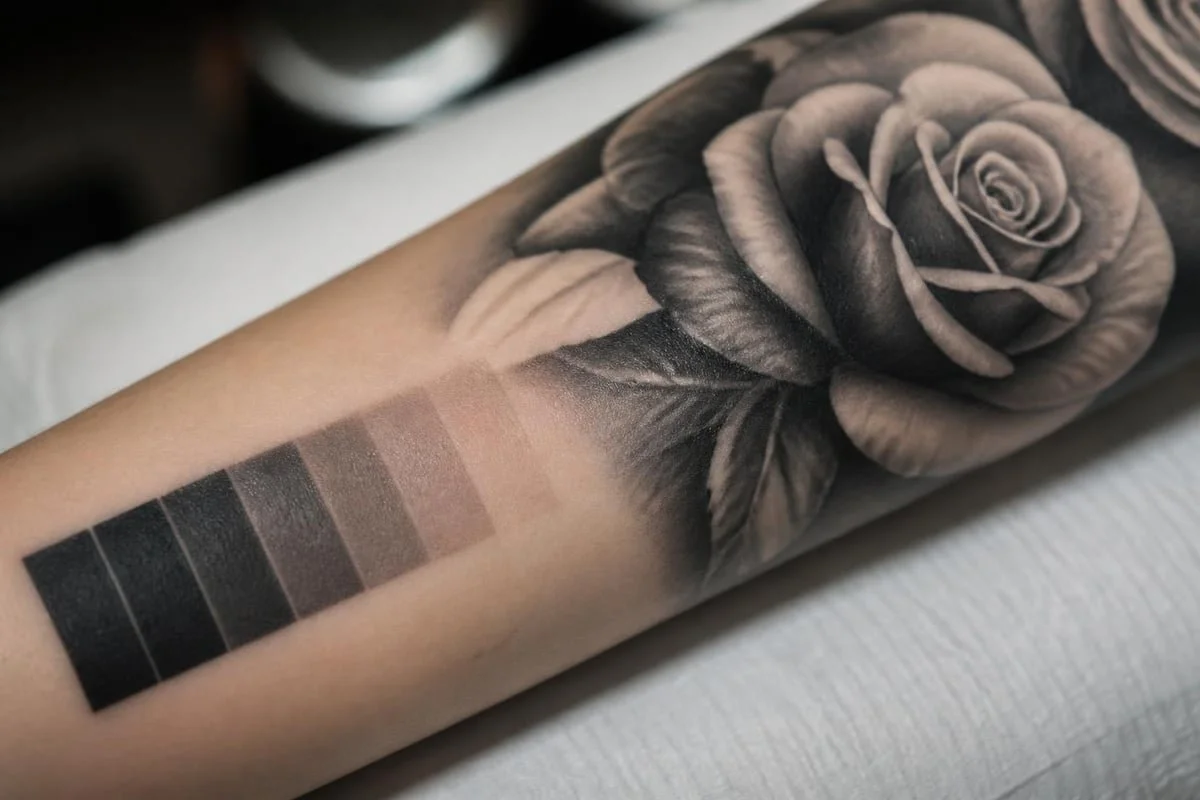
Tonal value scale in tattoo realism
Successful realism demands exceptional technical proficiency with needle configurations, machine speed adjustments, and hand pressure variations. Artists layer ink strategically, building from light values to dark, allowing the skin's healing process to settle pigment at precise depths for optimal clarity.
Subject Matter and Design Considerations
Black and white realism tattoos excel at capturing specific subjects that translate powerfully through grayscale interpretation. Portrait work remains the most popular choice, allowing clients to immortalize loved ones, cultural icons, or historical figures with striking accuracy.
Popular Subject Categories
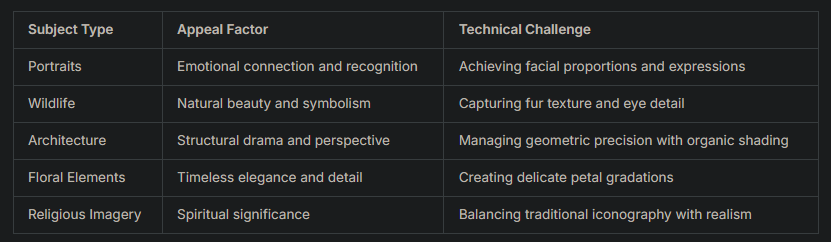
Wildlife subjects particularly benefit from black and white treatment. The subtle gradations capture fur texture, feather detail, and the profound depth found in animal eyes. Lions, wolves, owls, and eagles translate beautifully into grayscale, offering both visual impact and symbolic meaning.
Architectural elements provide opportunities for dramatic perspective and light play. Gothic structures, classical columns, and intricate building facades showcase the artist's ability to manage both precise geometric forms and atmospheric shading. When exploring different tattoo styles, many clients discover that architectural realism offers unique aesthetic possibilities.
Design Scale and Placement
Realism demands sufficient canvas space to capture essential detail. Miniature realistic tattoos sacrifice the subtlety that makes this style compelling, as fine gradations become muddy when compressed into small areas.
Optimal placement considerations:
Large muscle groups provide stable canvases with minimal distortion during movement
Flat surface areas like the back, chest, or thigh maintain image integrity
Areas with consistent skin texture ensure even ink saturation
Locations protected from excessive sun exposure preserve detail longevity
Understanding tattoo placement for the perfect spot becomes crucial when planning realism work, as body contours significantly impact how images read visually.
The Artistic Process Behind Photorealism
Creating a convincing black and white realism tattoo requires methodical planning and execution. The process begins long before needle touches skin, with extensive reference gathering and design refinement.
Reference Photography and Composition
Professional realism artists work exclusively from high-quality photographic references. The source image determines the tattoo's ultimate success, as artists can only recreate details present in the reference material. Sharp focus, proper lighting, and appropriate contrast in the reference photograph directly translate to tattoo quality.
Artists often modify reference images during the design phase, adjusting compositions for optimal flow with body contours. Background elements may be simplified or eliminated to focus attention on primary subjects. The importance of choosing the right tattoo artist becomes evident when evaluating portfolios for this compositional skill.
Layering and Value Building
The tattooing process mirrors traditional drawing techniques, building values progressively from light to dark. Artists typically begin with the lightest grays, establishing subtle highlights and mid-tones before introducing darker shadows and black accents.
Progressive layering stages:
Initial light value wash establishes form
Mid-tone application defines secondary shadows
Dark accent placement creates depth and contrast
Final black details add sharpness and dimension
Smoothing passes blend transitions for photographic quality
This methodical approach requires multiple sessions for larger pieces, allowing proper healing between layers. What happens during a tattoo session varies significantly between realism work and other styles due to these technical demands.
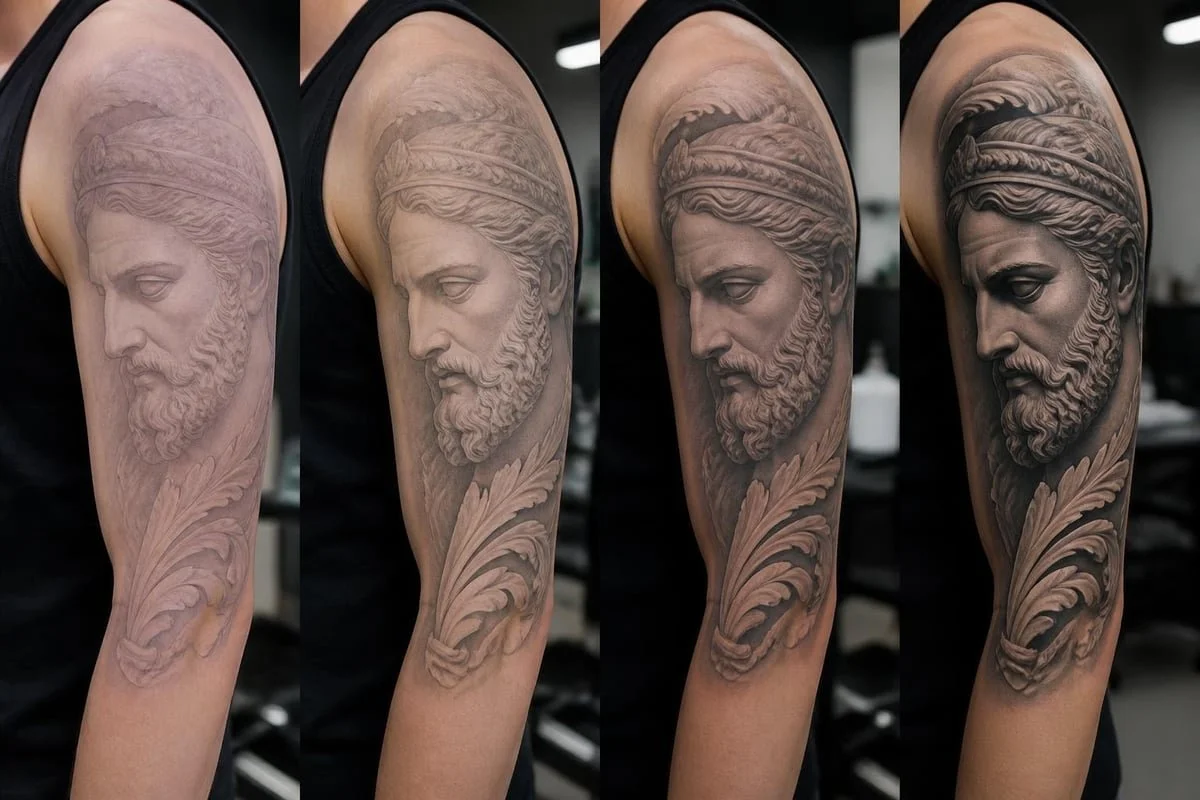
Realism tattoo Layering process
Technical Skills Required for Excellence
The technical gap between competent tattooing and masterful realism work is substantial. Understanding black and white realism tattoos reveals the demanding skill set artists must develop to execute this style convincingly.
Needle Control and Shading Mastery
Smooth gradient transitions require exceptional hand control and consistent machine operation. Artists adjust needle depth microscopically to deposit varying ink concentrations, creating seamless value shifts without visible banding or patchiness.
Different needle configurations serve specific purposes in realism work. Liner needles establish fine details and crisp edges. Magnum shaders create smooth value fields. Round shaders build soft transitions. Master artists switch between configurations fluidly throughout the tattooing process.
Understanding Skin as a Canvas
Skin presents unique challenges compared to paper or canvas. Different body areas accept ink differently based on skin thickness, texture, and underlying tissue density. How tattoo colors appear on different skin tones applies equally to grayscale work, as natural skin tone influences how black ink values read visually.
Experienced artists account for skin elasticity, knowing that areas with significant movement require adjusted techniques to maintain clarity over time. They understand how aging affects tattoos, planning compositions and value structures that remain readable decades into the future.
Longevity and Aging Considerations
Black and white realism tattoos offer exceptional longevity compared to color work when executed properly. The absence of color pigments eliminates issues with differential fading rates that can compromise colored tattoos over time.
How Grayscale Tattoos Age
Black and grey realism tattoos age gracefully when proper technique and aftercare combine effectively. Black ink maintains stability in skin over decades, though some lightening occurs naturally as the body's immune system gradually processes pigment particles.
Well-executed realism maintains recognizability and visual impact for life. The key lies in sufficient value contrast during initial application. Artists must push blacks deep enough for lasting darkness while keeping highlights bright enough to maintain separation from mid-tones as subtle softening occurs.
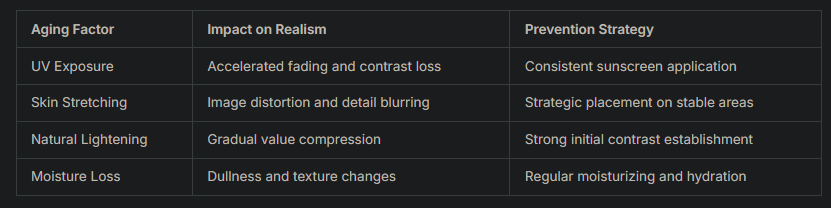
Maintenance and Touch-Up Requirements
Most black and white realism tattoos require minimal maintenance beyond standard aftercare protocols. Understanding tattoo aftercare essentials ensures optimal healing and long-term preservation.
Touch-ups become necessary when contrast diminishes sufficiently to impact readability. Typically this occurs after many years, if at all, with well-executed work. During touch-ups, artists refresh the darkest blacks and may add strategic highlights to restore dimensional pop.
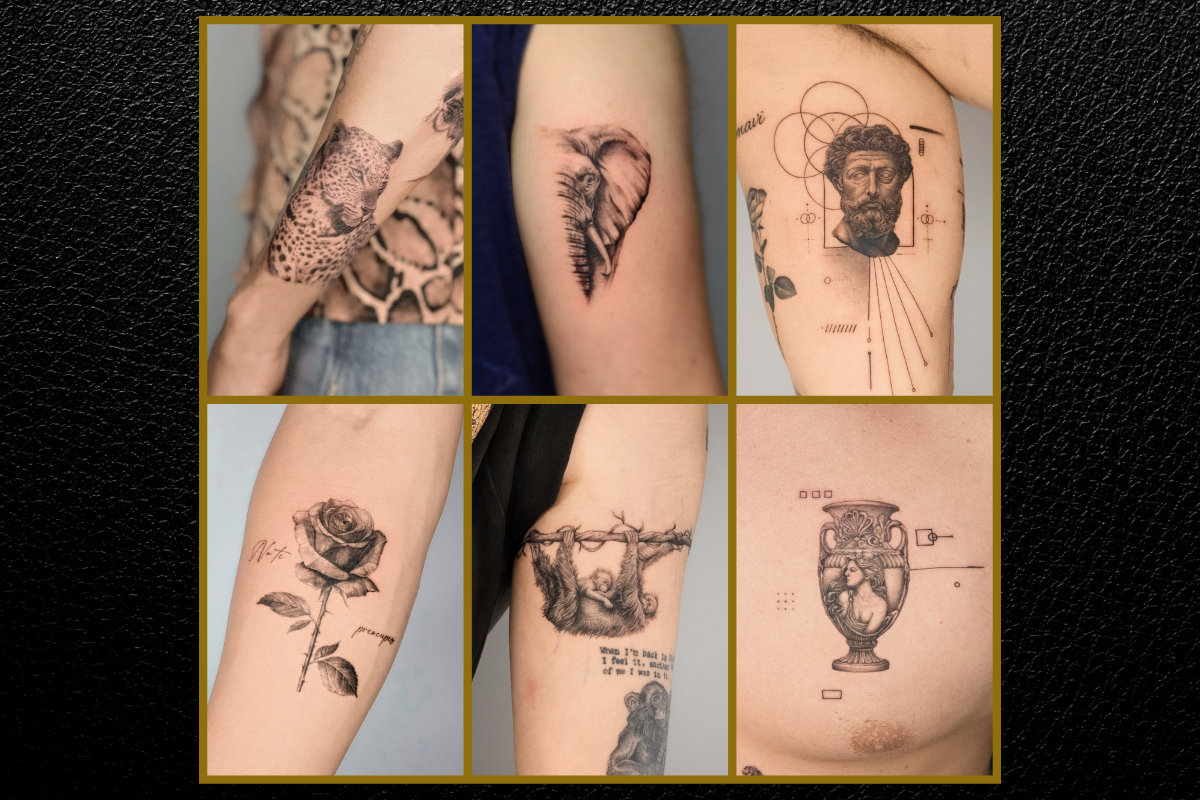
Realism Style at Our Studio
Selecting the Right Artist for Realism Work
The quality difference between mediocre and exceptional realism work is dramatic. Choosing a tattoo artist requires careful evaluation of specialized skills beyond general tattooing competency.
Portfolio Assessment Criteria
Examine artist portfolios specifically for realism examples that demonstrate technical mastery. Look for smooth gradients without visible banding, proper proportional accuracy in portraits, convincing texture rendering, and strong value contrast that creates dimensional depth.
Critical evaluation points:
Healed work examples showing long-term results rather than fresh tattoos
Variety of subjects demonstrating versatility and consistent quality
Proper lighting in photos allowing accurate assessment of value gradations
Close-up detail shots revealing technique precision
Multiple angles of dimensional pieces showing form consistency
Request consultations with artists whose portfolios demonstrate realism proficiency. During meetings, discuss reference materials, design modifications, and technical approaches. Professional realism artists welcome detailed conversations about their process and eagerly explain how they'll achieve desired results.
Studio Environment and Equipment
High-quality realism demands premium equipment and meticulously maintained work environments. Choosing the right tattoo studio involves assessing both artistic talent and professional standards.
Advanced realism artists invest in superior ink brands offering consistent pigment suspension and optimal skin saturation. They maintain extensive needle inventories, selecting configurations specifically suited to each design section. Professional lighting systems illuminate work areas without creating shadows that compromise precision.
Combining Realism with Other Styles
Contemporary tattoo art increasingly blends multiple styles within single compositions. Black and white realism serves as an excellent foundation for mixed-style pieces that incorporate complementary elements.
Effective Style Combinations
Geometric patterns pair beautifully with realistic portraits, creating striking contrasts between organic and mathematical elements. Delicate fine line work can frame realistic focal points, adding decorative flourishes without overwhelming photographic detail.
Popular combination approaches:
Realistic portraits with abstract background elements
Wildlife subjects emerging from geometric frameworks
Floral realism integrated with ornamental patterns
Portrait work combined with script lettering
Realistic elements transitioning into illustrative styles
The key to successful combination work lies in maintaining clear hierarchy. Realistic elements typically serve as primary focal points, with secondary style elements supporting rather than competing for attention. Skilled artists balance these components to create cohesive compositions that feel intentional rather than scattered.
Design Flow and Body Integration
The most sophisticated realism work considers the body's three-dimensional form during design development. Rather than treating skin as flat canvas, exceptional artists create compositions that flow with muscle structure and body contours.
This approach transforms static images into dynamic pieces that shift perspective as the body moves. A portrait angled to face forward on a relaxed arm might turn toward the viewer when the arm bends. Wildlife pieces can follow muscle lines to enhance the sense of power and movement.
Cultural and Personal Significance
Beyond technical achievement, black and white realism tattoos carry profound personal meaning for many collectors. The photographic quality enables precise representation of specific individuals, moments, and symbols that hold deep significance.
Memorial portraits represent perhaps the most emotionally charged application of realism tattooing. Clients seek to permanently honor lost loved ones through detailed facial renderings that capture not just physical likeness but essential character and spirit. The monochromatic approach often enhances the timeless, memorial quality of these pieces.
The symbolism behind tattoo designs extends beyond obvious imagery in realism work. Background elements, lighting choices, and compositional decisions all contribute layers of meaning. A portrait partially obscured by shadow might represent grief or mystery. Wildlife subjects positioned in specific poses carry cultural or personal symbolism beyond the creature's general meaning.
Preparing for Your Realism Session
Expectations during your first tattoo session differ when pursuing realism work compared to other styles. The extended time requirements and technical demands create unique preparation needs.
Physical and Mental Preparation
Large-scale realism projects require multiple extended sessions. Physical endurance becomes important, as sitting for six to eight hours demands stamina and pain management strategies. Proper rest, hydration, and nutrition before sessions significantly impact your ability to sit comfortably through lengthy appointments.
Mental preparation proves equally crucial. Understanding that realism develops progressively helps manage expectations during early sessions when the piece may appear incomplete or unclear. Trust the artist's process as layers build toward the final result.
Session preparation checklist:
Schedule appointments when well-rested and stress-free
Eat substantial meals before long sessions
Wear comfortable clothing allowing easy access to tattoo area
Bring entertainment for brief breaks between intensive work periods
Arrange transportation if sessions may leave you fatigued
Clear your schedule for proper rest immediately after appointments
Aftercare for Optimal Healing
Proper new tattoo care becomes especially critical with realism work, where subtle value gradations can be compromised by healing complications. Follow artist instructions precisely regarding cleaning frequency, moisturizer application, and sun protection.
Realism tattoos benefit from gentle healing that preserves delicate gradients. Avoid activities that cause excessive sweating, swimming, or sun exposure during the initial healing period. Easier tattoo healing results from consistent care and patience during the recovery process.
Investment and Value Considerations
Black and white realism tattoos represent significant financial investments reflecting the specialized skills and time requirements involved. Understanding pricing structures helps clients budget appropriately for quality work.
Pricing Factors in Realism Tattooing
Hourly rates for accomplished realism artists typically exceed those for general tattooing due to the advanced skill set required. Rates reflect years of dedicated practice, ongoing education, and the mental intensity of executing photorealistic work.
Elements influencing total cost:
Artist experience level and reputation
Design complexity and detail density
Size and body placement
Number of sessions required
Geographic location and studio overhead
Custom design development time
Quality realism work represents permanent art that will accompany you for life. Exploring various tattoo styles helps contextualize the value proposition of investing in masterfully executed realism versus settling for less skilled work that may require expensive correction or removal.
Long-Term Value and Satisfaction
The enduring appeal of expertly executed black and white realism tattoos justifies premium pricing. Unlike trendy styles that may feel dated within years, photorealistic work maintains classic elegance indefinitely. The technical quality ensures the piece ages gracefully, maintaining visual impact throughout your lifetime.
Client satisfaction rates for quality realism work remain exceptionally high. The precision with which skilled artists capture meaningful subjects creates profound emotional connections that deepen over time. Many collectors describe their realism pieces as among their most treasured possessions.