Black and Grey Tattoo Artist: Mastery in 2026
The artistry of black and grey tattooing stands as one of the most sophisticated and enduring styles in the tattoo industry. A skilled black and grey tattoo artist commands an exceptional understanding of tonal values, shading techniques, and artistic composition to transform skin into a canvas of depth and dimension. This monochromatic style has evolved from its origins in prison culture to become a cornerstone of contemporary tattoo art, particularly excelling in portraiture, realism, and intricate designs that demand precision and technical mastery.
Understanding the Black and Grey Tattoo Tradition
The black-and-gray tattooing style emerged from unique circumstances, developing its own distinct aesthetic language over decades. Unlike colorful tattoo styles that rely on vibrant pigments, this approach utilizes varying dilutions of black ink to create grayscale imagery.
A black and grey tattoo artist works exclusively with black ink, diluting it with distilled water or other solutions to achieve different shades of grey. This technique requires exceptional control and understanding of how ink heals in the skin. The artist must anticipate how different dilution ratios will appear once the tattoo has fully settled, typically accounting for 20-30% fading during the healing process.
Technical Foundations of Monochromatic Artistry
The techniques behind black and grey tattoos involve sophisticated shading methods that create the illusion of depth, texture, and three-dimensional form. Artists employ various needle configurations and machine settings to achieve different effects.
Key technical elements include:
Whip shading: A rapid, fluid motion that creates smooth gradients
Stippling: Dot-work techniques for texture and subtle tonal transitions
Layering: Building up density through multiple passes
Soft shading: Creating seamless blends between tones
Strong blacks: Establishing solid anchor points for contrast
Professional artists understand that strong black tones serve as the foundation for longevity and visual impact. Without sufficiently saturated blacks, the entire piece can appear washed out or lack the necessary contrast to make details visible.
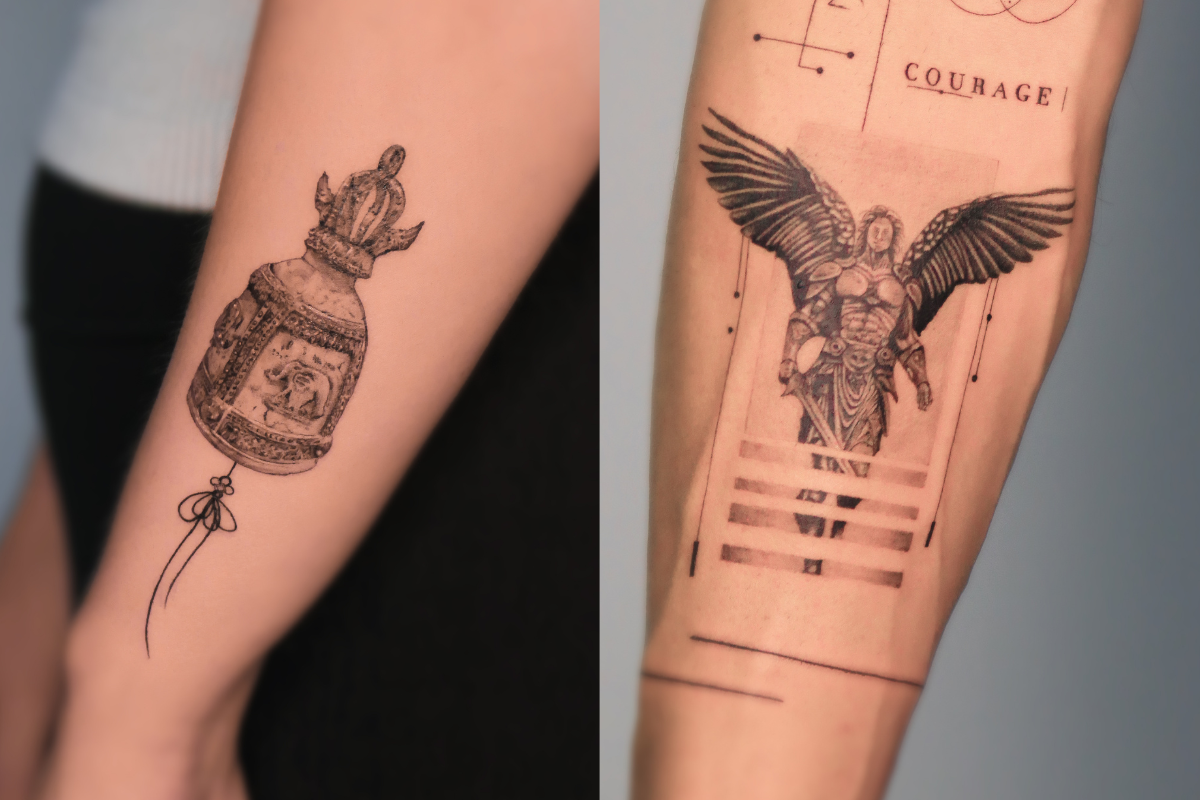
Black and grey shading techniques
Selecting Your Black and Grey Tattoo Artist
Choosing the right artist determines whether your tattoo becomes a masterpiece or a disappointment. When choosing a tattoo artist, you must evaluate multiple factors beyond just browsing flash designs on studio walls.
Portfolio Analysis and Artistic Specialization
Examine an artist's portfolio with a critical eye, specifically looking for consistency in their black and grey work. A specialist in this style should demonstrate mastery across various applications, from delicate script to photorealistic portraits.
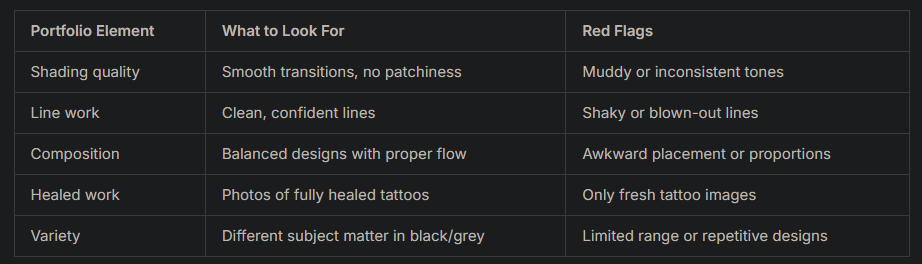
Professional artists showcase healed work because it demonstrates the true quality of their technique. Fresh tattoos can appear deceptively crisp, but healed pieces reveal the artist's understanding of ink retention and proper depth.
Consultation and Communication Standards
When what happens during a tattoo session matters to you, the consultation phase establishes expectations. A professional black and grey tattoo artist invests time in understanding your vision, offering honest feedback about what will translate well in monochromatic tones.
During consultations, artists should:
Discuss placement and how it affects the design
Explain their approach to shading for your specific concept
Provide realistic timelines for complex pieces
Address your pain tolerance and session length expectations
Review aftercare requirements specific to black and grey work
The best artists balance client preferences with technical expertise, guiding you toward decisions that result in superior long-term results.
Artistic Applications of Black and Grey Work
The versatility of monochromatic tattooing allows a black and grey tattoo artist to excel across numerous genres and styles. This approach adapts seamlessly to different artistic movements and subject matter.
Portraiture and Photorealism
Black and grey tattooing has become synonymous with photorealistic portraiture. Artists like those featured in verified black-and-gray artist directories demonstrate how this style captures intricate facial features, expressions, and emotions without color.
Successful portrait work requires:
Understanding of facial anatomy: Knowledge of bone structure, muscle groups, and proportions
Light source management: Consistent highlights and shadows that create dimension
Reference photo quality: High-resolution images with clear details
Skin tone translation: Converting color skin tones to accurate grey values
Expression capture: Preserving the subject's unique characteristics and personality
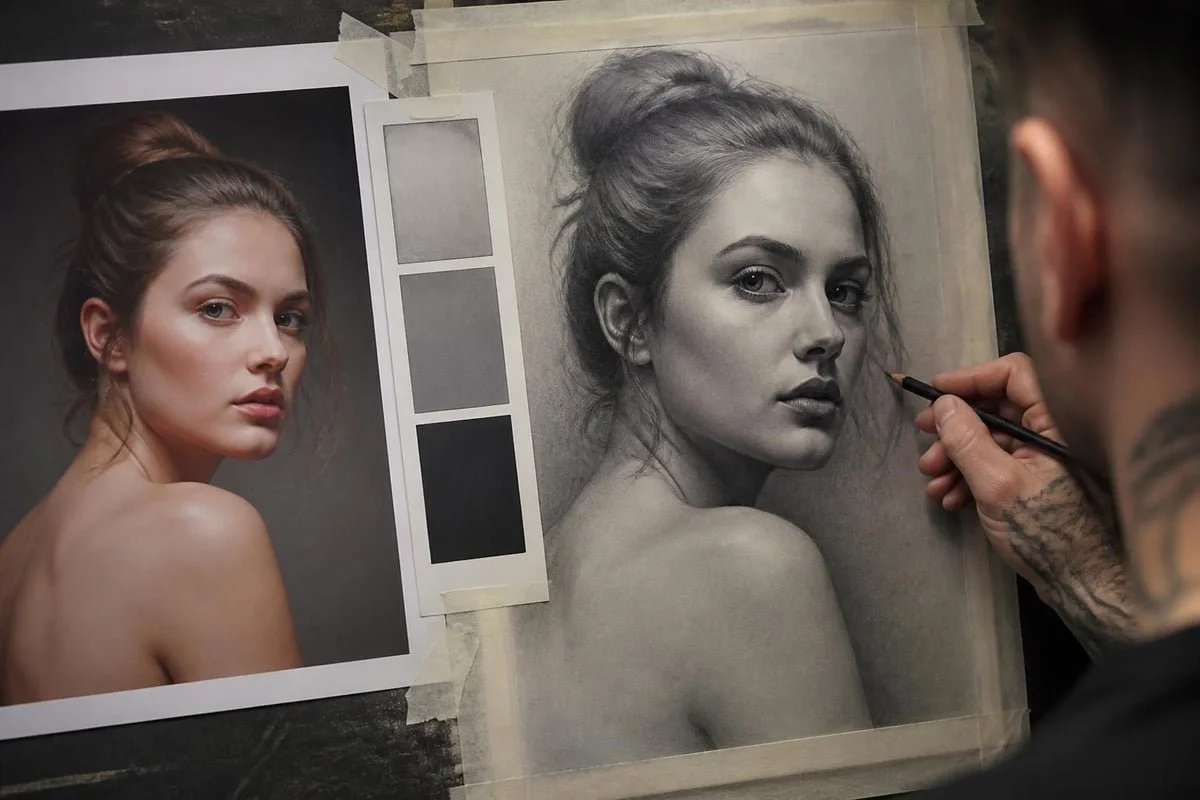
Portrait tattoo anatomy
Ornamental and Geometric Designs
Beyond realism, black and grey work excels in ornamental patterns, mandala designs, and geometric compositions. The precision required for these styles aligns perfectly with the controlled nature of monochromatic tattooing.
When exploring different tattoo styles, you'll notice how black and grey enhances symmetrical designs. The absence of color focuses attention on pattern complexity, line weight variation, and negative space utilization.
Technical Mastery and Equipment Considerations
A black and grey tattoo artist's equipment choices directly impact the quality of their work. Professional artists invest in specific tools designed for optimal shading performance.
Machine Configuration and Needle Selection
Different machines serve different purposes in black and grey work. Shader machines operate at lower voltages than liners, providing the gentle touch needed for smooth gradients.
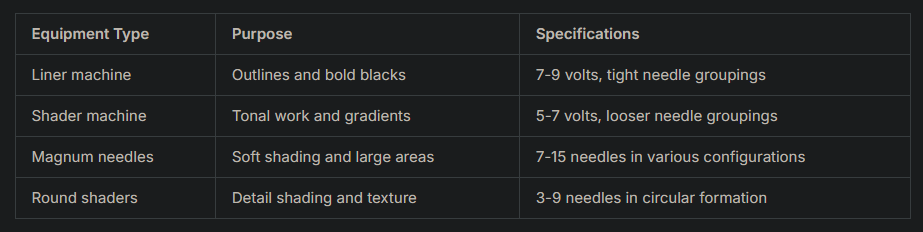
Modern artists also utilize grey tattoo ink formulations rather than exclusively diluting black ink. Pre-mixed grey washes offer consistency and reduce variables during long sessions.
Safety and Ink Composition
Recent research on tattoo ink composition has raised awareness about safety considerations. Professional studios prioritize inks that meet safety standards and contain minimal toxic metals or hazardous substances.
Clients should feel comfortable asking about:
Ink brand and manufacturer certifications
Sterilization protocols for equipment
Single-use needle policies
Autoclave maintenance records
Cross-contamination prevention measures
Reputable artists welcome these questions as they demonstrate client education and shared responsibility for safe tattooing practices.
The Evolution of Black and Grey Tattooing in 2026
Contemporary black and grey work has expanded far beyond its traditional roots. Modern practitioners blend techniques from various artistic traditions, creating hybrid styles that push creative boundaries.
Technology Integration and Design Innovation
Advanced technology now supports the creative process. Artists utilize digital design tools to preview placements, adjust compositions, and demonstrate scale before needle touches skin. Some practitioners employ tattoo retrieval networks and AI systems to catalog their work and maintain comprehensive portfolios.
The characteristics and evolution of black and grey tattooing continue to develop as artists experiment with new techniques. Micro-realism, abstract expressionism, and illustrative styles all find expression in monochromatic palettes.
Cultural Influence and Style Fusion
Bangkok's position as a cultural crossroads influences local black and grey artists who incorporate elements from Thai traditional art, Japanese imagery, and Western realism. This fusion creates unique pieces that honor multiple artistic traditions while maintaining technical excellence.
When considering traditional Thai tattoos adapted into black and grey formats, artists must balance cultural respect with contemporary aesthetics. The monochromatic approach can beautifully render traditional Sak Yant patterns while allowing for modern compositional arrangements.
Preparing for Your Black and Grey Tattoo Experience
Success requires preparation from both artist and client. Understanding what to expect during your first tattoo session reduces anxiety and supports optimal results.
Pre-Session Considerations
Your physical and mental preparation influences the tattooing process and final outcome. A black and grey tattoo artist appreciates clients who arrive well-rested, hydrated, and with realistic expectations about session duration.
Pre-session checklist:
Hydrate thoroughly for 48 hours before your appointment
Avoid alcohol and blood thinners for 24-48 hours prior
Eat a substantial meal 1-2 hours before your session
Wear appropriate clothing that provides easy access to the tattoo area
Bring entertainment for longer sessions (music, podcasts, audiobooks)
Plan transportation if getting work in sensitive areas
Proper preparation allows the artist to work efficiently and achieve optimal ink saturation. Dehydrated skin doesn't accept ink as well, potentially requiring additional passes that increase trauma and healing time.
Placement Strategy and Skin Considerations
The location of your tattoo affects how black and grey work appears over time. Tattoo placement decisions should account for skin texture, sun exposure, and how the area ages.
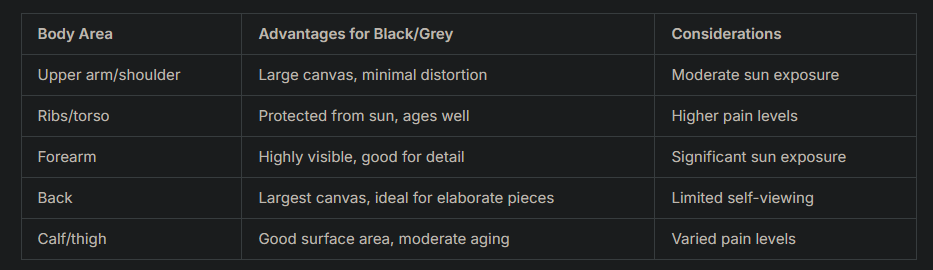
Large canvas, minimal distortion
Moderate sun exposure
Ribs/torso
Protected from sun, ages well
Higher pain levels
Forearm
Highly visible, good for detail
Significant sun exposure
Back
Largest canvas, ideal for elaborate pieces
Limited self-viewing
Calf/thigh
Good surface area, moderate aging
Varied pain levels
Artists experienced in covering scars with tattoos understand how scar tissue accepts ink differently. Black and grey work can effectively camouflage scarring when properly planned and executed.
Aftercare for Optimal Healing and Longevity
The weeks following your session determine how well your black and grey tattoo heals and retains its visual impact. Professional artists provide detailed tattoo aftercare instructions specific to their technique and the work performed.
Initial Healing Phase
The first two weeks prove critical for proper healing. During this period, your skin repairs itself while encapsulating the ink particles in the dermal layer.
Essential aftercare steps include:
Gentle washing: Clean 2-3 times daily with unscented antibacterial soap
Minimal moisturizing: Apply thin layers of recommended ointment
Avoid soaking: No swimming, baths, or prolonged water exposure
Sun protection: Keep the tattoo covered or apply high-SPF sunscreen
No picking: Allow scabs and dry skin to shed naturally
Black and grey work shows imperfections more readily than color tattoos, making proper healing essential. Inconsistent healing can create patches of lighter ink that compromise the overall design.
Long-Term Maintenance
Years down the road, your tattoo's appearance depends on protection and care. Sun exposure represents the primary enemy of tattoo longevity, breaking down ink particles and causing fading.
Maintenance best practices:
Apply broad-spectrum SPF 50+ sunscreen daily to exposed tattoos
Stay hydrated to maintain healthy skin elasticity
Moisturize regularly with quality, unscented lotions
Schedule touch-ups as needed to maintain solid blacks
Consider professional assessment every 5-10 years
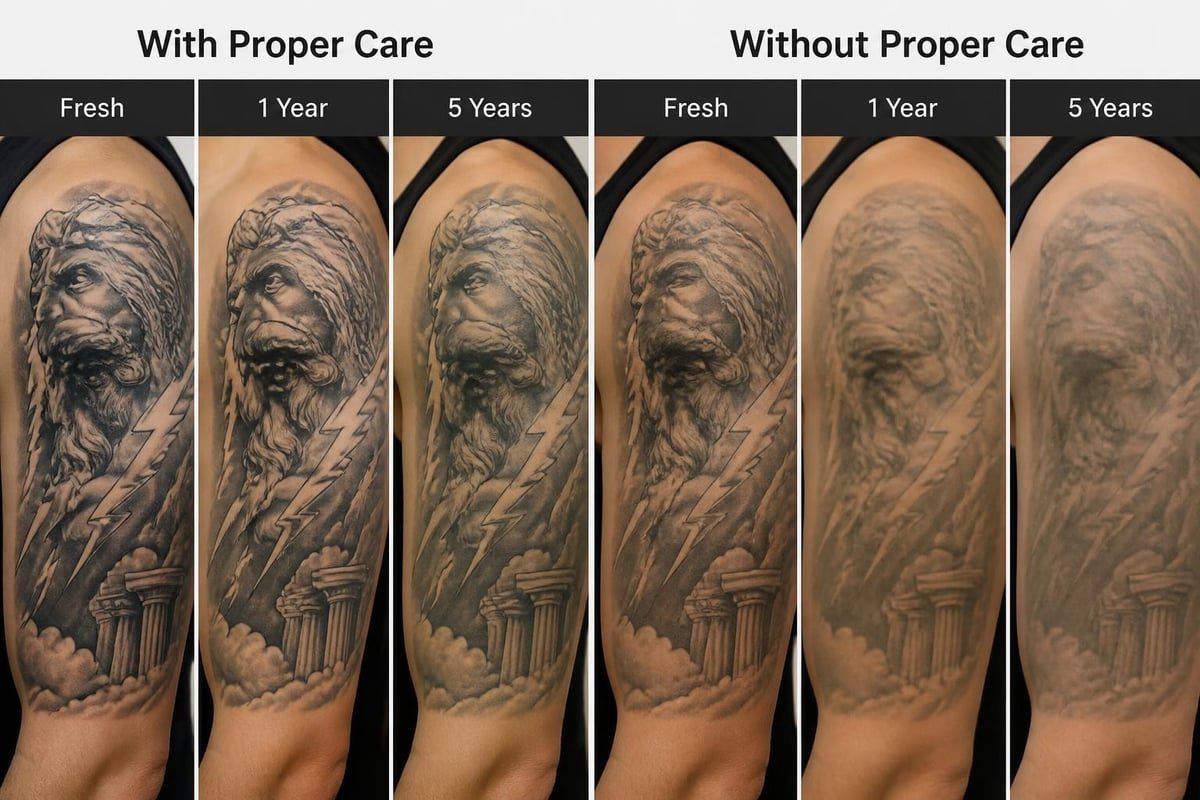
Tattoo aging and care
Investment and Value Considerations
Quality black and grey work commands appropriate pricing. A black and grey tattoo artist with proven expertise charges rates reflecting their skill level, experience, and the time investment required for exceptional work.
Pricing Structures and Time Investment
Most professional artists charge hourly rates ranging from $150 to $400+ depending on reputation, location, and specialization. Complex black and grey pieces often require multiple sessions, particularly for large-scale realism or intricate shading work.
Understanding value means recognizing that:
Experience costs more: Veteran artists with 10+ years command premium rates
Detailed work takes time: Photorealism requires significantly more hours than simple designs
Size impacts price: Larger pieces cost more but often offer better hourly rates
Touch-ups may be necessary: Quality artists include reasonable touch-up policies
Custom design work: Original artwork costs more than flash designs
When choosing the right tattoo studio, consider the complete value proposition rather than simply seeking the lowest price. Cheap tattoos often prove expensive when correction or cover-up becomes necessary.
Specialized Applications and Unique Challenges
Advanced black and grey tattoo artists tackle challenging projects that push technical boundaries. These specialized applications require additional expertise and problem-solving skills.
Working with Different Skin Tones
Artists must adjust their approach when working on various skin tones. Understanding how skin tone affects tattoo colors proves essential even in monochromatic work, as darker skin tones may require modified shading techniques.
Considerations for different skin types:
Fair skin: Shows contrast easily, requires careful grey dilution to avoid muddy appearance
Medium skin: Provides natural warmth that can enhance certain designs
Dark skin: Demands stronger blacks and adjusted grey scales for visibility
Scarred or uneven skin: Needs strategic planning to work with texture variations
Professional artists conduct patch tests when necessary and adjust their technique based on how individual skin accepts and displays ink.
Corrective and Cover-Up Work
Transforming poorly executed tattoos into quality black and grey pieces represents one of the most challenging aspects of the craft. Artists specializing in coverup work must understand how to strategically place dark elements while incorporating existing ink.
Cover-up strategies include:
Assessing existing ink density and placement
Designing new work that naturally incorporates dark areas
Using strategic shading to blend old and new elements
Managing client expectations about what's achievable
Potentially recommending laser removal for impossible covers
The most successful cover-ups feel intentional rather than obviously hiding previous work.
The Future of Black and Grey Tattooing
As we progress through 2026, black and grey tattooing continues evolving. New techniques, improved equipment, and cross-pollination with other art forms expand what's possible in monochromatic skin art.
Emerging Trends and Techniques
Contemporary artists experiment with micro-realism, achieving photographic detail in remarkably small scales. Others explore abstract expressionism, using black and grey tones to create emotional, non-representational pieces.
Current trends include:
Fine-line black and grey: Delicate work combining precision lines with subtle shading
Blackwork integration: Incorporating solid black elements with grey gradient work
Minimalist approaches: Simplified designs that maximize impact with minimal elements
Watercolor effects: Creating soft, flowing effects using only black and grey tones
Geometric fusion: Combining precise geometric patterns with organic shading
These innovations demonstrate that limitation to one color doesn't restrict creative expression. Instead, it focuses artistic vision and technical execution.
Professional Development and Continued Learning
Serious black and grey tattoo artists pursue ongoing education, attending conventions, workshops, and collaborating with other professionals. The best practitioners never stop refining their craft, studying classical art techniques, and pushing their personal boundaries.
Professional development includes:
Studying classical drawing and painting techniques
Understanding anatomy and form beyond surface appearance
Practicing on synthetic skin to test new approaches
Attending industry conferences and competitions
Seeking mentorship from established masters
Reviewing and critiquing their own past work
This commitment to growth separates competent artists from true masters of the craft.