Tree Tattoo Design: Symbolism, Styles & Fine Line Art
Tree tattoo design represents one of the most enduring and meaningful choices in contemporary body art, blending natural beauty with profound symbolism. From delicate cherry blossoms to mighty oaks, trees have captivated tattoo enthusiasts for generations, offering endless possibilities for artistic expression. Whether you're drawn to the intricate root systems that symbolize grounding or the reaching branches that represent growth, a well-executed tree tattoo becomes a permanent testament to your personal journey. The versatility of botanical imagery makes it particularly suited to fine line work, where skilled artists can capture every detail of bark texture, leaf patterns, and organic form.
Understanding the Symbolism Behind Tree Tattoos
Trees carry deep symbolic weight across cultures and throughout human history. The arboreal symbolism in European art from 1300 to 1800 demonstrates how trees have long represented concepts ranging from the Tree of Knowledge to family genealogies. In modern tree tattoo design, these historical meanings merge with personal significance.
Universal Tree Symbolism
Life and Growth: Trees represent the continuous cycle of life, death, and rebirth through seasonal changes. This makes them powerful symbols for personal transformation and development.
Strength and Resilience: Root systems that anchor trees through storms symbolize stability and the ability to weather life's challenges. Many clients choose tree imagery to commemorate periods of personal strength.
Connection: Trees bridge earth and sky, representing the connection between physical and spiritual realms, or between past, present, and future generations.
The beauty of tree tattoo design lies in its adaptability to individual interpretation. What resonates as strength for one person might represent family heritage for another.
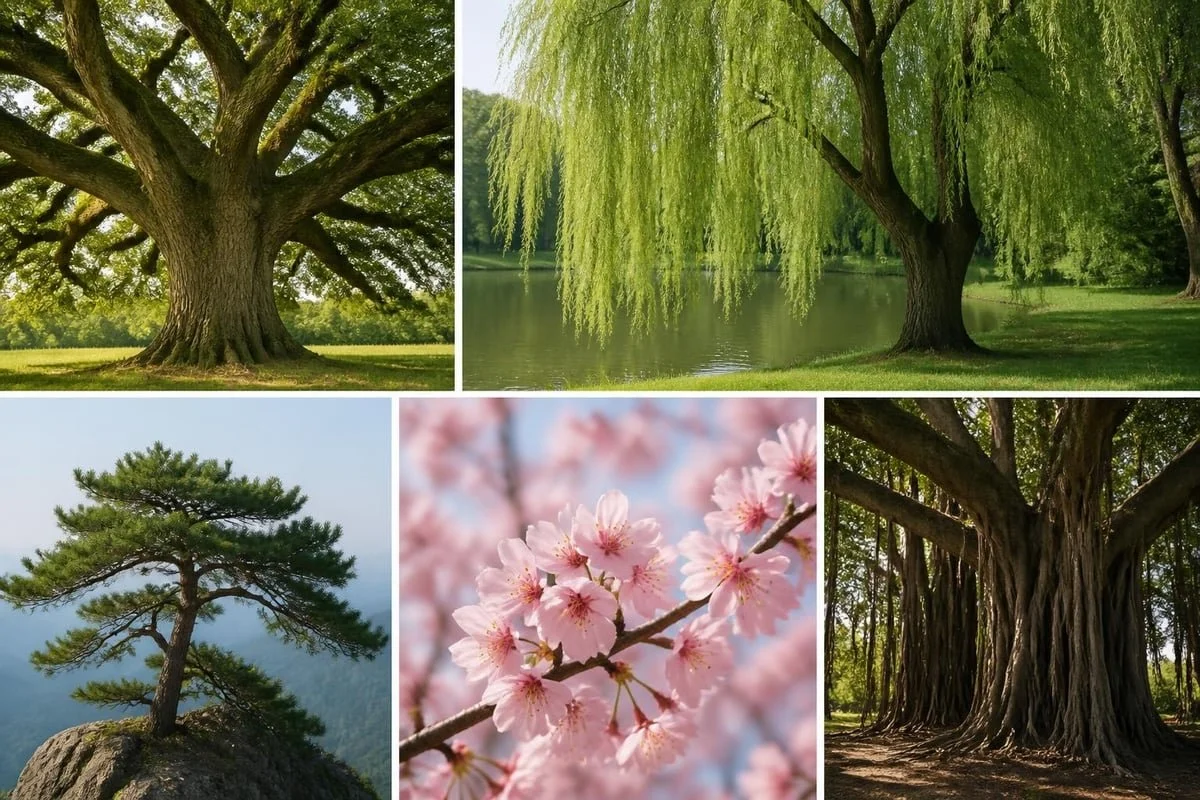
Tree species symbolism
Species-Specific Meanings
Each tree species carries distinct symbolic associations that can enhance your design's personal significance:
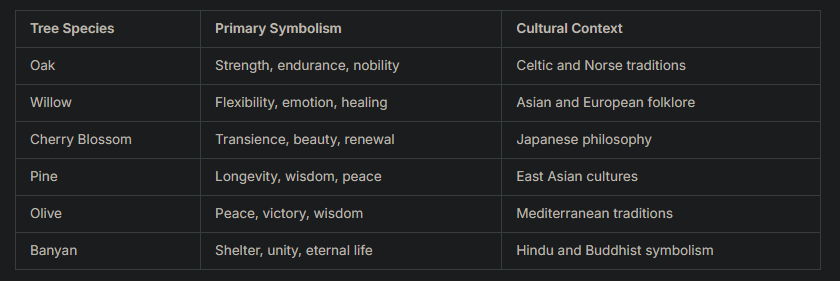
Understanding the symbolism behind tattoo designs helps ensure your tree tattoo design communicates your intended message. Working with an experienced artist allows you to blend traditional meanings with personal narratives.
Popular Tree Tattoo Design Styles
The interpretation of tree imagery varies dramatically across tattoo styles, each offering unique aesthetic qualities and technical demands.
Fine Line and Minimalist Approaches
Fine line tree tattoo design has surged in popularity for its elegant, sophisticated appearance. This style excels at capturing botanical details with precision and subtlety.
Characteristics of fine line tree tattoos:
Delicate linework creating intricate branch patterns
Minimal shading for clean, modern aesthetics
Emphasis on negative space and composition
Ideal for smaller placements or detailed larger pieces
Fine line work demands exceptional technical skill and steady hand control. At luxury studios, artists spend years perfecting the precision required to execute consistent, clean lines that won't blur over time.
Realism and Botanical Detail
Photorealistic tree tattoo design captures every nuance of bark texture, leaf veining, and natural light. This approach suits clients seeking lifelike representations.
Key elements include:
Detailed study of actual tree specimens or photographs
Complex shading techniques to create depth and dimension
Careful attention to light source and shadow placement
High contrast to distinguish foreground and background elements
Realistic botanical tattoos require multiple sessions and significant time investment. Research from clinical studies on tattoo fading shows that proper pigment layering and color selection significantly impact long-term appearance, making artist expertise crucial for realistic work.
Traditional and Neo-Traditional Styles
Traditional tree tattoo design incorporates bold outlines and limited color palettes characteristic of classic American or Japanese tattooing. Neo-traditional approaches expand this foundation with enhanced detail and broader color ranges.
These styles offer excellent longevity due to bold linework that resists aging better than extremely fine details. The strong visual impact makes them ideal for statement pieces.
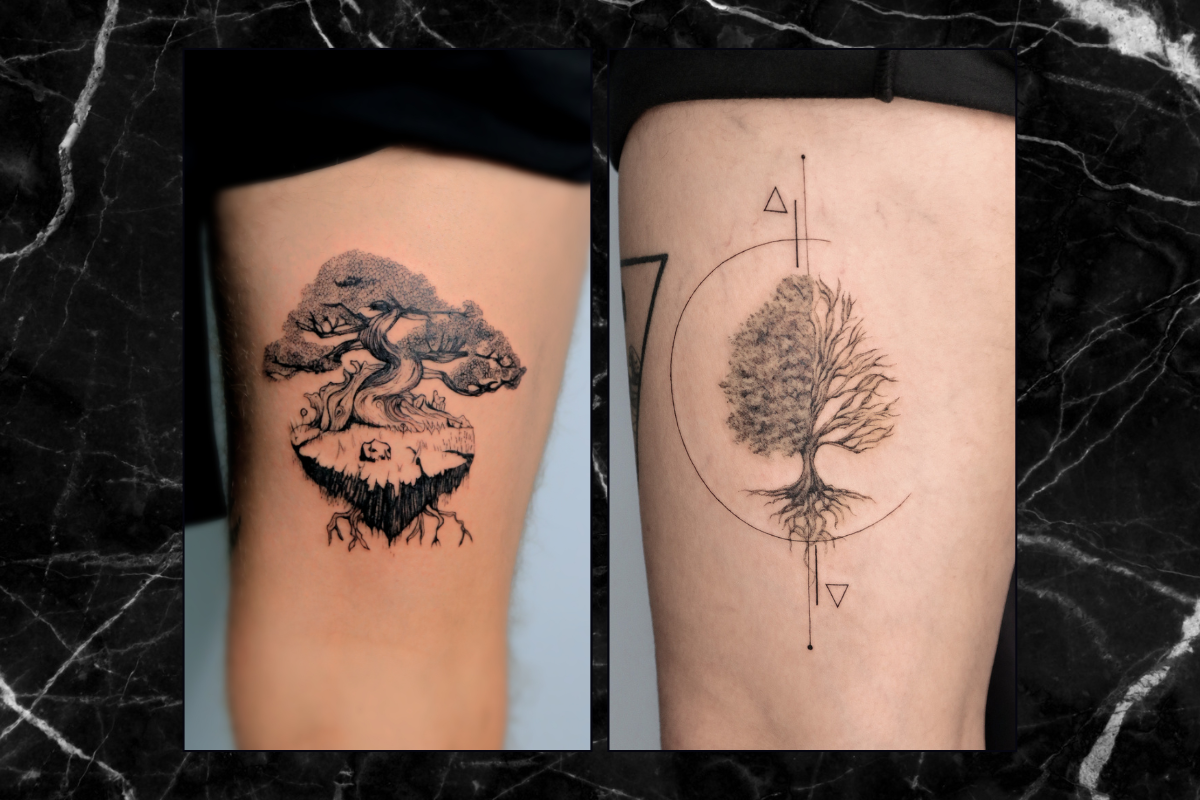
Tree design style comparison
Geometric and Abstract Interpretations
Modern tree tattoo design often incorporates geometric elements, creating striking contrasts between organic forms and mathematical precision.
Sacred geometry integration: Combining trees with mandalas, metatron's cube, or flower of life patterns
Half-realistic, half-geometric: Splitting the design between naturalistic and abstract representation
Dotwork technique: Building tree forms entirely from stippled dots for unique texture
Watercolor accents: Adding fluid color washes around structured tree silhouettes
These contemporary approaches appeal to clients seeking unusual tattoo ideas that stand apart from conventional designs.
Design Composition and Placement Considerations
Strategic composition elevates tree tattoo design from simple illustration to cohesive body art that complements your physique.
Vertical Compositions
Trees naturally lend themselves to vertical placements that follow the body's natural lines:
Spine placements: The trunk aligns with the spine, with branches extending across the upper back and roots spreading toward the lower back. This creates a powerful central axis.
Forearm and leg: Vertical tree designs work beautifully on limbs, with roots at the wrist or ankle and branches extending upward. The natural taper of these body areas complements tree proportions.
Ribcage: Side placements allow for dramatic scale, with the tree following the torso's vertical dimension. Consider how breathing movement will interact with the design.
Circular and Radial Designs
Alternative compositions create unique visual interest:
Tree of Life circles: Roots and branches curve to form a complete circle, symbolizing cyclical nature
Seasonal progression: Four trees showing spring, summer, fall, and winter in connected panels
Mirror images: Two trees meeting at the trunk, creating symmetrical designs ideal for back pieces
Understanding tattoo placement and finding the perfect spot ensures your design works harmoniously with your body's contours and your lifestyle needs.
Scale and Detail Balance

Fine line tree tattoo design particularly benefits from thoughtful size planning. Extremely small fine line work may not age as well as slightly larger executions that give lines room to settle without merging.
Technical Considerations for Long-Lasting Tree Tattoos
The permanence of tattoo art demands careful attention to technical factors that affect longevity and appearance over decades.
Ink Selection and Color Stability
Professional tattoo inks vary significantly in composition and durability. Research on tattoo pigment photodegradation reveals that certain pigments break down faster under UV exposure, affecting color retention.
Color choices for tree tattoo design:
Black and gray: Maximum longevity and contrast retention
Earth tones: Browns, greens, and ochres suit botanical subjects but may fade faster than black
Accent colors: Limited color pops in predominantly black designs combine visual interest with durability
White highlights: Particularly prone to fading; use sparingly and only when necessary
Discussing ink quality and choosing the best colours for your tattoo with your artist ensures informed decisions about your design's long-term appearance.
Line Weight and Aging
Fine line work requires special consideration for how tattoos age. Over time, all tattoo lines experience slight spreading as ink particles disperse in the dermis.
Best practices include:
Slightly thicker lines in critical areas to prevent future merging
Adequate spacing between parallel lines (branches, texture details)
Strategic variation in line weight to maintain visual hierarchy as the tattoo ages
Understanding that extremely fine details (individual pine needles, tiny leaves) may soften over years
Experienced artists balance current aesthetic preferences with long-term aging realities when executing tree tattoo design in fine line style.
Skin Type and Placement Factors
Different skin types and body locations affect tattoo appearance:
Skin tone: Darker skin tones may require adjusted contrast strategies; consult resources on tattoo colours for different skin tones
Skin texture: Areas with existing scarring or texture variations need special approach
Movement zones: Joints and frequently flexed areas experience more ink settling over time
Sun exposure: Regularly exposed areas require extra protection for color preservation
The Consultation and Design Process
Creating exceptional tree tattoo design begins long before needle touches skin. Professional consultation establishes the foundation for successful outcomes.
Researching and Choosing Your Artist
Not all tattoo artists excel at botanical work. When choosing a tattoo artist, examine portfolios specifically for:
Consistent line quality in fine detail work
Understanding of botanical proportions and natural forms
Range of techniques (shading, texturing, composition)
Examples of healed work showing long-term results
Luxury tattoo studios often employ specialists who focus on particular styles. Seeking an artist with demonstrated expertise in fine line botanical work ensures superior results.
Custom Design Development
The collaborative process typically involves:
Initial consultation: Discuss symbolism, preferred species, style direction, and placement. Share reference images and explain personal significance.
Preliminary sketches: Your artist creates initial concepts, exploring composition options and detail levels. This stage establishes the design's basic structure.
Refinement sessions: Collaborate on adjustments to proportions, adding or removing elements, and finalizing the overall aesthetic.
Final stencil preparation: The approved design is sized appropriately and prepared for application.
Quality artists invest substantial time in design development. Understanding what to expect during your first tattoo session helps you prepare mentally and physically for the experience.
Reference Material and Inspiration
Gathering comprehensive references improves design accuracy:
High-quality photographs of your chosen tree species
Historical artwork showing traditional tree depictions
Contemporary tattoo examples that appeal to your aesthetic
Sketches or mood boards conveying your vision
Artists appreciate clients who provide clear visual direction while remaining open to professional guidance on what translates effectively to skin.
Aftercare for Botanical Tattoos
Proper healing protects your investment and ensures optimal long-term appearance. The American Academy of Dermatology's guidance on caring for tattooed skin provides authoritative best practices.
Immediate Aftercare Protocol
First 24-48 hours:
Keep the bandage applied per your artist's instructions (typically 2-4 hours)
Wash gently with unscented antibacterial soap and lukewarm water
Pat dry with clean paper towels (avoid fabric towels that may harbor bacteria)
Apply thin layer of recommended aftercare ointment
Repeat washing and application 2-3 times daily
For detailed guidance, review comprehensive tattoo aftercare essentials and easier tattoo healing tips.
Long-Term Maintenance
Protecting your tree tattoo design requires ongoing attention:
Sun protection: UV exposure causes significant fading; apply broad-spectrum SPF 50+ to tattooed areas
Moisturization: Keep skin hydrated with fragrance-free lotions to maintain ink vibrancy
Avoid harsh chemicals: Chlorine, harsh soaps, and chemical exfoliants can degrade tattoo quality
Touch-ups: Even well-executed tattoos may benefit from periodic touch-ups after years
Fine line work particularly benefits from diligent sun protection, as thin lines show fading more obviously than bold traditional work.
Recognizing Healing Complications
Most tattoos heal without issues, but awareness of potential complications ensures prompt professional attention when needed:
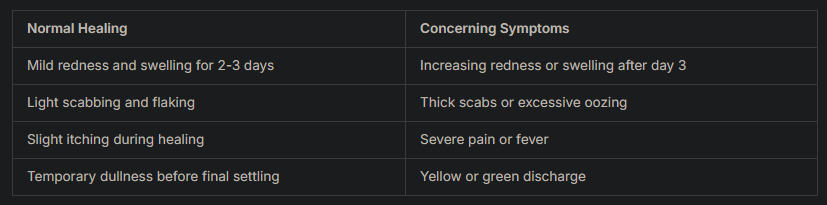
Professional guidance from your artist and medical professionals when necessary protects both your health and your artwork's appearance.
Cultural Sensitivity and Personal Meaning
Tree tattoo design intersects with various cultural traditions, requiring thoughtful consideration of cultural appropriation concerns.
Respecting Cultural Context
Certain tree imagery carries specific cultural significance:
Bodhi tree: Sacred in Buddhism, representing enlightenment. Understanding traditional Thai tattoos and their history provides context for Buddhist imagery.
Celtic tree of life: Rooted in Celtic spirituality, representing interconnection. Appropriate when honoring genuine heritage or with respectful research.
Nordic Yggdrasil: The world tree from Norse mythology, requiring understanding of its mythological context.
Working with culturally significant imagery respectfully means researching its origins, understanding its meaning, and ensuring your design honors rather than appropriates the tradition.
Creating Personal Narratives
The most meaningful tree tattoo design often incorporates personal story elements:
Incorporating family members' birth flowers or favorite trees
Representing specific locations through regional tree species
Marking life transitions through seasonal imagery
Commemorating lost loved ones through memorial trees
Your artist can help weave these personal elements into cohesive, aesthetically strong designs that carry deep individual significance.
Technical Innovations in Fine Line Botanical Work
Contemporary tattoo technology and technique continue advancing, particularly benefiting detailed work like tree tattoo design.
Equipment Advances
Modern rotary machines offer superior precision for fine line work compared to traditional coil machines:
Quieter operation reducing client stress
Adjustable needle depth for consistent line quality
Reduced skin trauma allowing finer detail
Better control for organic, flowing lines
Cartridge needle systems provide improved hygiene and consistency, with specialized configurations designed specifically for fine line botanical work.
Regulatory Considerations
European regulations on tattoo inks have influenced global standards, improving safety through ingredient restrictions and labeling requirements. Premium studios prioritize inks meeting or exceeding these regulatory standards.
Clients should feel comfortable asking about ink brands, ingredient safety, and studio sterilization protocols when choosing the right tattoo studio.
Digital Design Tools
Professional artists increasingly use digital illustration to refine tree tattoo design before tattooing:
Precise scaling: Ensuring proportions work perfectly for chosen placement
Multiple variations: Exploring different compositions quickly
Color testing: Previewing different palette options
Client visualization: Showing how the design will appear on the body
These tools enhance the collaborative process while maintaining the hand-crafted quality of final artwork.
Combining Trees with Complementary Elements
Tree tattoo design often incorporates additional imagery for enhanced meaning and visual interest.
Natural Elements
Harmonious additions include:
Wildlife: Birds nesting in branches, owls perched on limbs, deer beneath canopy
Celestial bodies: Moon visible through branches, sun rays filtering through leaves
Seasonal indicators: Falling autumn leaves, spring blossoms, snow on winter branches
Landscape features: Mountains, water, or meadows surrounding the tree
These elements create narrative depth while maintaining compositional balance.
Abstract and Symbolic Additions
Conceptual enhancements might include:
Roots transforming into other imagery (hearts, hands, words)
Branches becoming musical notes, birds in flight, or constellation patterns
Incorporation of meaningful quotes or names integrated into trunk or roots
Geometric frameworks or mandalas surrounding organic tree forms
Skilled artists balance these additions to enhance rather than overwhelm the central tree imagery.
Portrait and Memorial Integration
Trees frequently serve as framework for memorial tattoos:
Portraits incorporated into trunk or root systems
Dates or names carved into bark
Specific tree species meaningful to deceased loved ones
Seasonal states representing life stages
Understanding how tattoos can cover scars and create meaning from difficult experiences helps approach memorial work sensitively.