White Tattoo Sleeve: Design, Care & Everything to Know
A white tattoo sleeve represents one of the most sophisticated and unconventional approaches to body art in 2026. Unlike traditional black or colored ink designs, white ink creates a subtle, almost ethereal appearance that challenges conventional tattoo aesthetics. This increasingly popular style offers a refined alternative for individuals seeking body art that maintains discretion while showcasing intricate detail work. Understanding the unique characteristics, design considerations, and long-term maintenance requirements of white ink sleeves ensures you make an informed decision before committing to this distinctive form of self-expression.
Understanding White Ink Tattoo Sleeves
White ink tattoos differ fundamentally from traditional tattoo applications in both technique and appearance. The pigment sits beneath the skin's surface, creating a raised, scar-like effect rather than the bold contrast associated with darker inks. When applied as a full sleeve, white ink demands exceptional precision and skill from the tattoo artist.
The visibility of a white tattoo sleeve varies significantly based on skin tone. White ink tattoos appear most prominent on medium to darker skin tones, where the contrast between the ink and natural skin creates a striking visual effect. On lighter skin tones, the designs may appear more subtle, sometimes only visible in certain lighting conditions or when the skin is tanned.
Skin Tone Considerations
Different skin tones interact with white ink in distinct ways that directly impact the final aesthetic:
Fair skin: White ink appears cream-colored or pale yellow, often subtle except under direct light
Medium skin: Provides optimal contrast, allowing intricate details to stand out clearly
Olive skin: Creates beautiful, luminous effects with strong visibility
Dark skin: Produces the most dramatic contrast, making white ink designs highly prominent
Planning a tattoo sleeve requires careful consideration of how the design will flow across the entire arm. For white ink specifically, understanding these visibility factors helps set realistic expectations about the final result.
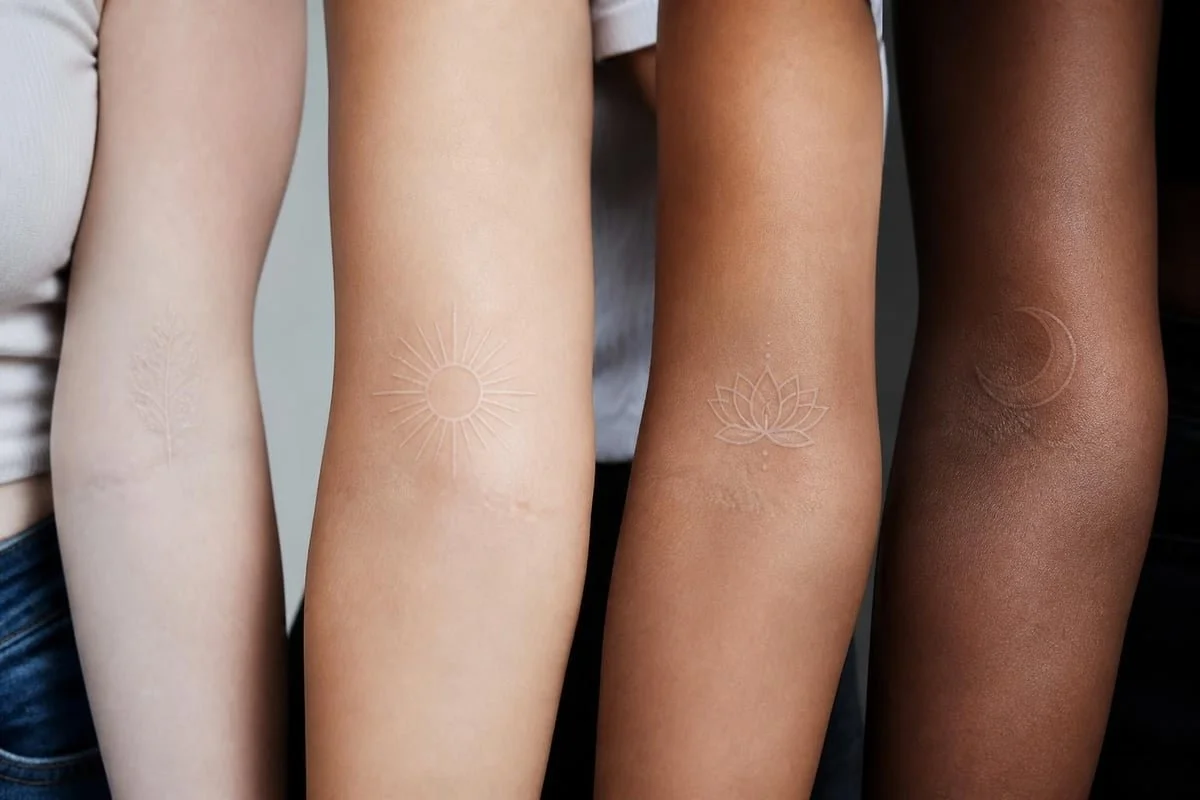
white ink visibility comparison
Design Elements for White Tattoo Sleeves
Creating an effective white tattoo sleeve demands thoughtful design choices that complement the unique properties of white ink. Fine line work, geometric patterns, and nature-inspired motifs translate exceptionally well to this medium.
Optimal Design Categories
Certain design styles maximize the aesthetic potential of white ink applications:
Botanical elements: Delicate flowers, leaves, and vines that wrap organically around the arm
Geometric patterns: Sacred geometry, mandalas, and architectural designs that utilize precise linework
Lace and textile patterns: Intricate designs mimicking fabric textures and ornate detailing
Celestial themes: Stars, moons, and constellation patterns that create a mystical appearance
Abstract compositions: Flowing lines and organic shapes that enhance natural arm contours
The distinctive characteristics of white ink make it particularly suitable for designs that emphasize subtlety and sophistication. Bold, heavy designs typically suited for black ink may not translate effectively to white ink applications.
Coverage and Composition
When planning your white tattoo sleeve composition, consider these strategic approaches:
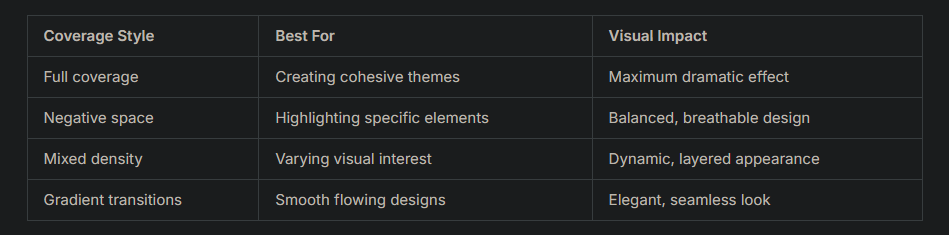
Working with artists who specialize in fine line and detailed tattoo designs ensures your white tattoo sleeve achieves the level of precision this style demands.
Technical Aspects and Application Process
The application of a white tattoo sleeve requires specialized knowledge and technical expertise. White ink behaves differently than traditional pigments during the tattooing process, demanding adjustments in technique and approach.
Artists must apply white ink with greater pressure and repetition to achieve adequate saturation. The pigment particles in white ink are larger and less stable than black ink, making proper depth and density critical for longevity. During your first tattoo session, understanding these technical requirements helps manage expectations about the process.
Session Planning and Timeline
A complete white tattoo sleeve typically requires multiple sessions:
Initial consultation: Design planning, skin assessment, and expectation setting (1-2 hours)
First session: Outline and primary design elements (3-5 hours)
Subsequent sessions: Shading, detail work, and density building (3-4 hours each)
Touch-up session: Addressing any areas requiring additional saturation (2-3 hours)
Most white ink sleeves require 4-6 sessions spaced 4-6 weeks apart to allow proper healing between applications. This extended timeline ensures optimal ink retention and design quality.
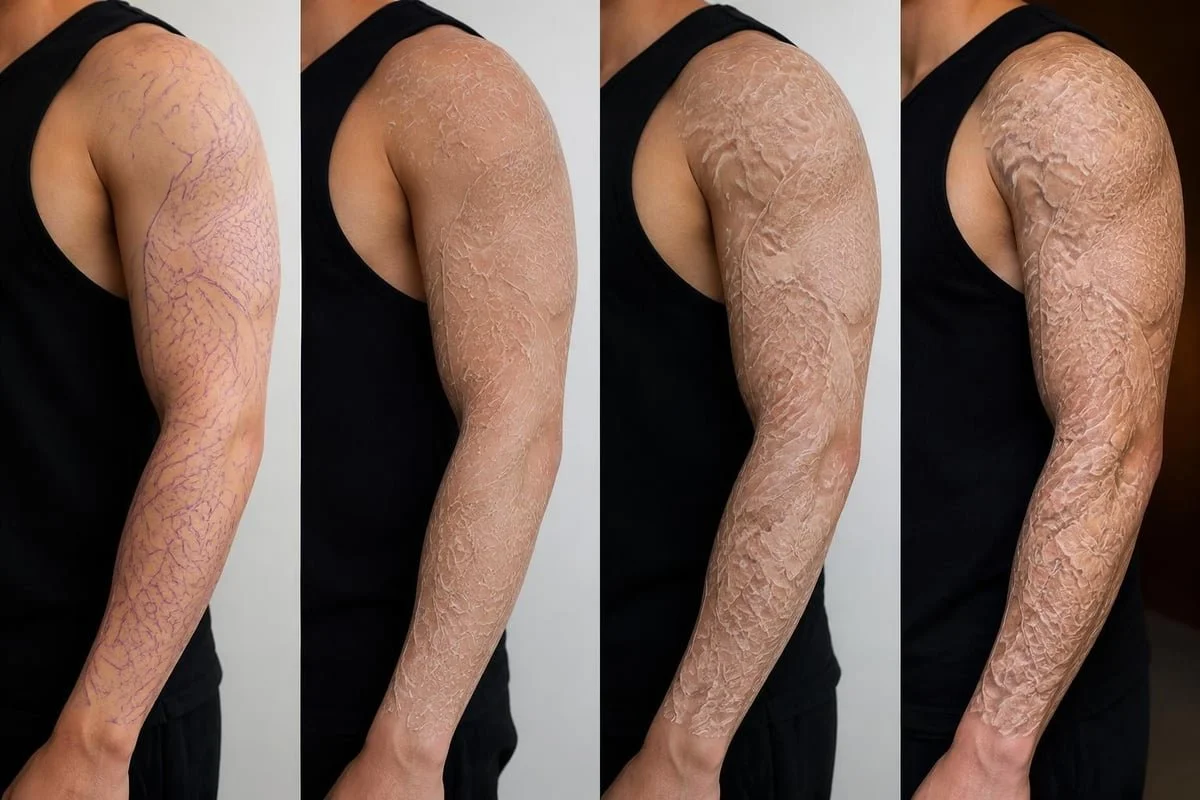
White tattoo sleeve application stages
Healing and Aftercare Requirements
White ink tattoos demand meticulous aftercare to preserve their appearance and prevent complications. The healing process differs from traditional tattoos due to white ink's unique properties and visibility during various healing stages.
Initial Healing Phase
The first two weeks following your white tattoo sleeve application are critical:
Days 1-3: The tattooed area appears raised and may have slight redness. White ink looks brightest during this period but will fade as healing progresses. Keep the area clean and moisturized according to your artist's specific aftercare instructions.
Days 4-14: Peeling and flaking occur as the skin regenerates. The white ink may appear patchy or uneven during this stage, which is completely normal. Avoid picking at the peeling skin to prevent pigment loss.
Long-Term Maintenance
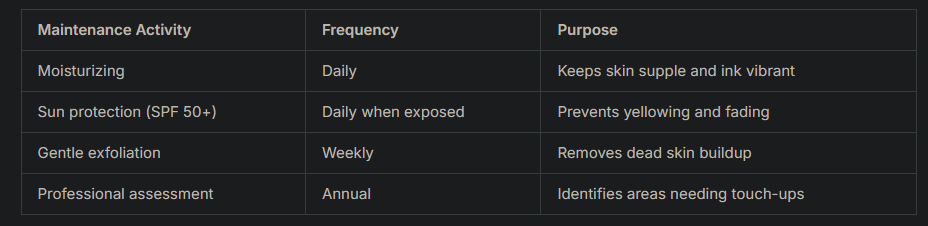
Understanding proper tattoo care becomes even more important with white ink, as neglect can lead to premature fading or discoloration.
Longevity and Aging Considerations
White tattoo sleeves age differently than traditional colored tattoos. The pigment tends to fade faster and may develop a yellowish tint over time, particularly with sun exposure. Setting realistic expectations about longevity helps you plan for maintenance and touch-ups.
Research on white tattoo aging indicates that these designs typically require touch-ups every 2-5 years, depending on skin type, sun exposure, and aftercare practices. Some individuals experience faster fading, while others maintain their white ink remarkably well for extended periods.
Factors Affecting Longevity
Multiple variables influence how long your white tattoo sleeve maintains its appearance:
Skin type: Oily skin may reject white ink more readily than dry skin
Placement: Areas with frequent friction or sun exposure fade faster
Lifestyle: Swimming, tanning, and outdoor activities accelerate fading
Initial application quality: Proper depth and saturation extend longevity
Aftercare consistency: Diligent care significantly impacts retention
The white ink application process requires understanding these factors before committing to a full sleeve design.
Choosing the Right Artist
Selecting an experienced artist specializing in white ink work is perhaps the most critical decision in your white tattoo sleeve journey. Not all tattoo artists possess the technical skills and experience necessary to execute white ink effectively.
Essential Artist Qualifications
When evaluating potential artists for your white tattoo sleeve:
Review portfolios specifically featuring healed white ink work, not just fresh applications
Assess their experience with various tattoo styles and white ink techniques
Verify they understand how white ink interacts with different skin tones
Confirm they use high-quality, reputable white ink brands
Ensure they provide comprehensive aftercare guidance
Finding the right tattoo artist involves thorough research and consultation. Don't hesitate to schedule multiple consultations before making your final decision.

White ink tattoo consultation
Common Misconceptions About White Ink Sleeves
Several myths surround white tattoo sleeves that can lead to unrealistic expectations or unnecessary concerns. Addressing these misconceptions helps you approach your tattoo decision with accurate information.
Myth vs. Reality
Myth: White ink tattoos are invisible on light skin. Reality: While more subtle, they remain visible, especially when the skin is tanned or under certain lighting.
Myth: White ink is more painful than traditional tattoos. Reality: Pain levels are comparable, though multiple passes may be required for adequate saturation.
Myth: White tattoos never fade. Reality: White ink actually fades faster than most colored inks and requires regular touch-ups.
The truth about important white ink considerations helps establish appropriate expectations before beginning your sleeve project.
Design Inspiration and Style Variations
White tattoo sleeves offer remarkable versatility in design approach, from minimalist elegance to intricate complexity. Understanding different style options helps you visualize your ideal aesthetic.
Modern interpretations of white ink sleeves often incorporate:
Negative space techniques: Using untouched skin as part of the design composition
Layered depth: Creating dimensional effects through varying line weights and densities
Ornamental patterns: Drawing inspiration from henna, lace, and decorative arts
Nature motifs: Incorporating flora, fauna, and organic elements
Cultural symbols: Respectfully integrating meaningful iconography
Exploring unique tattoo ideas can spark inspiration for creating a truly distinctive white tattoo sleeve that reflects your personal aesthetic.
Color Combination Possibilities
While pure white ink sleeves create a stunning monochromatic effect, some individuals opt for combination approaches that incorporate white ink alongside other pigments. These hybrid designs offer expanded creative possibilities.
Effective Color Pairings
White ink complements various color palettes:
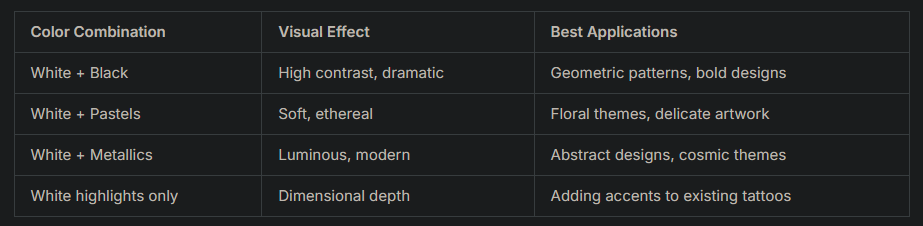
Understanding how colors work with different skin tones helps determine whether a pure white sleeve or a combination approach best suits your vision.
Practical Lifestyle Considerations
Before committing to a white tattoo sleeve, evaluate how this choice aligns with your lifestyle, profession, and personal circumstances. While white ink offers discretion, it still requires significant commitment.
Professional Environment
White tattoo sleeves typically offer greater workplace flexibility than traditional tattoos due to their subtlety. On lighter skin tones, they may be barely visible in office environments, though direct lighting can reveal them. Consider your industry's attitude toward visible body art and whether the semi-visible nature of white ink serves your professional needs.
Daily Activity Impact
Certain lifestyle factors warrant consideration:
Outdoor activities: Frequent sun exposure accelerates fading and yellowing
Water exposure: Chlorine and salt water may affect ink retention during healing
Physical labor: Jobs involving friction or skin trauma can damage white ink more readily
Climate: Hot, humid environments may impact healing and long-term appearance
Technical Alternatives and Cover-Up Options
For those interested in white ink aesthetics but concerned about longevity, alternative approaches exist. The white out technique uses white ink over existing black tattoos to create new designs or lighten unwanted artwork.
This approach offers unique possibilities for tattoo transformation while working with white ink's distinctive properties. Additionally, white ink serves as an effective highlighting tool for covering scars or creating three-dimensional effects in existing tattoo work.
Hybrid Sleeve Approaches
Rather than committing to a full white tattoo sleeve, consider these alternatives:
Accent sleeves: White ink highlights within a primarily colored or black design
Partial coverage: White ink on forearm with traditional ink on upper arm
Seasonal designs: White ink that appears more prominently when tanned
Progressive sleeves: Starting with small white elements before expanding to full coverage
Understanding the full spectrum of sleeve tattoo options helps you make the most informed decision about incorporating white ink into your body art journey.
Cost Considerations and Investment Planning
White tattoo sleeves typically command premium pricing due to the specialized skill required and extended session times. Multiple passes with white ink, combined with the need for future touch-ups, make this a significant financial commitment.
Budget planning for a white tattoo sleeve should account for:
Initial design and application: Multiple sessions over several months
Touch-up appointments: Every 2-5 years to maintain vibrancy
Premium aftercare products: High-quality, tattoo-specific moisturizers and sunscreens
Artist expertise premium: Experienced white ink specialists may charge higher rates
When choosing the right tattoo studio, prioritize quality and experience over cost savings. White ink's challenging nature makes artistic expertise a worthwhile investment that pays dividends in longevity and aesthetic quality.