Minimalist Tattoo Styles: The Ultimate Guide for 2026
The art of saying more with less has become a defining aesthetic movement in contemporary tattooing. Minimalist tattoo styles have captured the attention of clients seeking refined, elegant body art that speaks through subtlety rather than boldness. This approach to tattooing strips away unnecessary complexity, focusing on clean lines, intentional spacing, and the power of simplicity to create designs that remain timeless and sophisticated. As the demand for understated elegance grows in 2026, understanding the nuances of this style becomes essential for anyone considering their next piece of permanent art.
The Foundation of Minimalist Design Philosophy
Minimalist tattoo styles represent more than just small or simple designs. They embody a deliberate artistic philosophy rooted in the principle that every line must serve a purpose. The minimalist tattoo approach requires artists to master the art of reduction, identifying the essential elements that communicate an idea while eliminating everything superfluous.
This design methodology draws inspiration from various artistic movements, including Scandinavian design, Japanese Zen aesthetics, and modernist art. The result is body art that feels both contemporary and timeless, avoiding trends that quickly become dated.
Core Characteristics That Define the Style
The defining features of minimalist tattoo styles create a distinct visual language that sets them apart from other approaches:
Fine-line execution using single-needle or small groupings
Strategic use of negative space as an active design element
Monochromatic palette focusing primarily on black ink
Small to medium scale emphasizing placement and proportion
Geometric precision or organic simplicity in form
Understanding these characteristics helps clients appreciate the technical skill required to execute minimalist work successfully. What appears effortlessly simple demands exceptional precision from the artist.
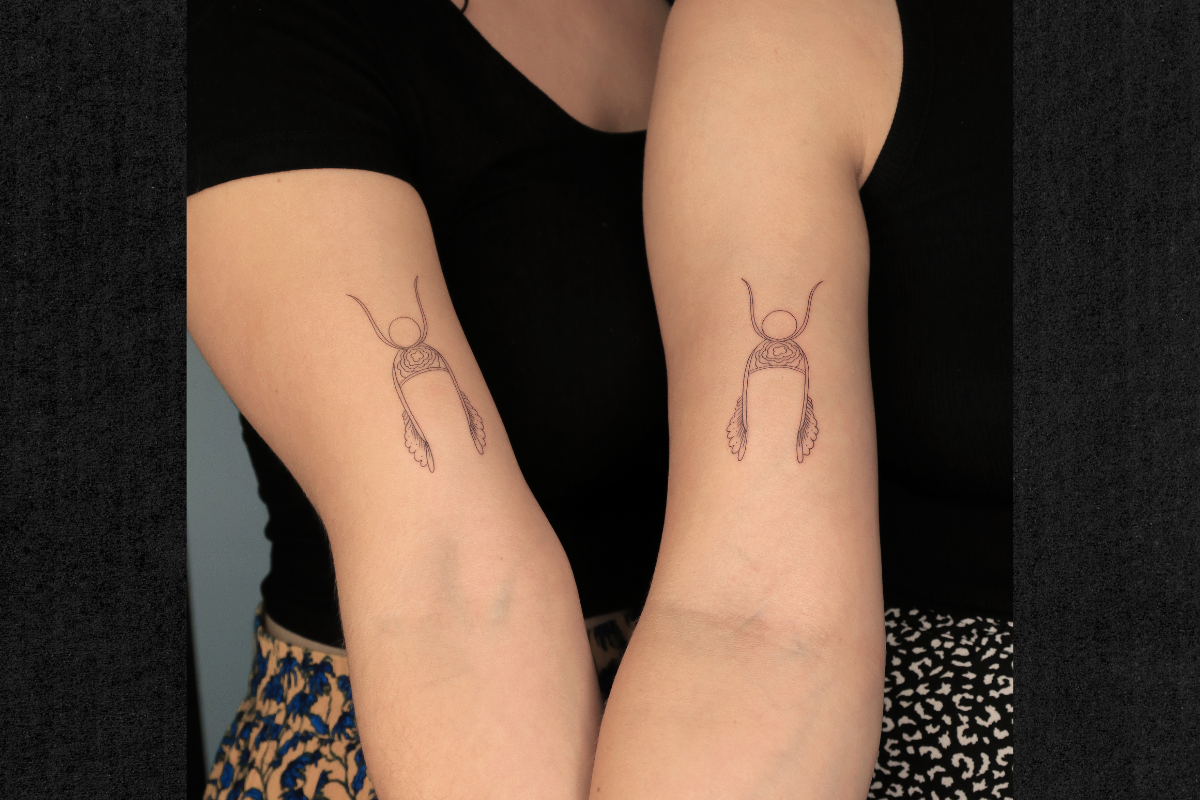
Essential elements of minimalist tattoo design
Technical Mastery Behind Minimal Linework
The execution of minimalist tattoo styles demands exceptional technical proficiency. Artists must develop steady hands capable of creating consistent line weights across varying body contours. Unlike bold traditional tattoos where minor imperfections can be masked by thick lines and shading, minimalist work exposes every slight variation in the artist's technique.
Single-needle tattooing represents the pinnacle of minimalist technical achievement. This method uses the smallest needle configuration possible, creating hairline marks that require multiple passes to achieve the desired ink saturation. The process takes longer and demands greater concentration than conventional tattooing methods.
Line Quality and Consistency
Achieving perfect line quality involves several technical considerations. The artist must maintain consistent depth penetration throughout the design to ensure even healing and ink retention. Pressure variations that would barely register in bold work become glaringly obvious in fine-line pieces.
Machine settings play a critical role in minimalist execution. Artists typically use rotary machines rather than coil machines for their smoother operation and precise control. Voltage settings must be calibrated carefully to match skin type, body placement, and desired line character.
The fine-line and single-needle methods require artists to work more slowly and deliberately than with traditional techniques, making each session a meditation in precision and patience.
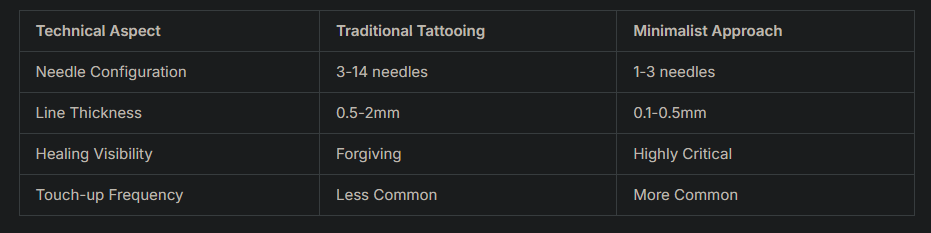
Popular Themes and Subject Matter
Minimalist tattoo styles translate certain subjects particularly well. Geometric shapes, botanical illustrations, celestial bodies, and abstract symbols frequently appear in minimalist portfolios. These subjects naturally lend themselves to simplification while retaining their recognizable essence.
Nature-inspired designs dominate the minimalist aesthetic. Single-line flower silhouettes, delicate leaf outlines, and simplified animal forms capture natural beauty through essential shapes. The fine line tattoo specialization demonstrates how organic subjects can be rendered with minimal strokes while maintaining their character.
Symbolism and Personal Meaning
Many clients choose minimalist tattoo styles specifically for their ability to encode personal meaning within understated designs. A simple geometric shape might represent a significant life philosophy, while a single-line portrait outline could commemorate a loved one. The subtlety allows for private significance that doesn't demand public explanation.
Abstract representations offer particular appeal within minimalist work. Rather than literal depictions, artists create symbolic interpretations that communicate emotions, memories, or concepts through simplified forms. This approach resonates with clients seeking tattoos that feel personal and unique.
When exploring various tattoo styles, many discover that minimalist approaches offer the most flexibility for combining multiple meanings within a cohesive design framework.
Placement Considerations for Minimal Designs
Strategic placement amplifies the impact of minimalist tattoo styles. Unlike larger pieces that create their own visual territory, minimal designs work with the body's natural contours and negative space. The relationship between the tattoo and surrounding skin becomes part of the composition itself.
Certain body areas particularly suit minimalist work:
Inner wrist and forearm for linear designs following bone structure
Behind the ear for tiny symbolic pieces
Collarbone and ribcage where delicate lines complement anatomical curves
Fingers and hands for ultra-minimal expressions
Ankle and foot for placement that allows discretion
The importance of tattoo placement extends beyond aesthetics to include practical considerations like visibility, professional requirements, and long-term aging patterns.
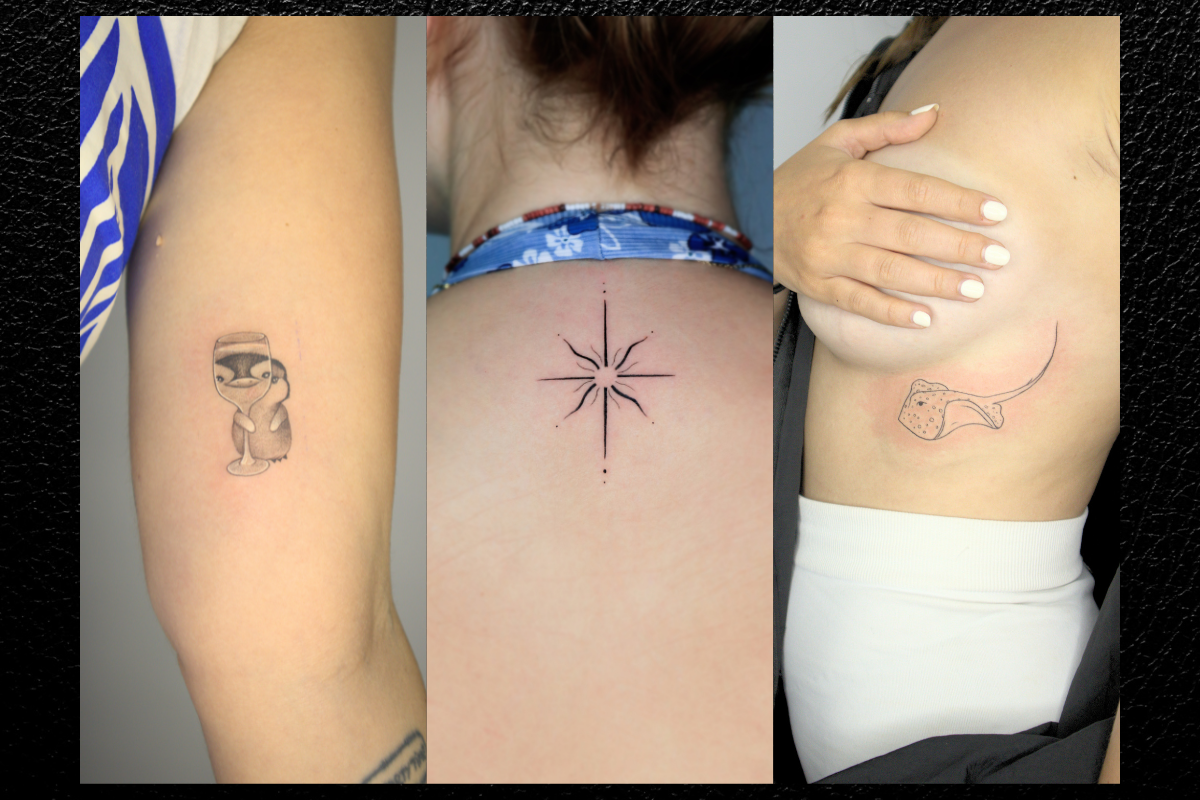
Body placement options for minimalist tattoos
Sizing and Scale Proportions
Determining appropriate size for minimalist designs requires careful evaluation. Too small, and fine details may blur together as the tattoo ages. Too large, and the piece may lose its minimalist character. Most successful minimalist tattoo styles fall between one and four inches in their longest dimension.
Professional artists assess multiple factors when recommending size, including the complexity of line patterns, the client's skin texture, the chosen body placement, and expected aging characteristics. A design that looks perfect on paper may require adjustment for optimal skin translation.
Longevity and Aging Characteristics
One common concern about minimalist tattoo styles involves how they age over time. Fine lines naturally spread slightly as skin changes, leading some to question whether these delicate designs will remain legible decades later. Understanding aging patterns helps clients make informed decisions about their minimalist work.
The philosophy behind minimalist tattoos emphasizes quality execution as the primary factor in longevity. Well-executed fine-line work by experienced artists maintains clarity far better than poorly executed pieces, regardless of style.
Factors Affecting Long-Term Appearance
Several variables influence how minimalist tattoos age:
Initial line quality and ink saturation depth
Sun exposure and UV protection practices
Skin type and natural aging patterns
Placement area and movement frequency
Aftercare adherence during healing phases
Clients committed to preserving their minimalist tattoo styles invest in proper sun protection and may schedule touch-up sessions every five to ten years to refresh line crispness. These maintenance considerations should factor into the initial decision-making process.
Selecting the Right Artist for Minimalist Work
Not all talented tattoo artists excel at minimalist styles. This specialized approach requires specific skills that differ significantly from bold traditional work or complex realism. Choosing the right tattoo artist becomes particularly critical for clients seeking minimalist designs.
Portfolio review forms the foundation of artist selection. Examine multiple examples of completed minimalist work, paying attention to line consistency, spacing precision, and overall composition. Look for healed photos rather than just fresh work, as these reveal the artist's true technical capability.
Questions to Ask Potential Artists
During consultations, specific questions help identify artists truly proficient in minimalist tattoo styles:
How long have you specialized in fine-line work?
What needle configurations do you prefer for minimal designs?
Can you show healed examples from various time periods?
What size do you recommend for my concept based on aging considerations?
How do you approach touch-ups for minimalist pieces?
Artists confident in their minimalist capabilities welcome these technical questions. Those hesitant or unable to provide detailed answers may lack the specialized experience needed for optimal results.
The importance of choosing the perfect tattoo artist extends beyond technical skill to include communication style, artistic vision alignment, and comfort level during the tattooing process.
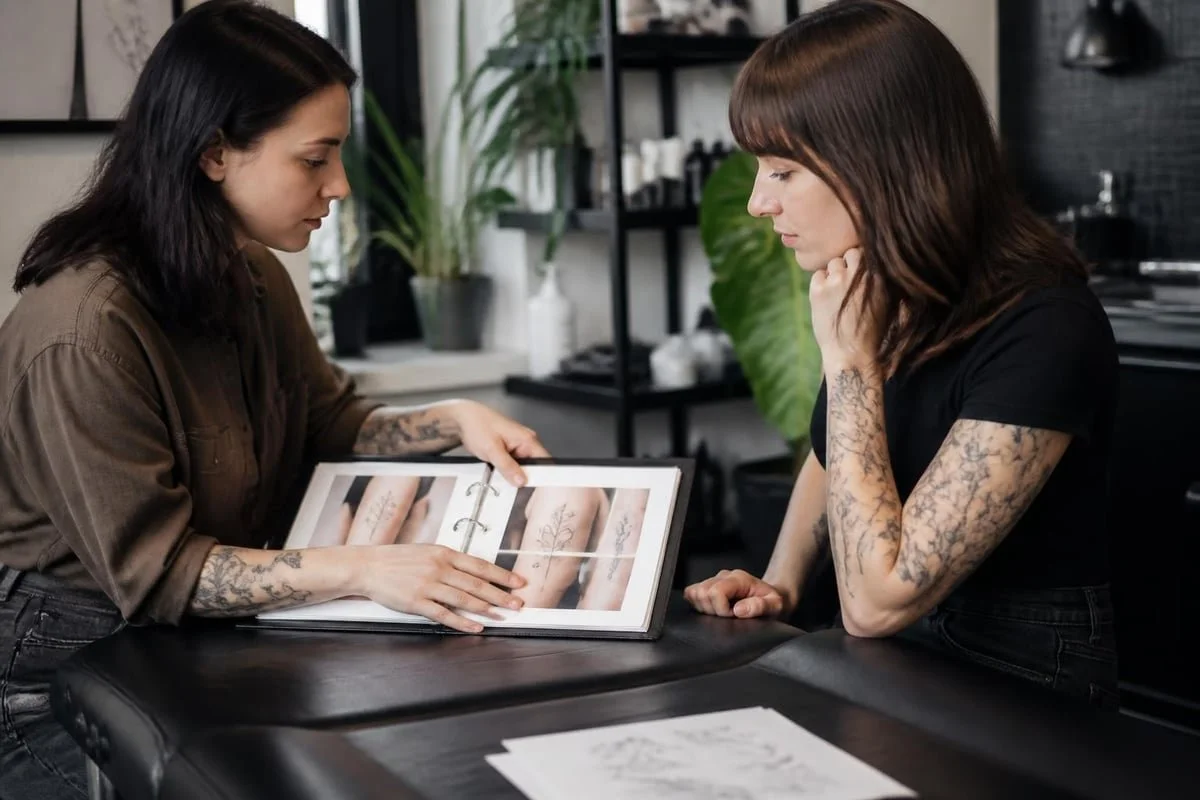
Evaluating minimalist tattoo artist portfolios
Design Development and Customization Process
Creating custom minimalist tattoo styles involves collaborative refinement between client and artist. The process typically begins with concept discussion, where clients describe their vision, preferred symbolism, and placement intentions. Artists then translate these ideas into minimalist visual language.
Sketch iterations allow gradual refinement toward the perfect design. The artist may present several versions showing different levels of reduction, helping clients understand how much detail can be removed while maintaining recognizability. This collaborative process ensures the final design resonates personally while working within minimalist aesthetic principles.
Balancing Simplicity with Uniqueness
One challenge in minimalist work involves creating designs that feel unique rather than generic. With limited elements to work with, distinguishing one minimalist flower from thousands of others requires thoughtful customization. Artists achieve this through subtle variations in line character, proportional adjustments, and incorporating personalized symbolic elements.
The symbolism behind tattoo designs provides depth that compensates for visual simplicity. A minimalist design gains significance through the story it represents rather than elaborate visual complexity.
Color Considerations in Minimal Aesthetics
While black ink dominates minimalist tattoo styles, selective color use can enhance certain designs without compromising their minimal character. When incorporated thoughtfully, a single accent color creates visual interest while maintaining overall simplicity.
Monochromatic variations using different gray tones offer another approach to adding dimension without introducing color. This technique requires exceptional skill in controlling ink dilution and saturation depth to achieve subtle tonal shifts.
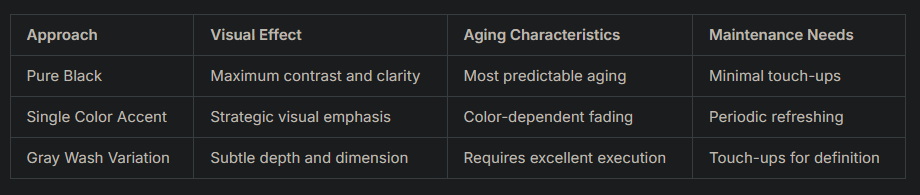
Understanding how different tattoo colors work helps clients make informed decisions about whether to incorporate color into their minimalist designs or maintain pure monochromatic simplicity.
Session Experience and Pain Considerations
The tattooing experience for minimalist tattoo styles differs from larger, bolder work. Sessions typically run shorter due to the reduced coverage area, though the detailed nature of fine-line work means artists work more slowly than with conventional techniques.
Pain levels vary significantly based on placement rather than style. The fine needles used in minimalist work create a different sensation than larger needle groupings-often described as sharper and more precise rather than the broader burning sensation of traditional tattooing.
What to Expect During Your Session
Clients preparing for their first tattoo session should understand that minimalist work requires stillness and patience. Any movement or muscle tension can affect line quality, so maintaining relaxed positioning throughout the session proves essential.
Stencil placement receives particular attention in minimalist work. Since these designs often emphasize relationship with body anatomy and negative space, artists spend considerable time ensuring perfect positioning before beginning the tattoo.
Aftercare Specific to Fine-Line Work
Proper healing significantly impacts the final appearance of minimalist tattoo styles. The delicate nature of fine lines makes them more susceptible to damage from improper aftercare than bold traditional work. Following artist-recommended protocols ensures optimal healing and long-term clarity.
Understanding tattoo aftercare essentials becomes particularly important for minimalist pieces. Over-moisturizing can pull ink from fine lines, while insufficient care may lead to scabbing that damages delicate linework.
Critical Healing Phase Guidelines
The first two weeks prove most critical for minimalist tattoo healing:
Gentle washing with unscented soap twice daily
Thin application of recommended ointment or moisturizer
Avoiding sun exposure, swimming, and excessive sweating
Resisting the urge to pick at any scabbing or peeling
Wearing loose clothing over tattooed areas
Many artists provide specific aftercare instructions tailored to fine-line work, which may differ from general tattoo aftercare advice. Following these customized guidelines ensures the best possible healing outcome.
Minimalist Approaches to Cover-Up Work
While minimalist tattoo styles excel as original designs, they also offer solutions for certain cover-up situations. Small, faded tattoos can sometimes be incorporated into larger minimalist compositions that work with rather than against the existing ink.
However, minimalist approaches have limitations in cover-up applications. The light, delicate nature of fine-line work cannot effectively conceal bold or dark existing tattoos. Clients interested in covering scars with tattoos should discuss whether minimalist styles suit their specific situation or if alternative approaches would prove more effective.
Cultural Perspectives and Modern Interpretation
Minimalist tattoo styles draw inspiration from various cultural traditions while evolving into a distinctly contemporary aesthetic. Japanese irezumi philosophy, with its emphasis on negative space and intentional composition, influences modern minimalist approaches. Similarly, traditional Thai tattoo practices incorporate fine-line sacred geometry that resonates with current minimalist trends.
The rich history of traditional Thai tattoos demonstrates how cultural tattoo traditions have long appreciated the power of simplified, symbolic designs-a concept that continues in modern minimalist interpretations.
Contemporary Evolution and Innovation
Modern minimalist tattoo styles continue evolving as artists experiment with new techniques and conceptual approaches. Some incorporate subtle dotwork elements, while others explore the boundaries between minimalism and geometric abstraction. This ongoing innovation ensures the style remains fresh and relevant rather than becoming formulaic.
Social media platforms have accelerated the spread and evolution of minimalist aesthetics, allowing artists worldwide to share techniques and inspire one another. This global exchange has elevated the overall quality and creativity within the minimalist tattoo community.