Flower Tattoos for Ladies: Design Guide 2026
Flower tattoos for ladies remain among the most sought-after designs in luxury tattoo studios worldwide, combining natural beauty with deeply personal symbolism. These timeless pieces represent everything from personal growth and femininity to remembrance and transformation, making them versatile choices for women seeking meaningful body art. In 2026, the evolution of tattooing techniques has elevated botanical designs to new heights, with fine line artistry and intricate detailing creating sophisticated interpretations of nature's most beautiful blooms. Whether you're considering your first tattoo or adding to an existing collection, understanding the nuances of floral designs ensures you make an informed decision that resonates with your personal story.
Understanding the Enduring Appeal of Botanical Ink
The popularity of flower tattoos for ladies transcends generational boundaries and cultural differences. Women have embraced floral designs for decades because they offer an extraordinary combination of aesthetic beauty and symbolic depth. Each bloom carries unique meanings that can be customized to reflect individual experiences, values, and aspirations.
Modern luxury tattoo studios have transformed how these designs are executed, incorporating advanced techniques that capture the delicate details of petals, stems, and leaves with remarkable precision. Fine line work has become particularly popular for botanical pieces, allowing artists to create realistic representations or stylized interpretations that maintain elegance regardless of size.
The versatility of floral tattoos extends beyond their visual appeal. They adapt beautifully to virtually any placement on the body, from small minimalist pieces behind the ear to elaborate full-sleeve compositions. This flexibility makes them ideal for both those taking their first step into body art and experienced collectors expanding their portfolios.
Cultural Significance Across Traditions
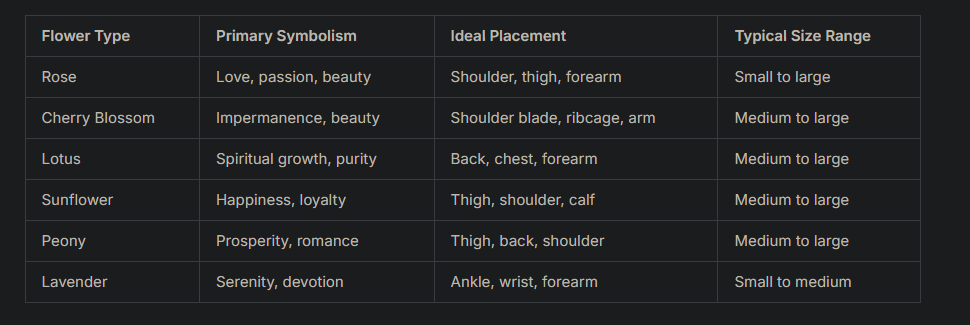
Different cultures have assigned specific meanings to various flowers throughout history. Roses symbolize love and passion in Western traditions, while lotus flowers represent spiritual awakening and purity in Eastern philosophies. Cherry blossoms embody the beauty of impermanence in Japanese culture, and peonies signify prosperity and honor in Chinese symbolism.
Understanding these cultural contexts enriches the selection process. When you choose a design that resonates with your heritage or personal philosophy, your tattoo becomes more than decoration-it transforms into a meaningful statement about your identity and values.
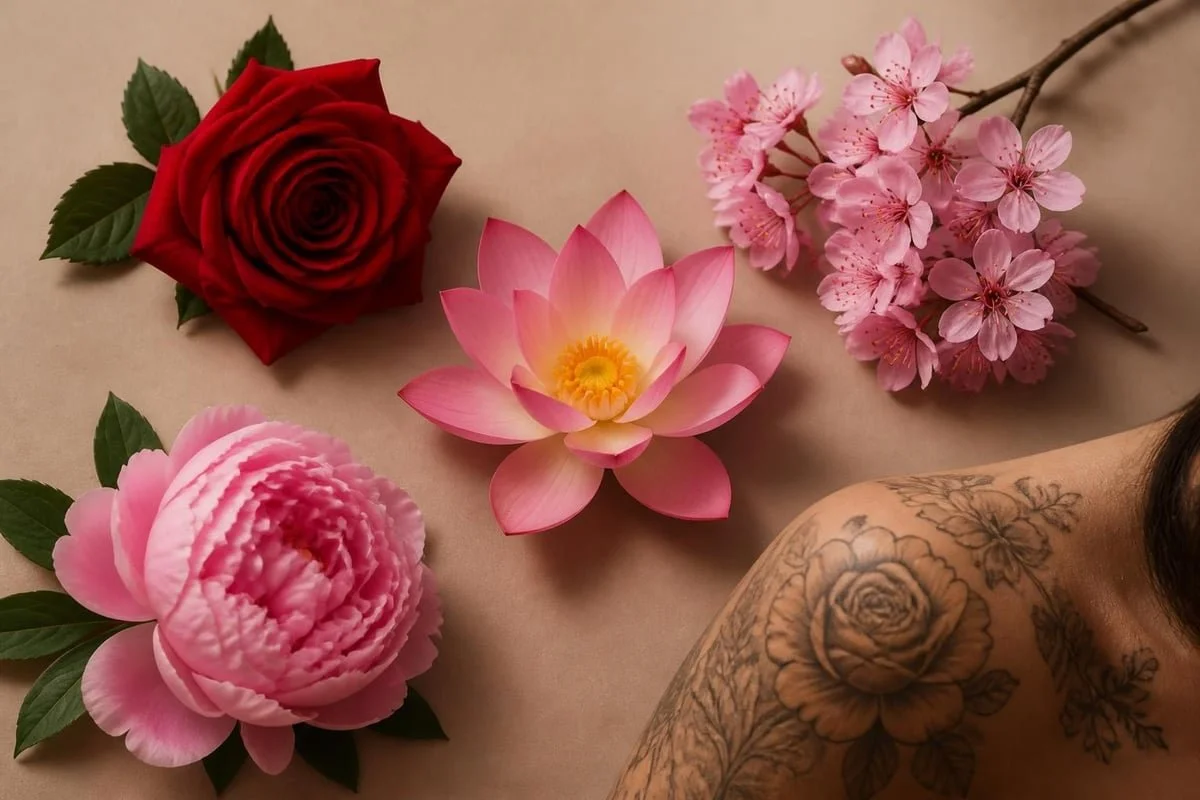
flower symbolism across cultures
Popular Flower Varieties and Their Meanings
Selecting the right bloom for your tattoo requires consideration of both aesthetic preference and symbolic significance. Each flower variety offers distinct visual characteristics and carries specific meanings that can enhance the personal connection to your artwork.
Classic Rose Designs
Roses remain the most requested flower in tattoo studios worldwide. Their layered petals provide excellent opportunities for shading and depth, while their universal recognition makes them instantly relatable. Red roses traditionally symbolize romantic love, while white roses represent innocence and new beginnings. Yellow roses convey friendship and joy, and black roses can signify rebirth or farewell.
The complexity of rose designs varies significantly. Some clients prefer realistic renderings with detailed shading and color gradients, while others opt for minimalist line work that captures the essence of the bloom with elegant simplicity.
Delicate Cherry Blossoms
Cherry blossoms offer ethereal beauty and profound meaning. These flowers bloom briefly each spring, making them powerful symbols of life's fleeting nature and the importance of cherishing each moment. Their soft pink petals and graceful branches create naturally flowing compositions that work beautifully along the shoulder, down the spine, or wrapping around the forearm.
Many women appreciate cherry blossoms for their feminine appearance and the reminder to embrace change with grace. Exploring different tattoo styles helps determine whether watercolor, traditional, or fine line techniques best suit your vision for this design.
Lotus Flower Spirituality
The lotus holds special significance for those drawn to spiritual symbolism. Rising from muddy water to bloom pristine on the surface, the lotus represents transformation, resilience, and spiritual enlightenment. These qualities resonate deeply with women who have overcome adversity or experienced significant personal growth.
Lotus designs range from simple mandala-style patterns to elaborate realistic portrayals with multiple layers of petals. The symmetrical nature of lotus flowers makes them particularly well-suited for placement on the back, chest, or as standalone pieces on the forearm or calf.
Vibrant Sunflower Positivity
Sunflowers bring brightness and optimism to any tattoo collection. Their bold yellow petals and distinctive circular centers create visually striking designs that symbolize happiness, loyalty, and adoration. These blooms work exceptionally well for those seeking larger, more colorful pieces.
The architectural structure of sunflowers provides interesting opportunities for artistic interpretation. Some designs emphasize the geometric patterns within the flower's center, while others focus on the dramatic contrast between the golden petals and dark seeds.
Design Styles for Contemporary Floral Tattoos
The execution style dramatically impacts the final appearance of flower tattoos for ladies. Current trends showcase diverse approaches, from hyperrealistic renderings to abstract interpretations, each offering distinct aesthetic qualities.
Fine Line Floral Artistry
Fine line techniques have revolutionized botanical tattoo designs in recent years. This approach uses single needles or small needle groupings to create delicate, precise lines that capture intricate details without appearing heavy or bold. The result is sophisticated, often minimalist artwork that ages gracefully and maintains its elegance over time.
This style particularly suits clients seeking understated designs that complement rather than dominate their appearance. Fine line work requires exceptional skill and steady hands, making choosing the right tattoo artist especially important for achieving optimal results.
Watercolor Techniques
Watercolor tattoos mimic the flowing, organic appearance of watercolor paintings. These designs feature soft color washes, gradient effects, and sometimes intentional "bleeding" beyond the lines to create an artistic, painterly quality. Watercolor floral pieces often appear more whimsical and contemporary compared to traditional tattoo styles.
The technique works beautifully for flowers with naturally varied coloration, such as wildflower bouquets or abstract floral interpretations. However, clients should understand that watercolor tattoos may require more frequent touch-ups than traditional designs to maintain their vibrancy.
Traditional and Neo-Traditional Approaches
Traditional tattooing brings bold outlines and saturated colors to floral designs. This style, rooted in classic American tattoo heritage, creates striking, highly visible artwork that stands the test of time. Neo-traditional techniques build upon this foundation, incorporating more detailed shading, expanded color palettes, and enhanced dimension while maintaining the bold, readable quality of traditional work.
These approaches suit clients who appreciate vintage aesthetics or desire larger statement pieces. The robust nature of traditional tattooing ensures the design remains clear and vibrant for decades with proper care.
Minimalist Single-Line Designs
At the opposite end of the spectrum, minimalist flower tattoos for ladies embrace simplicity through single continuous lines that suggest rather than fully render botanical forms. These designs demonstrate how much can be communicated with minimal elements, creating elegant, modern pieces that integrate seamlessly with various personal styles.
Minimalist approaches work particularly well for small placements and first tattoos, offering sophisticated artwork without overwhelming commitment. As detailed in resources about minimalistic and delicate flower tattoos, these pieces prove that restraint often enhances rather than diminishes artistic impact.
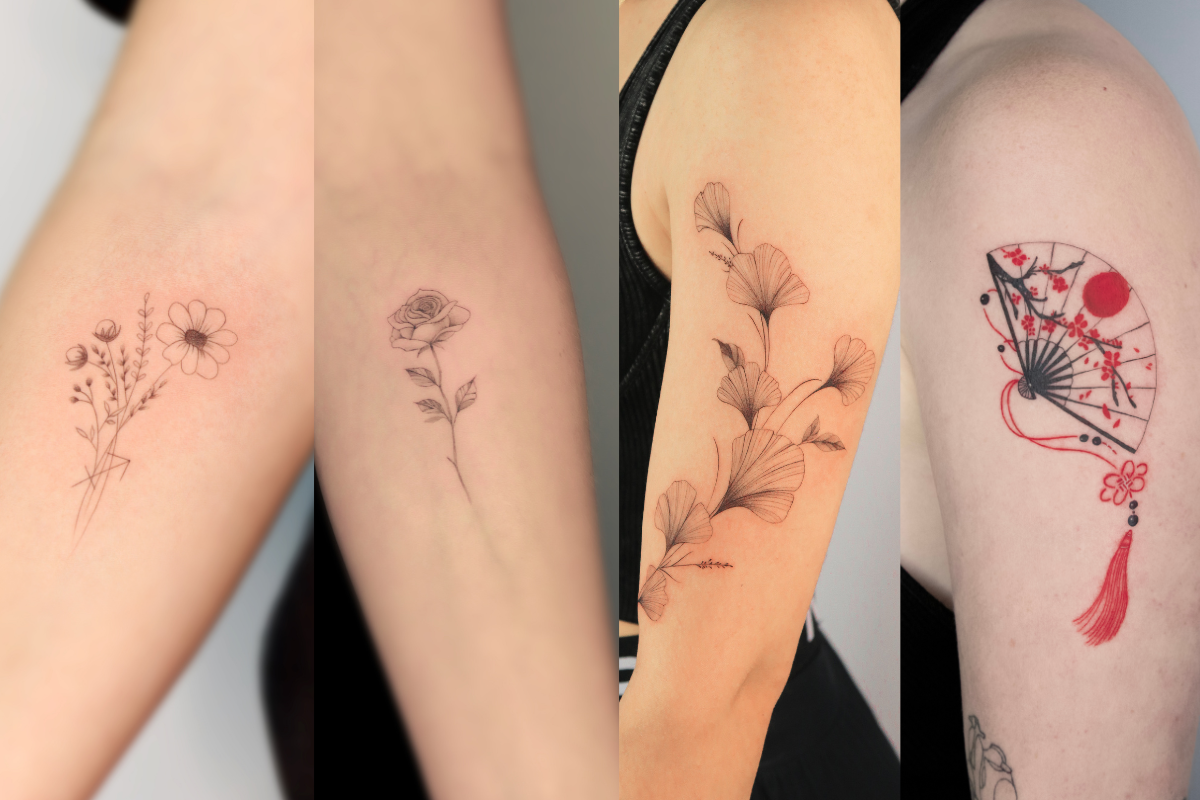
Flower tattoo style variations
Strategic Placement Considerations
Placement significantly affects both the visual impact and personal significance of your floral tattoo. Different body areas offer varying advantages in terms of visibility, pain levels, and how the design ages over time.
Visible Versus Discreet Locations
The decision between visible and easily concealed placement depends on personal circumstances, professional requirements, and comfort levels. Forearms, hands, and ankles provide constant visibility, allowing you to enjoy your artwork daily and share it readily with others. These locations make bold statements about personal style and commitment to body art.
Conversely, shoulder blades, ribcages, and thighs offer more privacy, with the flexibility to reveal or conceal your tattoo based on situation and preference. Many professionals opt for these placements to maintain workplace versatility while still enjoying meaningful body art. Understanding tattoo placement helps align your choice with both aesthetic goals and practical considerations.
Size and Scale Proportions
Body anatomy influences how different sized designs appear. Delicate ankle pieces suit smaller blooms like forget-me-nots or small roses, while larger areas like thighs and backs accommodate sprawling compositions featuring multiple flowers, vines, and complementary elements.
Small placements (wrist, ankle, behind ear): Single blooms, minimalist designs, tiny bouquets
Medium placements (forearm, shoulder, calf): Detailed single flowers, small clusters, vertical compositions
Large placements (thigh, back, ribcage): Elaborate gardens, multiple flower varieties, flowing vine work
The comprehensive guide to flower tattoos illustrates how scale impacts design complexity and detail levels.
Anatomical Flow and Movement
Exceptional tattoo artists consider how designs interact with body contours and natural movement. Flowers with stems and vines can follow muscle lines, wrap around limbs, or flow across curves to create dynamic, three-dimensional effects. This attention to anatomical harmony ensures your tattoo appears integrated with your body rather than simply placed upon it.
Shoulder and hip placements allow designs to extend naturally across rounded surfaces. Spine tattoos can utilize the body's central vertical line for balanced compositions. When considering hand flower tattoo options, remember that hand anatomy creates unique challenges and opportunities for artistic flow.
Customizing Your Floral Design
Generic flash designs have their place, but truly exceptional flower tattoos for ladies emerge from collaborative customization processes between client and artist. Personalization transforms standard botanical imagery into deeply meaningful artwork that tells your unique story.
Incorporating Personal Elements
Adding specific details creates one-of-a-kind designs that hold particular significance. Birth flowers corresponding to meaningful dates, flowers from significant locations, or blooms associated with loved ones all enhance emotional connections to your tattoo.
Some clients incorporate names, dates, or meaningful words woven through stems or petals. Others request specific color variations that hold personal significance or complement existing tattoos. The possibilities for customization are limited only by imagination and artistic feasibility.
Combining Multiple Flower Species
Mixed floral compositions allow you to incorporate multiple symbolic meanings or create visually dynamic arrangements. A bouquet might include roses for love, lavender for peace, and daisies for innocence, creating a personal garden of meaningful blooms.
When combining flowers, consider how different species interact aesthetically. Some blooms have similar shapes and work harmoniously together, while others provide interesting contrasts in petal structure, size, and overall form. Professional artists can arrange diverse elements into cohesive, balanced compositions.
Adding Complementary Natural Elements
Expanding beyond pure florals introduces additional depth and symbolism. Butterflies represent transformation and freedom, hummingbirds symbolize joy and resilience, and bees signify community and hard work. Incorporating bee tattoo symbolism alongside flowers creates rich, layered narratives.
Other popular additions include:
Dewdrops for purity and new beginnings
Thorns for protection and life's challenges
Leaves and vines for growth and connection
Geometric frames for modern contrast
Celestial elements like moons or stars
Color Selection and Application
Color choices dramatically influence the mood, style, and longevity of floral tattoos. Understanding how different pigments interact with skin tones and age over time ensures satisfaction with your artwork for years to come.
Black and Gray Sophistication
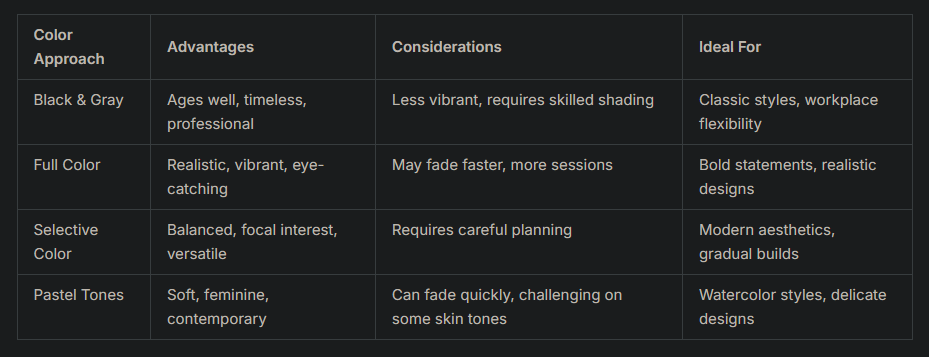
Monochromatic designs offer timeless elegance and often age more gracefully than colored work. Black and gray florals rely on shading techniques to create depth, dimension, and tonal variation. This approach suits both realistic renderings and stylized interpretations.
The absence of color allows the form and composition to take center stage. Many clients appreciate the classic, understated quality of grayscale work, particularly for professional environments where subtlety is valued. Exploring gray tattoo ink options reveals the remarkable range achievable within this palette.
Vibrant Color Applications
Full color brings flowers to life with remarkable realism and visual impact. Modern tattoo pigments offer exceptional vibrancy and staying power, with color palettes ranging from soft pastels to intense saturated hues. The selection of tattoo colors for different skin tones affects how pigments appear and age.
Realistic color work requires significant skill in blending, shading, and understanding how different pigments interact both during application and throughout the healing process. Artists must consider how colors will settle and potentially shift over time to ensure long-term satisfaction.
Selective Color Accents
A popular contemporary approach combines primarily black and gray work with strategic color accents. This technique might feature grayscale foliage with a single vibrant red rose, or monochromatic petals with colored centers. The selective use of color creates focal points and adds visual interest while maintaining overall sophistication.
This approach also offers practical advantages. Colored sections can be added later if desired, allowing clients to start with black and gray work and incorporate color during future sessions.
Preparing for Your Tattoo Session
Proper preparation enhances both the tattooing experience and final results. Understanding what to expect and how to prepare physically and mentally ensures a smoother process and optimal healing.
Consultation and Design Approval
Professional studios prioritize thorough consultations before beginning any work. During this phase, you'll discuss your vision, review the artist's portfolio, and collaborate on design refinement. Bring reference images, describe your symbolism preferences, and communicate any concerns or questions.
Many studios provide design proofs before your appointment, allowing time for revisions and ensuring complete satisfaction before ink touches skin. This collaborative process is essential when working with professional tattoo artists to achieve your desired outcome.
Physical Preparation Guidelines
Arriving well-rested, hydrated, and properly nourished significantly impacts how your body handles the tattooing process. Avoid alcohol and blood-thinning medications for 24 hours before your appointment, as these can increase bleeding and affect ink retention.
Wear comfortable clothing that provides easy access to the placement area. For longer sessions, bring snacks, water, and entertainment. Understanding what happens during a tattoo session reduces anxiety and helps you prepare appropriately.
Managing Pain and Discomfort
Pain tolerance varies significantly among individuals, and different body areas have varying sensitivity levels. Generally, areas with more flesh and muscle tolerate tattooing better than bony regions or areas with thin skin. Ribs, ankles, and hands typically rank among the more sensitive placements for flower tattoos for ladies.
Breathing techniques, breaks during longer sessions, and maintaining proper blood sugar levels all help manage discomfort. Most clients find the anticipation worse than the actual experience, particularly when working with skilled artists who prioritize client comfort.
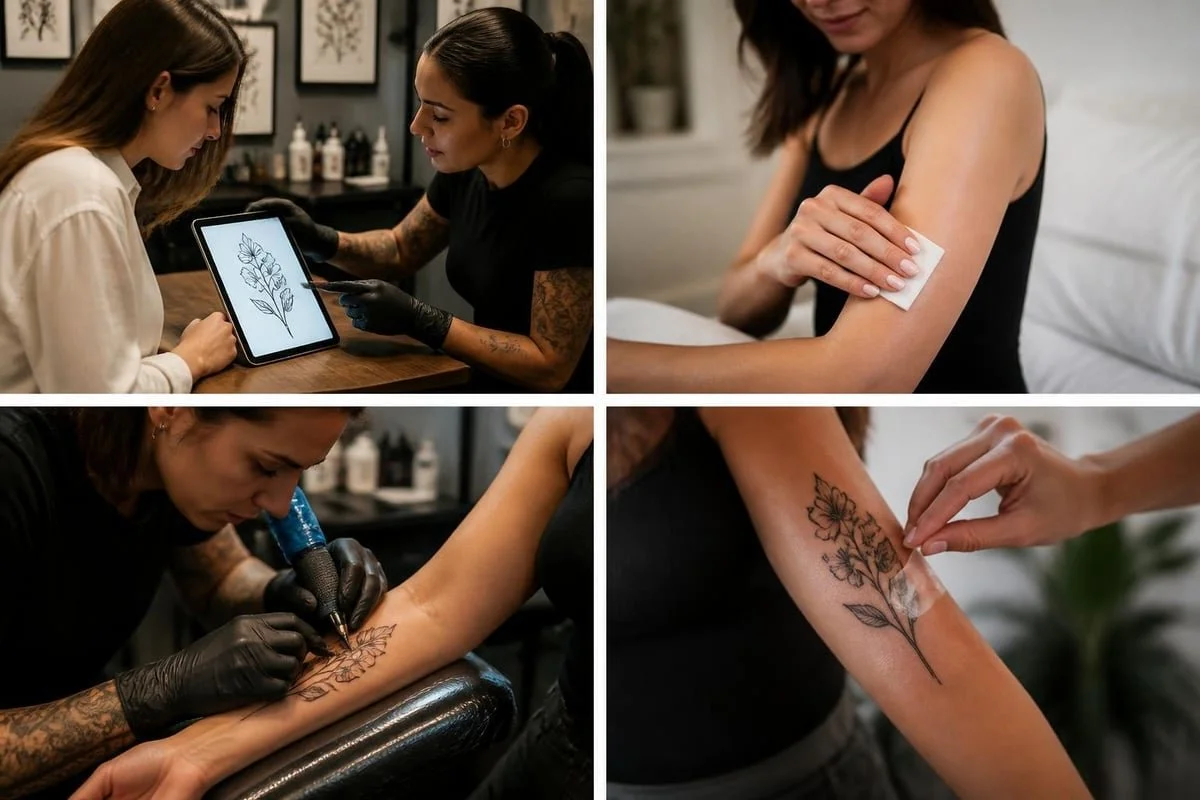
Tattoo session preparation
Aftercare and Long-Term Maintenance
Proper aftercare determines how well your tattoo heals and how vibrant it remains over time. Following professional recommendations ensures optimal results and minimizes complications.
Initial Healing Protocol
The first two weeks are critical for proper healing. Keep your tattoo clean and moisturized following your artist's specific instructions, which typically involve gentle washing with unscented soap and applying recommended ointments or lotions. Avoid submersion in water, direct sunlight, and tight clothing that might irritate the area.
Detailed guidance on caring for your new tattoo covers the complete healing timeline and addresses common concerns. Following these protocols prevents infection, promotes even healing, and preserves the integrity of your artwork.
Long-Term Preservation Strategies
Once healed, protecting your tattoo from sun exposure becomes the primary maintenance concern. UV rays fade tattoo pigments over time, particularly vibrant colors and light shades. Apply broad-spectrum sunscreen (SPF 30 or higher) whenever your tattoo will be exposed to sunlight.
Moisturizing regularly keeps skin healthy and tattoos looking fresh. Well-hydrated skin maintains better color saturation and clearer lines compared to dry, neglected skin. Additional tattoo healing tips help maintain your artwork's appearance for decades.
Touch-Up Considerations
Even with excellent care, some tattoos benefit from periodic touch-ups. Fine line work may need refreshing after several years, and colored pieces often require touch-ups to restore vibrancy. Many reputable studios offer complimentary or discounted touch-ups within specific timeframes after the original work.
Schedule touch-ups when you notice fading, line spreading, or color loss. Addressing these issues promptly maintains your tattoo's intended appearance and prevents more extensive restoration work later.
Current Trends in Floral Tattoo Artistry
The tattoo industry continually evolves, with new techniques and aesthetic preferences emerging each year. Understanding current trends helps inform design choices while ensuring your artwork remains personally meaningful regardless of changing fashions.
Botanical Illustration Style
Detailed botanical illustrations, reminiscent of vintage scientific drawings, have gained tremendous popularity. These designs feature precise anatomical accuracy, including roots, stamens, and seed pods alongside petals and leaves. The educational, almost technical quality creates sophisticated pieces that appeal to those who appreciate both art and nature.
This style often incorporates Latin names, measurement lines, and notation-style details that enhance the scientific aesthetic. Resources showcasing beautiful and meaningful flower tattoos demonstrate how this approach creates unique, intellectually engaging artwork.
Dried and Pressed Flower Aesthetics
Moving beyond fresh blooms, many contemporary designs depict flowers in various stages of their lifecycle, including dried, pressed, or wilting states. These pieces acknowledge that beauty exists in all phases of existence and carry powerful symbolism about aging, transformation, and accepting change.
The flattened, two-dimensional quality of pressed flower designs suits the natural constraints of tattooing while creating distinctive visual characteristics that stand apart from traditional floral work.
Negative Space Integration
Modern artists increasingly use negative space as an active design element rather than simply background. Flower silhouettes created through surrounding black work, petals defined by empty skin tone, and clever use of gaps within compositions create striking visual effects that challenge traditional tattooing approaches.
This technique requires exceptional artistic skill to ensure designs read clearly while maintaining balance and visual interest. The results, however, offer unique contemporary aesthetics that showcase both creativity and technical mastery.
Geometric Framework Combinations
Pairing organic floral elements with geometric shapes creates dynamic contrast and modern appeal. Flowers might emerge from or be contained within triangles, hexagons, or sacred geometry patterns. Dotwork mandalas might incorporate floral motifs, blending spiritual symbolism with natural beauty.
These combinations appeal to clients seeking designs that bridge traditional and contemporary aesthetics, offering timeless floral symbolism within current artistic frameworks. Collections of floral tattoo designs showcase the remarkable diversity of this approach.
Selecting the Right Studio and Artist
The quality of your tattoo depends entirely on the skill, experience, and artistic vision of your chosen artist. Investing time in thorough research ensures you entrust your body to capable, professional hands.
Portfolio Evaluation Criteria
Examine potential artists' portfolios with specific attention to their floral work. Look for clean lines, smooth shading, proper color saturation, and designs that have aged well over time. Artists who specialize in or regularly create botanical pieces bring deeper understanding of how to render different flower types effectively.
Consider whether their aesthetic style aligns with your vision. An artist known for bold traditional work might not be the best choice for delicate fine line florals, regardless of their overall skill level. When choosing a tattoo studio, compatibility between your preferences and their expertise is paramount.
Studio Environment and Hygiene Standards
Professional tattoo studios maintain impeccable cleanliness and follow strict health protocols. Observe whether artists use new needles for each client, employ proper sterilization procedures for equipment, and maintain clean workspaces. Reputable studios willingly discuss their safety practices and provide transparent information about their processes.
The overall atmosphere should feel welcoming yet professional, with clear pricing structures, respectful communication, and willingness to address questions and concerns. These factors indicate a studio's commitment to client satisfaction and ethical business practices.
Communication and Collaboration
The best tattoo experiences emerge from genuine collaboration between client and artist. Your chosen artist should listen carefully to your ideas, ask clarifying questions, and offer professional insights that enhance your vision while remaining true to your intentions.
Beware of artists who dismiss your ideas or push you toward designs that don't resonate with you. Similarly, trust artists who advise against technically unfeasible concepts or placements that won't age well. This balanced approach to communication indicates professionalism and genuine concern for your long-term satisfaction.
Special Considerations for First-Time Clients
If your flower tattoo represents your first body art experience, additional considerations ensure a positive introduction to tattooing.
Starting with Appropriate Scale
While you might envision an elaborate full-sleeve floral composition, beginning with a smaller piece allows you to experience the process without overwhelming commitment. Small to medium designs provide sufficient detail to appreciate the artistry while leaving room for expansion if you choose to develop a larger collection over time.
Many clients find that their first tattoo informs preferences for future work, including preferred placement areas, pain tolerance levels, and aesthetic styles. Starting modestly provides valuable information without irreversible consequences.
Understanding the Commitment
Tattoos are permanent, and while removal technologies continue advancing, the process remains expensive, time-consuming, and imperfect. Ensure your chosen design holds genuine personal significance rather than representing temporary preferences or trends.
Consider how your tattoo might be perceived in various life contexts, including professional environments, family situations, and future life stages. While personal expression deserves priority, practical considerations ensure satisfaction for decades to come. Resources discussing 180 flower tattoo designs for women can help identify timeless options that transcend temporary trends.
Managing Expectations Realistically
Understanding realistic outcomes prevents disappointment. Even the most skilled artists cannot perfectly replicate every reference image, particularly when translating photographs to skin. Factors including skin tone, texture, and body movement affect how designs appear and age.
Trust your artist's professional judgment regarding technical feasibility, appropriate sizing for desired detail levels, and realistic color expectations. This collaboration produces artwork that not only looks beautiful initially but maintains its quality throughout your lifetime.
Addressing Common Concerns and Questions
Several questions frequently arise when considering flower tattoos for ladies. Addressing these concerns helps you approach your tattoo journey with confidence and realistic expectations.
Will My Tattoo Fade or Change Over Time?
All tattoos experience some degree of fading over years and decades, particularly with sun exposure. However, proper care significantly extends vibrancy and clarity. Black and gray work typically maintains definition better than colored pieces, though modern pigments have dramatically improved color retention.
Expecting your tattoo to look identical after 20 years as it did when fresh is unrealistic, but well-executed work by skilled artists ages gracefully, requiring only periodic touch-ups to restore original appearance.
How Much Will My Design Cost?
Tattoo pricing varies based on artist experience, studio location, design complexity, size, and time required. Exceptional artists command higher rates because their skill justifies the investment. When considering costs, remember you're paying not just for the actual tattooing time but for years of training, artistic development, and professional expertise.
Quality tattoos represent significant investments, but attempting to save money by choosing less experienced artists often results in substandard work that requires expensive corrections or removal. Prioritize quality over cost when making this permanent decision.
Can Tattoos Effectively Cover Scars or Birthmarks?
Tattooing over scars or birthmarks presents unique challenges but is often possible with experienced artists. Scar tissue accepts ink differently than regular skin, potentially resulting in uneven color absorption or altered healing. Some scars, particularly raised keloids, may not be suitable for tattooing.
Professional assessment determines feasibility for your specific situation. Many clients find that covering scars with tattoos provides both aesthetic improvement and emotional healing, transforming sources of insecurity into beautiful artwork.