Tattoo Skull: Symbolism, Styles & Design Guide 2026
The tattoo skull remains one of the most iconic and versatile symbols in body art, transcending cultural boundaries and artistic movements. From ancient civilizations to modern tattoo studios, skull imagery has captivated enthusiasts seeking to express themes of mortality, transformation, strength, and individuality. Whether rendered in bold traditional lines or delicate fine line work, skull tattoos carry profound personal meaning while offering limitless creative possibilities. This timeless motif continues to evolve alongside contemporary tattooing techniques, making it an enduring choice for those seeking meaningful and visually striking body art.
The Deep Symbolism Behind Skull Tattoos
Understanding the meaning behind skull tattoos requires examining multiple cultural contexts and historical perspectives. While many associate skulls with death and darkness, the symbolism extends far beyond these surface interpretations. In many traditions, skulls represent the cyclical nature of life, serving as reminders of mortality that paradoxically celebrate the vitality of existence.
The duality inherent in skull imagery makes it particularly compelling for tattoo enthusiasts. Death and rebirth, danger and protection, fear and courage all coexist within this singular symbol. This complexity allows individuals to project their own narratives onto the design, creating deeply personal artwork that resonates with their life experiences.
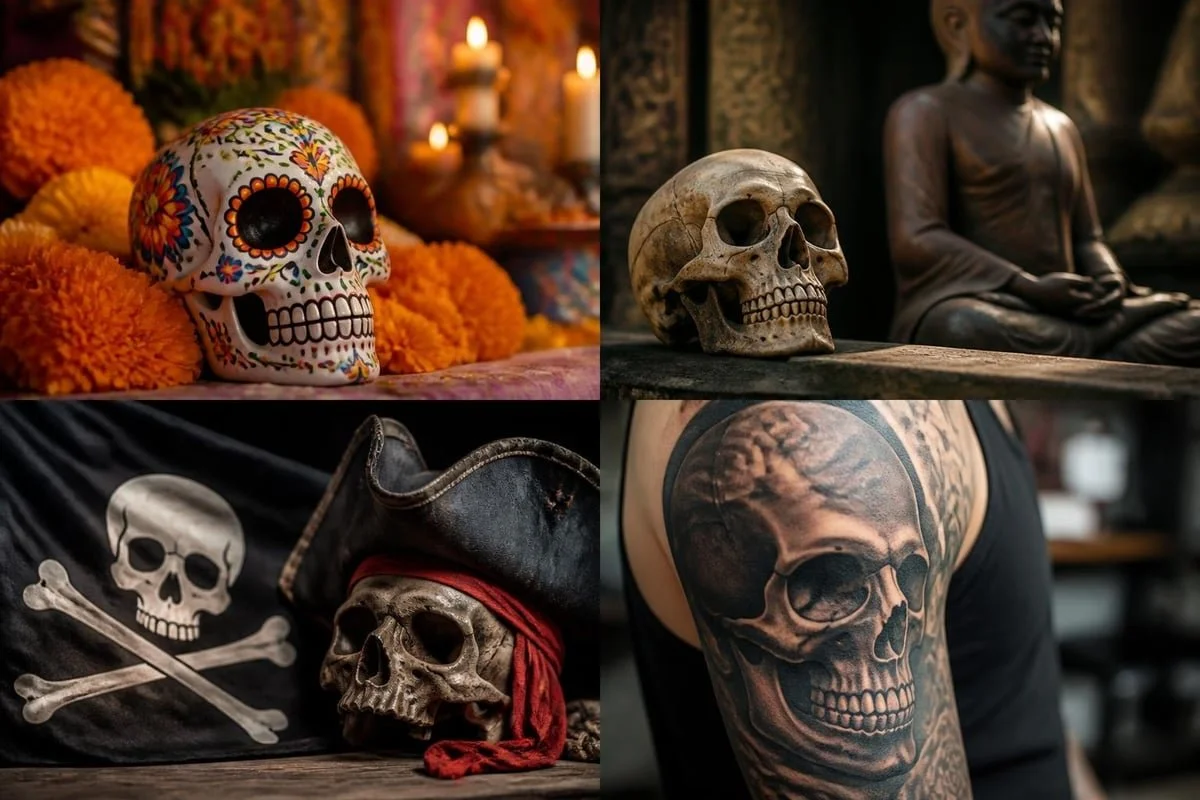
skull tattoo cultural symbolism
Different cultural traditions have shaped how we interpret skull tattoos today:
Mexican Día de los Muertos celebrates deceased loved ones with ornate, colorful skull designs representing joyful remembrance
Buddhist traditions use skull imagery as meditation tools for contemplating impermanence and spiritual growth
Pirate and nautical culture adopted skulls as symbols of fearlessness and defiance against authority
Military and motorcycle communities embrace skulls to signify brotherhood, protection, and overcoming adversity
Historical Context of Skull Imagery in Tattooing
The history of skulls in tattoo culture reveals fascinating evolution across centuries. Early sailors marked their bodies with skull and crossbones designs as protective talismans during dangerous voyages. These symbols served dual purposes: warding off death while acknowledging its constant presence at sea.
Traditional American tattooing elevated the skull to iconic status through the work of pioneers like Sailor Jerry and Don Ed Hardy. Their bold, graphic interpretations established design conventions still referenced today. The post-war era saw skull tattoos become associated with counterculture movements, rebellion, and individual freedom.
Popular Tattoo Skull Styles and Artistic Approaches
Modern tattoo studios offer unprecedented variety in how skull designs can be executed. Understanding different artistic styles helps clients select approaches that align with their aesthetic preferences and the message they wish to convey through their body art.
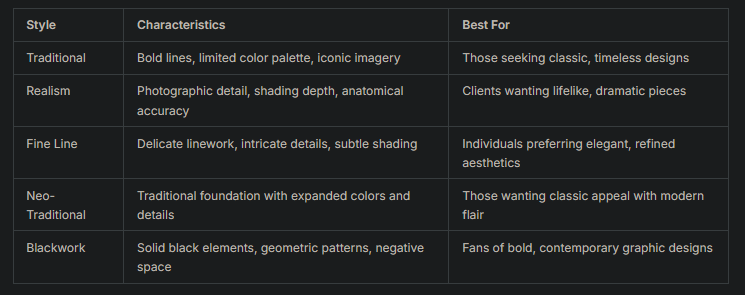
Fine Line Skull Tattoos for Sophisticated Expression
Fine line skull tattoos represent the pinnacle of technical precision and artistic restraint. This approach particularly suits clients seeking sophisticated designs that integrate seamlessly with professional lifestyles. The delicate nature of fine line work allows for smaller scale placements while maintaining intricate detail.
At luxury tattoo studios specializing in detailed tattoo designs, artists employ single-needle techniques to create subtle gradations and refined details impossible with traditional methods. These tattoos age gracefully when executed by skilled practitioners using quality inks and proper needle configurations.
Fine line skull tattoos excel in several design contexts:
Minimalist interpretations focusing on essential skull structure
Botanical combinations featuring delicate flowers intertwined with bone
Ornamental designs incorporating mandala patterns and geometric elements
Anatomical studies emphasizing medical illustration aesthetics
Realism and the Anatomical Tattoo Skull
Realistic skull tattoo designs demand exceptional technical skill and deep understanding of anatomy, light, and shadow. These pieces transform skin into canvas for photographic reproduction of human remains, creating striking visual impact through dimensional depth and tonal variation.
The realism approach allows artists to incorporate environmental elements that enhance narrative depth. Skulls can emerge from darkness, rest among flowers, or interact with other symbolic imagery. This style particularly benefits from larger placement areas where detail can be fully appreciated.
Creating photorealistic skull tattoos requires specialized knowledge:
Anatomical accuracy in bone structure and proportions
Light source consistency throughout the composition
Smooth gradations between highlights and shadows
Texture rendering to simulate bone surface characteristics
Background integration connecting the subject to surrounding space
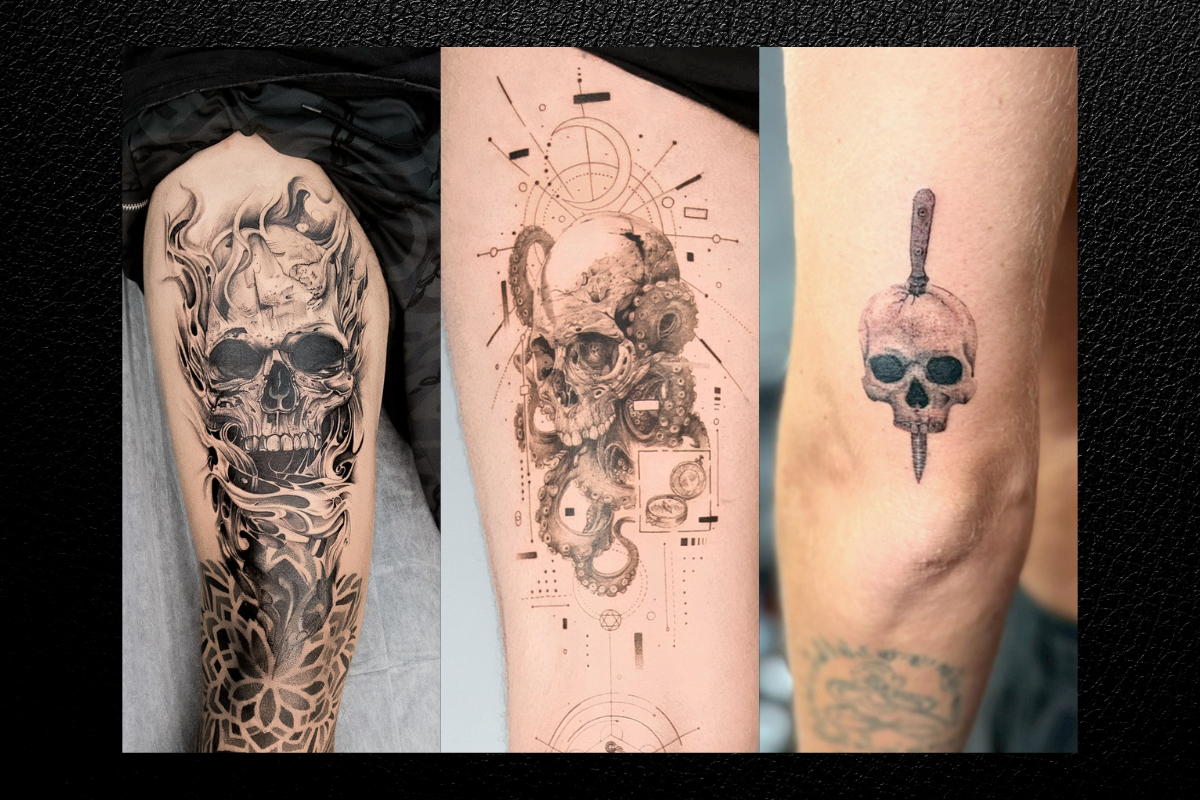
Fineline versus realism skull techniques
Design Elements That Enhance Tattoo Skull Meaning
Skull tattoos rarely exist in isolation. Complementary elements significantly alter the overall symbolism and visual narrative. Understanding how different pairings influence meaning helps clients develop cohesive concepts that authentically represent their intentions.
Florals soften skull imagery while emphasizing life's beauty amid mortality. Roses suggest love and passion, while lotus flowers introduce spiritual transformation themes. Cherry blossoms add impermanence concepts drawn from Japanese philosophy.
Animals paired with skulls create complex metaphors. Snake and skull combinations reference rebirth and healing. Ravens or crows emphasize mystery and intelligence. Butterflies suggest metamorphosis and the soul's journey beyond physical existence.
Objects provide cultural and personal context. Crowns indicate authority or ambition. Hourglasses reinforce time's passage. Candles represent the soul's light persisting beyond death. Weapons suggest struggle, protection, or warrior mentality.
Color Theory in Skull Tattoo Design
While many associate skull tattoos with black and grey work, strategic color application creates distinct emotional tones and cultural references. Choosing appropriate colors requires consideration of skin tone, design style, and symbolic intentions.
Traditional sugar skull designs employ vibrant palettes celebrating life and honoring ancestors. Deep reds suggest passion or sacrifice. Blues can indicate calm acceptance or spiritual realms. Gold accents add luxury and importance to compositions.
Contemporary color approaches include:
Watercolor effects creating dreamlike, ethereal atmospheres
Single color accents highlighting specific design elements
Pastel palettes for softer, more approachable interpretations
Fluorescent inks for UV-reactive designs with modern edge
Placement Considerations for Skull Tattoos
Strategic placement significantly impacts both the visual effectiveness and personal meaning of skull tattoos. Different body areas offer unique advantages depending on design complexity, size requirements, and visibility preferences.
Forearm placements provide excellent visibility for medium-sized designs while allowing easy concealment with clothing when necessary. The relatively flat surface suits both fine line and traditional approaches. Inner forearm placements feel more personal and intimate.
Chest and ribcage locations accommodate larger, more complex compositions incorporating multiple elements. These areas allow for symmetrical designs that follow natural body contours. The proximity to vital organs adds symbolic weight for many clients.
Back pieces offer maximum canvas space for elaborate skull compositions. Full back designs can incorporate landscapes, additional figures, and extensive decorative elements. Upper back and shoulder blade areas suit smaller, focused skull studies.
Size and Scale Decisions
Determining appropriate sizing requires balancing artistic vision with practical considerations. Larger designs accommodate greater detail and complexity but demand more session time and financial investment. Smaller tattoos offer subtlety but may limit design intricacy.
Micro skull tattoos measure under two inches and work best in fine line or minimalist styles. These suit clients seeking discreet body art or testing comfort with tattooing before committing to larger pieces. Placement options include fingers, behind ears, or ankles.
Medium designs between three and six inches represent the most popular size range for skull tattoos. This scale allows sufficient detail for recognition while fitting common placement areas like forearms, calves, or shoulders without overwhelming body proportions.
Large-scale skull tattoos exceeding eight inches enable photorealistic rendering, complex compositions, and dramatic visual impact. These require careful planning regarding what to expect during tattoo sessions that may span multiple appointments.
Customizing Your Tattoo Skull Design
Creating personalized skull tattoos involves collaborative development between client and artist. Moving beyond flash designs to custom artwork ensures unique pieces reflecting individual stories and aesthetic preferences. Choosing the right tattoo artist becomes paramount when pursuing bespoke skull designs.
Professional consultation processes explore client motivations, symbolic intentions, and visual preferences. Artists skilled in fine line and detailed work can translate abstract concepts into cohesive visual narratives incorporating skull imagery as central or supporting elements.
Incorporating Personal Symbolism
Generic skull designs carry universal meanings, but customization adds layers of personal significance. Incorporating birth flowers, meaningful dates rendered in Roman numerals, or specific decorative patterns transforms standard imagery into intimate autobiography.
Portrait elements can merge loved ones' features with skull structure, creating memento mori pieces honoring those who have passed. Cultural heritage symbols blend with skull foundations, celebrating ancestry while acknowledging mortality's universality.
Consider these personalization approaches:
Include subtle initials or coordinates within decorative elements
Reference specific skull types (animal skulls, crystal skulls) for unique symbolism
Incorporate profession-related imagery (medical instruments, artistic tools)
Blend multiple artistic styles within single compositions
Add quotes or text in complementary fonts and languages
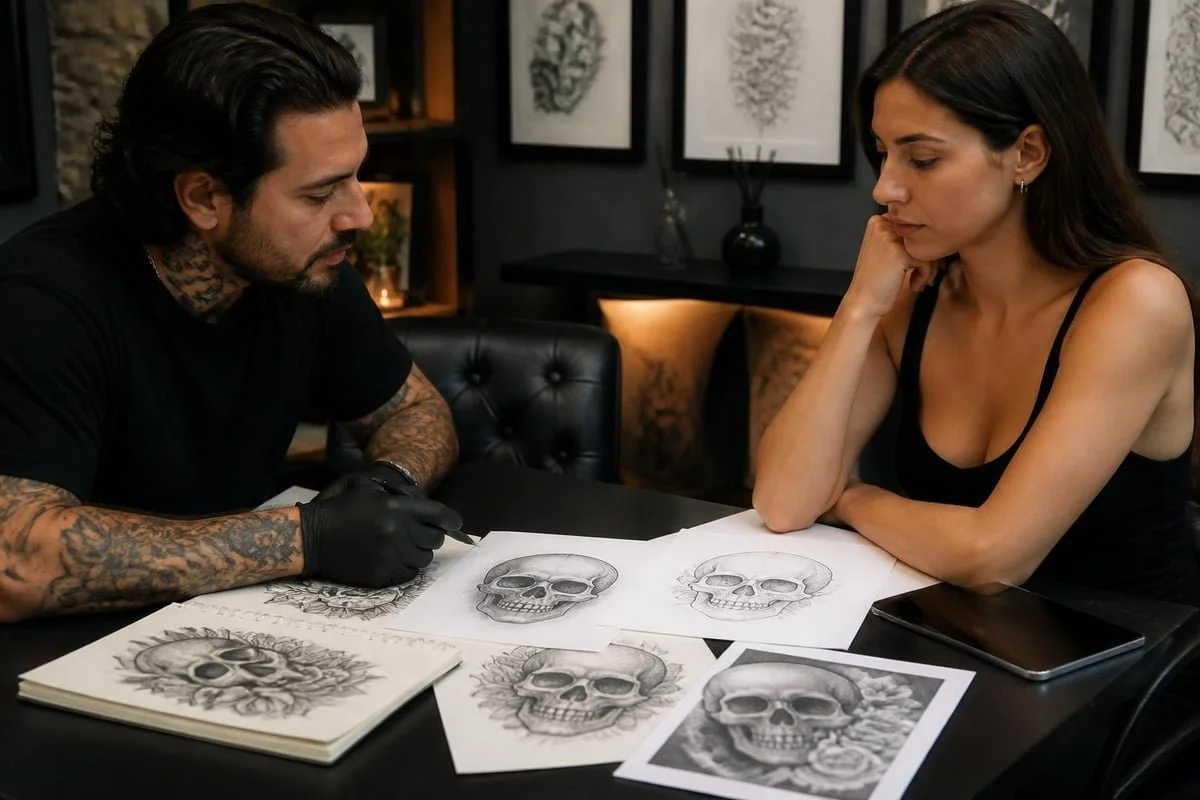
Custom skull tattoo consultation process
Technical Excellence in Skull Tattoo Execution
Superior skull tattoos result from both artistic vision and technical mastery. Understanding the mechanics behind quality tattooing helps clients appreciate the craft and make informed decisions when selecting tattoo studios.
Needle configurations dramatically affect line quality and shading capabilities. Fine line skull work requires single needles or tight groupings for precision. Realism demands various shader configurations for smooth gradations. Traditional styles use larger groupings for bold, saturated lines.
Ink quality influences color vibrancy, healing consistency, and long-term appearance. Premium studios invest in professional-grade inks formulated for optimal skin compatibility and color retention. Black ink selection particularly impacts skull tattoos, where deep blacks create essential contrast.
Machine selection affects everything from noise levels to skin trauma. Modern rotary machines offer quieter operation and reduced vibration, enhancing client comfort during extended sessions. Coil machines provide traditional tactile feedback some artists prefer for specific techniques.
Healing and Longevity Considerations
Proper aftercare directly impacts how skull tattoos heal and age over time. Following professional tattoo aftercare protocols preserves artistic integrity and prevents complications that compromise appearance.
Fine line skull tattoos require particularly diligent care during healing. Delicate lines can blur if exposed to excessive moisture or friction. Protecting fresh tattoos from sun exposure prevents premature fading of intricate details that define fine line aesthetics.

Cultural Sensitivity and Skull Imagery
While skull tattoos enjoy widespread popularity, certain interpretations carry specific cultural significance deserving respectful consideration. Understanding these contexts prevents appropriation while enabling meaningful cross-cultural appreciation.
Sugar skull designs rooted in Mexican Día de los Muertos traditions represent specific cultural practices honoring deceased family members. Approaching these designs with understanding of their origins and significance shows respect for the traditions they represent. Working with artists familiar with authentic representations ensures cultural accuracy.
Tibetan skull imagery appears in Buddhist meditation practices symbolizing impermanence and spiritual liberation. These designs often incorporate specific iconographic elements with religious meanings. Clients drawn to these aesthetics should research their significance and consult knowledgeable artists.
Contemporary skull tattoos can draw inspiration from global traditions while developing personal meaning separate from specific cultural practices. The key lies in understanding the symbolism behind tattoo designs and making informed choices about incorporating cultural elements.
Skull Tattoos in Professional Environments
Tattoo acceptance in professional settings continues evolving, though considerations remain for visible body art. Strategic placement and design choices allow individuals to express themselves through skull tattoos while navigating workplace expectations.
Placement discretion enables coverage during formal situations while allowing personal expression during leisure time. Upper arms, thighs, backs, and ribcage areas remain easily concealable under business attire. This flexibility suits professionals in conservative industries who desire meaningful body art.
Aesthetic refinement influences perception. Fine line skull tattoos in sophisticated styles appear markedly different from bold traditional pieces, though both carry validity as artistic expressions. Clients can select approaches aligning with their professional presentation preferences.
Industries experiencing greatest tattoo acceptance include creative fields, technology sectors, hospitality, and entrepreneurial ventures. However, individual workplace cultures vary significantly. Understanding specific organizational norms helps inform placement and visibility decisions.
The Future of Tattoo Skull Artistry
Skull tattoo evolution continues as techniques advance and artistic boundaries expand. Emerging trends suggest several directions for this enduring motif's development in coming years.
Technological integration introduces new possibilities through improved equipment and ink formulations. UV-reactive inks create skulls visible only under blacklight. Precision rotary machines enable increasingly detailed fine line work. Digital design tools facilitate complex compositions impossible to sketch by hand alone.
Style fusion blends multiple approaches within single pieces. Traditional skull outlines might incorporate realistic shading, geometric patterns, and watercolor elements simultaneously. This eclecticism reflects broader contemporary art movements and individual expression emphasis.
Sustainability consciousness influences studio practices and client preferences. Vegan ink formulations appeal to ethically-minded enthusiasts. Reduced single-use plastics and improved sterilization protocols reflect environmental awareness within tattooing communities.
Personalization emphasis continues strengthening as clients seek truly unique designs reflecting individual narratives. Generic flash designs decline in favor of collaborative custom work developing concepts specific to each person's story and aesthetic vision.