Tattoo Line Arm: Complete Guide to Minimalist Arm Tattoos
The tattoo line arm has emerged as one of the most popular minimalist tattoo trends in luxury studios worldwide, combining elegant simplicity with profound personal meaning. These clean, precise designs range from delicate single lines that wrap around the forearm to complex geometric patterns that flow along the arm's natural contours. Whether you're drawn to the understated elegance of a thin band or the bold statement of thick black lines, understanding the nuances of line work on the arm helps you make an informed decision about your next piece of body art. At premier studios specializing in fine line techniques, artists have perfected the precision required to create flawless linear designs that age gracefully and maintain their crisp appearance for years.
Understanding Tattoo Line Arm Designs
The tattoo line arm encompasses a broad spectrum of minimalist designs that use lines as their primary artistic element. These tattoos can be as simple as a single continuous line encircling the bicep or as complex as multiple intersecting geometric patterns flowing from shoulder to wrist.
Single line tattoos represent the purest form of minimalist body art. A skilled artist creates these designs using one continuous needle stroke, requiring exceptional technical precision and steady hand control. The single black line on the arm carries various interpretations, from marking significant life transitions to representing personal boundaries and strength.
Popular Line Tattoo Variations
Different styles of tattoo line arm designs offer unique aesthetic qualities and symbolic meanings:
Armband tattoos: Complete circular bands wrapping around the upper arm, forearm, or wrist
Parallel lines: Two or more evenly spaced horizontal lines creating visual rhythm
Geometric patterns: Angular lines forming triangles, hexagons, or abstract shapes
Continuous line art: Single-stroke designs depicting objects, animals, or portraits
Dotwork lines: Lines created entirely from individual dots for texture variation
Curved organic lines: Flowing, wave-like patterns following muscle definition
The two-line arm tattoo design has gained particular popularity for its representation of balance, duality, and life's parallel journeys. Many clients choose this style to symbolize relationships, past and present, or the balance between opposing forces.
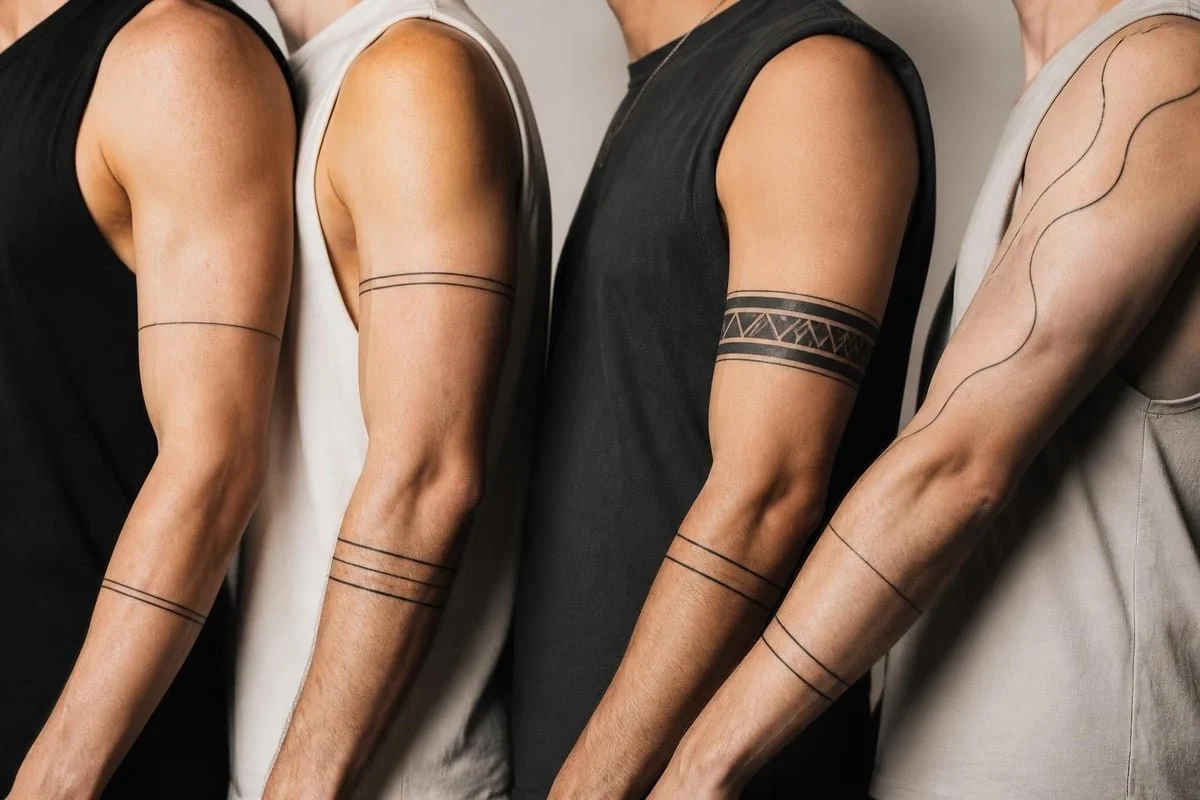
Different tattoo line arm styles
Symbolic Meanings Behind Arm Line Tattoos
The tattoo line arm carries deep symbolic significance that varies based on design specifics, placement, and personal interpretation. Understanding these meanings helps you choose a design that resonates with your personal journey.
Traditional and Cultural Symbolism
Armband tattoo meanings span across cultures and time periods. In Polynesian tradition, armbands represented tribal status, achievements, and protective powers. Modern interpretations often honor these roots while incorporating personal significance.
Memorial and remembrance emerge as common themes. A solid black band frequently serves as a memorial tattoo, representing grief, loss, or honoring departed loved ones. The unbroken circle symbolizes eternal connection and memories that transcend physical presence.
Strength and resilience manifest through bold, thick line designs. Athletes and fitness enthusiasts often choose armband tattoos to represent dedication, physical achievement, or personal milestones. The circular nature symbolizes completion, wholeness, and the cyclical nature of personal growth.
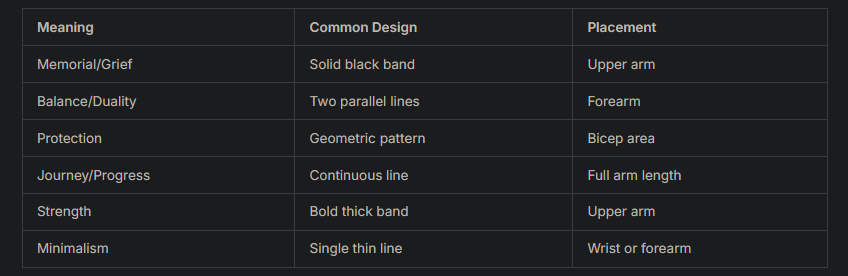
Personal Interpretations
Modern tattoo line arm designs often carry individualized meanings unique to each wearer. Some clients incorporate specific line thicknesses representing different life stages, while others use breaks in lines to symbolize significant life changes or obstacles overcome.
The beauty of minimalist line work lies in its versatility for personal storytelling. When considering unusual tattoo ideas, line designs offer endless customization possibilities while maintaining clean, professional aesthetics suitable for various professional environments.
Choosing the Right Placement for Your Tattoo Line Arm
Strategic placement maximizes the visual impact of your tattoo line arm while considering factors like visibility, pain tolerance, and how the design interacts with your body's natural movement.
Upper Arm Placement
The upper arm, particularly the bicep and tricep areas, provides excellent canvas space for larger line designs. This location offers:
Lower pain levels due to more muscle mass and less nerve density
Easy concealment with short-sleeved shirts when necessary
Natural circular shape perfect for armband designs
Minimal distortion from aging or weight fluctuation
Bicep bands appear consistently even as the muscle flexes, making them ideal for complete circular designs. The upper arm's relatively flat surface when relaxed allows artists to create perfectly horizontal lines that maintain their appearance during normal movement.
Forearm and Wrist Options
The forearm serves as a popular location for tattoo line arm designs due to its visibility and personal significance. When considering tattoo placement for the perfect spot, the forearm offers unique advantages:
Visibility considerations become important for those wanting to admire their artwork daily. The inner forearm provides a more private canvas, while the outer forearm displays designs prominently. Wrist placements create delicate statements but require extra care during healing due to constant movement.
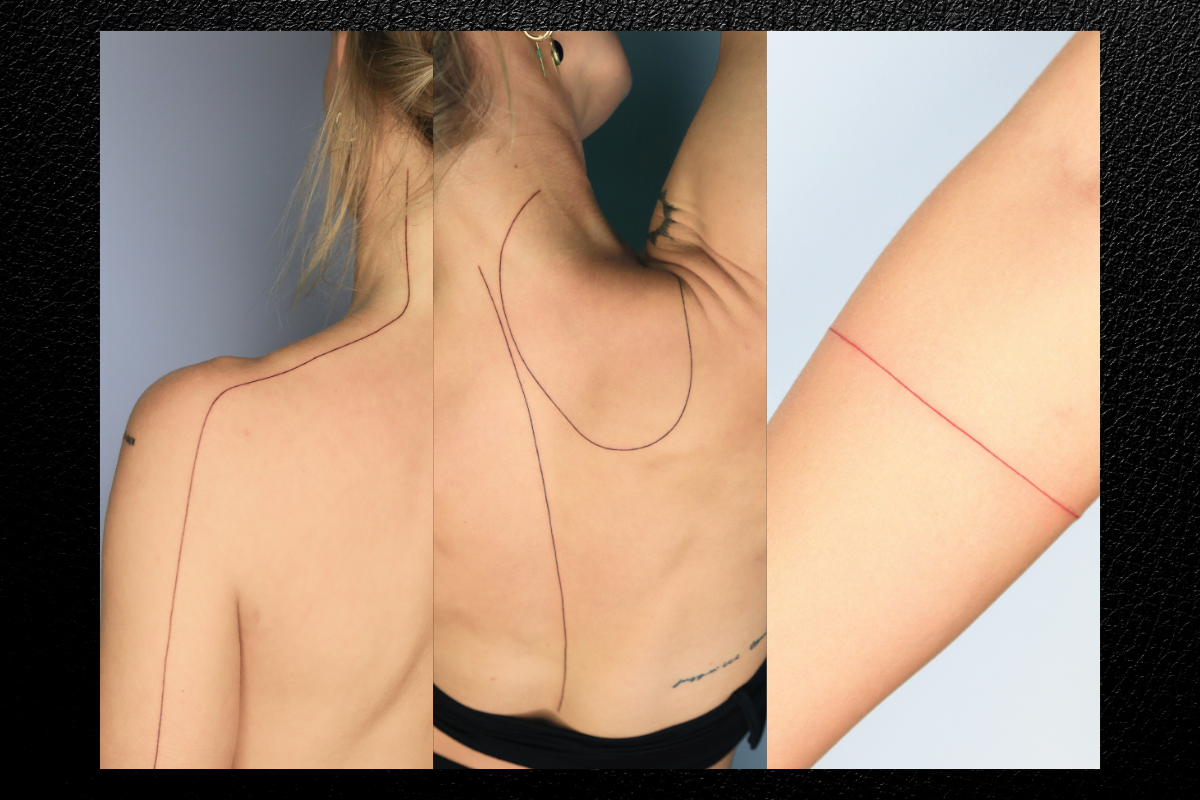
Arm placement zones for tattoos
Full Sleeve Integration
For clients planning comprehensive arm coverage, incorporating line elements into fine line sleeve designs creates visual cohesion. Lines can serve as borders, separators between different design elements, or standalone features complementing more detailed work.
The full sleeve approach requires careful planning to ensure line work maintains consistent thickness and spacing throughout the entire arm. Professional artists at luxury studios create detailed stencils accounting for how the arm's changing diameter affects line appearance from shoulder to wrist.
Design Considerations and Customization
Creating the perfect tattoo line arm involves balancing aesthetic preferences with practical considerations about line thickness, style, and complexity.
Line Thickness and Visual Weight
The thickness of your lines dramatically impacts the overall appearance and meaning of your tattoo. Consider these options:
Ultra-fine lines (1mm or less): Delicate, feminine, and subtle
Medium lines (2-3mm): Balanced visibility and elegance
Bold lines (5mm+): Strong, masculine, and high-contrast
Variable thickness: Artistic depth through line weight variation
Thicker lines generally age better, maintaining their definition over decades. However, advances in fine line techniques at specialized studios now allow even delicate work to remain crisp when executed properly and cared for correctly. Understanding how to care for a new tattoo becomes particularly crucial for maintaining fine line work.
Geometric and Abstract Patterns
Geometric line tattoo designs incorporate mathematical precision and sacred geometry principles. These patterns include:
Mandala-inspired circles with radiating line elements
Triangular compositions representing stability and direction
Hexagonal patterns creating three-dimensional illusions
Sacred geometry incorporating golden ratio proportions
Minimalist architecture featuring clean structural lines
Organic and Flowing Designs
Not all tattoo line arm designs require geometric precision. Abstract fluid line art creates movement and organic beauty through curved, flowing lines that complement the arm's natural musculature. These designs work particularly well on the forearm, where gentle curves can follow the subtle contours created by muscles and tendons.
Continuous line drawings challenge artists to create recognizable images without lifting the needle, resulting in unique, flowing artwork. From musical instruments to portraits, these designs showcase technical mastery while maintaining minimalist appeal.
Working with Luxury Tattoo Studios
Selecting the right studio and artist for your tattoo line arm design significantly impacts the final result. Precision line work requires specific technical skills and equipment that distinguish luxury studios from standard tattoo shops.
Artist Expertise and Specialization
When choosing a tattoo artist, prioritize those specializing in fine line and minimalist work. Review portfolios specifically for:
Line consistency: Examine whether lines maintain uniform thickness without wavering or blowouts. Professional line work appears crisp and clean, with precise edges and consistent saturation throughout the entire design.
Healing examples: Request healed photos of previous line work, ideally at least six months to one year post-tattoo. This demonstrates how the artist's technique stands the test of time and body's natural healing processes.
Technical precision: Study how the artist handles curves, circles, and geometric shapes. Perfect circles and straight lines require exceptional hand control and experience with proper needle techniques.
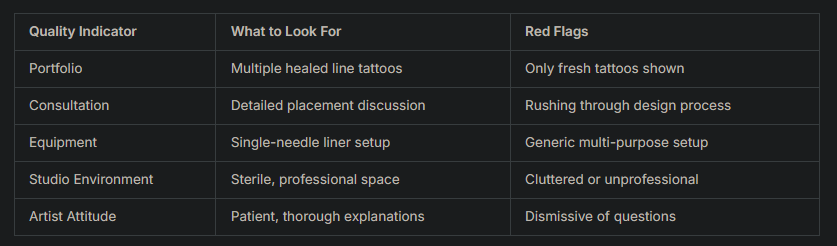
Studio Environment and Equipment
Luxury tattoo studios invest in specialized equipment for line work precision. Single-needle liners create the finest lines, while high-quality inks ensure consistent color saturation. The studio environment should reflect professionalism through spotless workstations, proper sterilization protocols, and comfortable client areas.
Understanding what happens during a tattoo session helps set realistic expectations. For line work, sessions typically proceed faster than heavily shaded pieces, though precision requires patience and cannot be rushed.
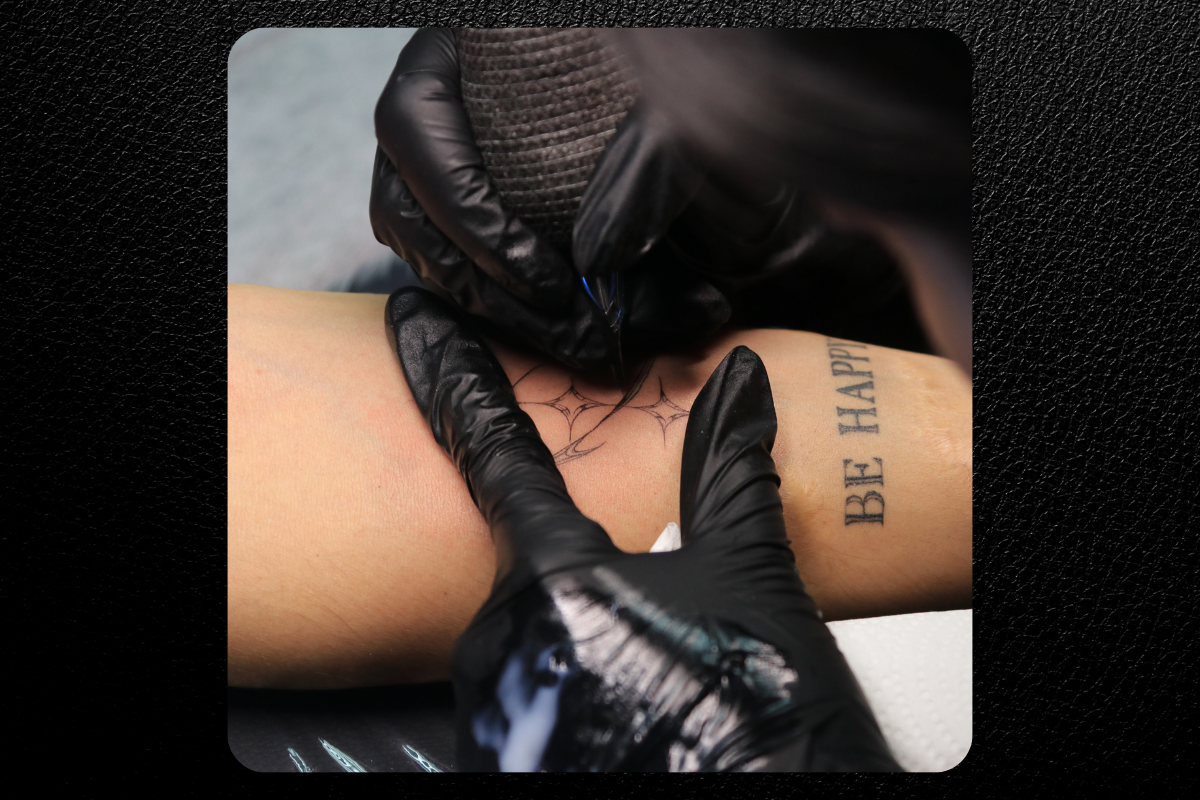
Professional line tattoo process
Preparing for Your Tattoo Line Arm Session
Proper preparation ensures optimal results and a comfortable experience during your tattoo session. Several factors influence how well your skin accepts the ink and how smoothly the healing process progresses.
Pre-Session Preparation
Skin condition plays a crucial role in line tattoo quality. Moisturized, healthy skin accepts ink more readily and heals more predictably than dry or damaged skin. Begin daily moisturizing at least two weeks before your appointment, avoiding petroleum-based products that can create barriers to ink penetration.
Hydration and nutrition directly impact your skin's elasticity and healing capability. Drink adequate water in the days leading to your session and eat a substantial meal beforehand to maintain stable blood sugar levels during the appointment.
If you're experiencing your first tattoo session, understanding pain management helps you prepare mentally. Arm placements generally rank moderate on pain scales, with the inner arm and areas near the elbow and wrist causing more sensitivity than outer bicep or forearm locations.
Day-of-Session Guidelines
Arrive to your appointment with:
Clean, unscented skin free from lotions, oils, or fragrances
Comfortable, loose-fitting clothing that easily exposes the tattoo area
Snacks and water for longer sessions requiring breaks
Reference images and final design confirmations
Positive mindset and realistic time expectations
Avoid alcohol consumption for at least 24 hours before your session, as it thins blood and can cause excessive bleeding during the tattoo process. This bleeding dilutes ink placement and can result in less crisp lines.
Aftercare for Optimal Line Tattoo Results
The healing process dramatically impacts the final appearance of your tattoo line arm design. Proper aftercare ensures lines remain crisp, colors stay saturated, and healing occurs without complications.
Initial Healing Phase (Days 1-14)
Immediate care begins the moment your artist applies the protective covering. Modern aftercare often uses breathable film bandages that remain in place for 3-5 days, protecting the fresh tattoo while allowing it to breathe. Traditional bandages require removal within 2-4 hours, followed by gentle washing.
Follow these critical steps for easier tattoo healing:
Wash gently with fragrance-free antibacterial soap and lukewarm water
Pat dry using clean paper towels rather than cloth towels
Apply thin layers of recommended healing ointment 2-3 times daily
Avoid submersion in pools, hot tubs, or baths
Protect from sun using loose clothing coverage
Resist picking at scabs or peeling skin
Long-Term Maintenance
Sun protection remains the most important factor in maintaining crisp line work. UV exposure causes ink degradation and can blur fine lines over time. Apply broad-spectrum SPF 50+ sunscreen to tattoos whenever exposed to sunlight, even on cloudy days or through car windows.
Moisturization keeps skin supple and prevents the dry, cracked appearance that can make line tattoos look faded. Quality, fragrance-free lotions applied daily maintain skin health and tattoo vibrancy. Consider specialized tattoo aftercare products formulated specifically for long-term maintenance.
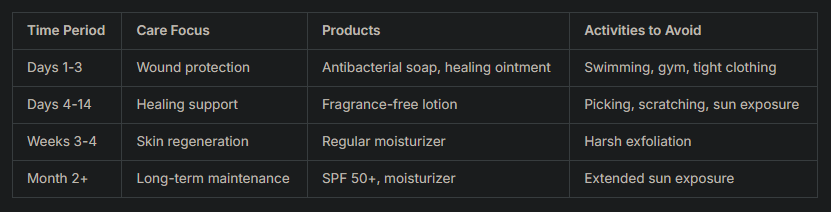
The following table outlines proper aftercare timeline:
Exploring Popular Tattoo Line Arm Styles
The versatility of line work enables countless style variations, from minimalist curved designs to comprehensive geometric compositions. Exploring different approaches helps identify which style resonates with your aesthetic preferences.
Minimalist Single Lines
The epitome of "less is more" philosophy, single-line tattoos make powerful statements through restraint. These designs prove that complexity isn't required for meaningful body art. A delicate line circling the wrist or wrapping around the forearm creates elegant sophistication suitable for professional environments.
Artists specializing in line tattoo styles understand how to position single lines to complement natural arm anatomy. Slight variations in placement-higher on the forearm versus closer to the wrist-create dramatically different visual effects.
Bold Blackwork Bands
Solid black armbands represent the opposite end of the minimalist spectrum, using thick bands of saturated black ink to create bold, striking statements. These designs draw inspiration from traditional Polynesian and tribal tattooing while embracing modern minimalist aesthetics.
Collections like this armband gallery showcase hundreds of variations, from single thick bands to multiple parallel bands of varying widths. The visual weight of blackwork creates strong contrast against skin, making these tattoos particularly effective on medium to dark skin tones when considering tattoo colors for different skin tones.
Integrated Symbolic Elements
Modern tattoo line arm designs frequently incorporate subtle symbolic elements within the line work itself. Small breaks in bands can represent significant life events, while varying line weights tell visual stories about different life chapters.
Nature-inspired lines might incorporate tiny leaves, branches, or waves into otherwise geometric patterns. These additions personalize standard designs while maintaining the overall minimalist aesthetic. When exploring symbolism behind tattoo designs, consider how small details can add layers of personal meaning without overwhelming the clean line work.
Addressing Common Concerns and Questions
Clients considering tattoo line arm designs often share similar questions and concerns about longevity, pain levels, and practical considerations.
Will Fine Lines Blur Over Time?
Line longevity depends on multiple factors including artist technique, ink quality, skin type, and aftercare dedication. When executed by skilled artists using proper depth and quality pigments, even fine lines maintain clarity for decades with appropriate care and sun protection.
Thicker lines naturally age more gracefully due to greater ink volume, but advances in tattooing techniques and ink formulations have significantly improved fine line durability. Regular tattoo aftercare essentials prevent premature fading regardless of line thickness.
Pain Levels for Arm Line Tattoos
Pain tolerance varies significantly between individuals, but arm placements generally rank as moderate discomfort compared to areas like ribs or spine. The quick, linear nature of line work means less overall time under the needle compared to heavily shaded pieces.
Areas with more muscle mass and distance from bone-like the outer bicep or outer forearm-typically cause less discomfort than bony areas near the elbow or wrist. Most clients describe the sensation as a hot scratching or burning feeling rather than sharp pain.
Professional Environment Considerations
Workplace acceptance of visible tattoos continues improving, but minimalist line designs offer particular advantages for professional settings. Their clean, artistic nature appears less provocative than bold traditional pieces, while strategic placement on upper arms allows easy concealment when necessary.
When selecting placement, consider your career trajectory and whether visible tattoos might impact professional advancement. Upper arm placements offer maximum flexibility, remaining hidden under business attire while visible in casual settings.
Cost Considerations
Pricing for line work varies based on design complexity, artist experience, and studio location. Simple armband tattoos might require only one short session, while intricate geometric sleeves demand multiple appointments. Luxury studios typically charge premium rates reflecting their specialized expertise, premium equipment, and superior results.
When choosing the right tattoo studio, prioritize quality over cost savings. Line work requires precision that only experienced artists consistently deliver, making this an investment in permanent body art that shouldn't be compromised by budget limitations.
Combining Line Work with Other Tattoo Elements
While stunning as standalone pieces, tattoo line arm designs also integrate beautifully with other tattoo styles, creating dynamic compositions that balance minimalism with detailed artistry.
Line Work as Framework
Structural lines serve as organizational elements within larger tattoo compositions. A simple armband might anchor a sleeve design, providing visual breaks between different themed sections. Geometric line patterns create frames or borders around realistic portraits or nature scenes.
This approach allows gradual tattoo collection building. Start with a foundational line element, then add complementary pieces over time as budget and design vision evolve. The initial line work establishes aesthetic direction while remaining complete and attractive on its own.
Contrasting Minimalism with Detail
Visual balance emerges when combining ultra-minimalist lines with heavily detailed elements. A delicate single line wrapping around the forearm might intersect with a detailed realistic tattoo or microrealism piece, creating interesting contrast between simplicity and complexity.
This technique requires skilled artists who understand how different styles interact visually. The best results come from comprehensive planning where all elements work together cohesively rather than appearing randomly placed.
Cultural Sensitivity and Respect
When drawing inspiration from traditional armband designs, understanding cultural context and practicing respectful appreciation remains essential.
Traditional Patterns and Modern Interpretation
Cultural heritage plays significant roles in many line-based tattoo traditions. Polynesian, Maori, and Southeast Asian cultures developed sophisticated line-based tattooing systems carrying deep spiritual and social significance. Modern interpretations should acknowledge these roots while avoiding direct appropriation of sacred symbols.
If interested in culturally significant designs like traditional Thai tattoos, work with artists knowledgeable about proper usage and meaning. Respectful appreciation involves understanding symbolism and obtaining designs through culturally appropriate channels rather than copying sacred imagery without context.
Creating Personal Meaning
Individual symbolism allows creating meaningful tattoo line arm designs without cultural appropriation concerns. Work with your artist to develop unique patterns representing your personal journey, values, or significant relationships. This approach ensures your tattoo remains authentically yours while respecting traditional cultural practices.