Tattoo Dot Work : Art, Meaning & Technique Guide 2026
The world of tattooing encompasses countless styles and techniques, but few approaches demonstrate the remarkable precision and artistic versatility quite like tattoo dots. These seemingly simple elements serve as the foundation for both minimalist designs and elaborate compositions, offering clients a unique pathway to express personal meaning through body art. Whether you're considering a subtle arrangement of dots on your fingers or an intricate dotwork masterpiece spanning larger areas, understanding the artistry and significance behind this technique will help you make informed decisions about your next tattoo investment.
Understanding the Fundamentals of Tattoo Dots
Tattoo dots represent one of the most fundamental yet sophisticated techniques in modern body art. At their core, these designs utilize individual points of ink to create patterns, shading, and imagery that range from strikingly simple to breathtakingly complex. The dotwork tattoo technique requires exceptional precision and patience, as each dot must be carefully placed to achieve the desired visual effect.
The technique offers several distinct advantages:
Exceptional control over shading gradients
Ability to create unique textures unavailable through traditional methods
Reduced skin trauma compared to solid shading
Distinctive aesthetic that stands apart from conventional tattoo styles
The placement of each individual dot determines the overall composition's success. Professional tattoo artists spend years mastering the spacing, depth, and density required to transform simple points into cohesive artwork. This meticulous approach aligns perfectly with the philosophy of luxury tattoo studios that prioritize quality and precision in every detail.
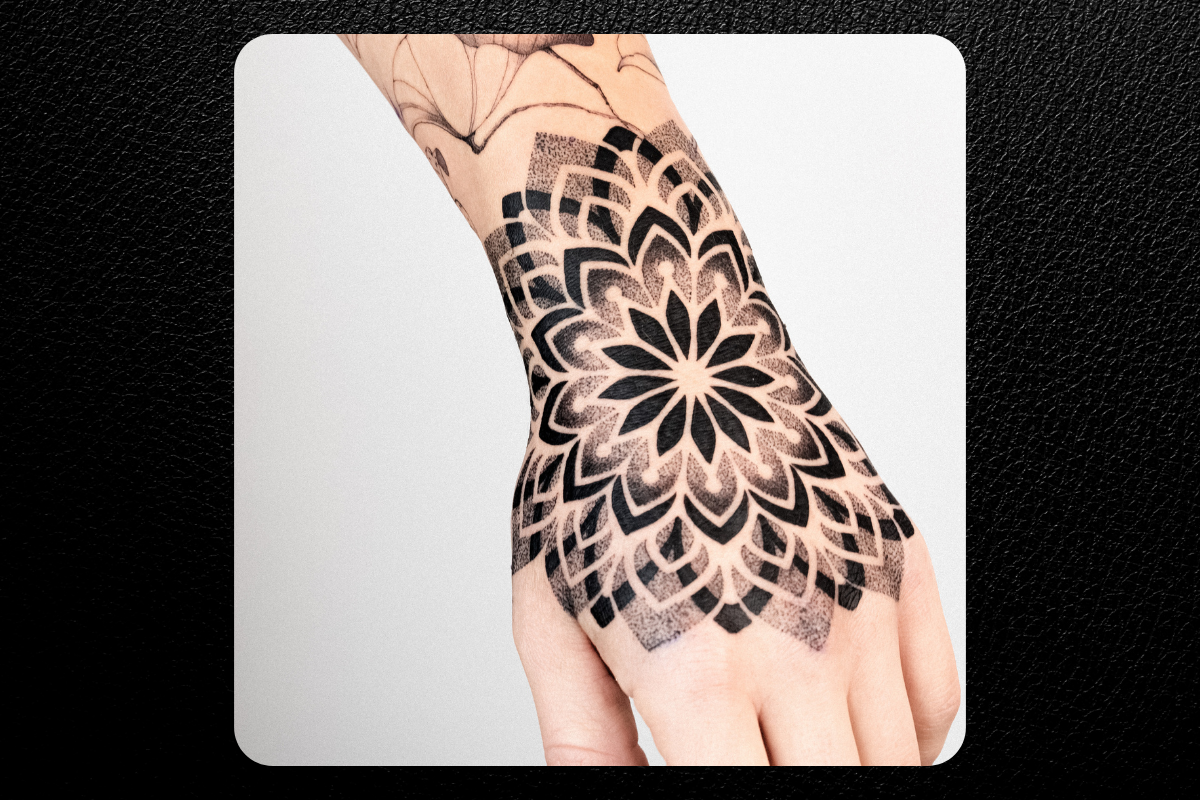
Dotwork tattoo technique layers
The Historical Context of Dotwork
The use of dots in tattooing traces back thousands of years across various cultures. Ancient hand-poked tattoos relied heavily on dot-based application methods, creating designs through careful accumulation of individual marks. This historical foundation has evolved into contemporary dotwork, which combines traditional wisdom with modern precision tools.
Today's dotwork artists have elevated the technique to new artistic heights. They incorporate geometric patterns, mandalas, sacred geometry, and organic designs that showcase the versatility of tattoo dots. The resurgence of interest in this style reflects broader trends toward mindful, intentional body art that carries deeper personal significance.
Symbolism and Personal Meaning
Tattoo dots carry profound symbolic weight despite their minimal appearance. The meaning behind finger dot tattoos often connects to themes of life milestones, spiritual journeys, or personal balance. Three dots arranged in a triangle pattern have become particularly popular, representing various concepts depending on cultural context and personal interpretation.
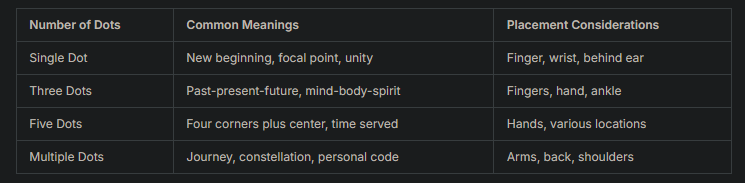
The beauty of tattoo dots lies in their interpretative flexibility. Clients at luxury studios often collaborate with artists to develop custom arrangements that hold unique personal significance. This collaborative process ensures the final design resonates authentically with the wearer's story and aesthetic preferences.
Minimalist Expression
For those drawn to understated elegance, simple dot arrangements offer powerful visual impact without overwhelming presence. Minimal tattoo designs continue gaining popularity among professionals and creatives who appreciate sophisticated subtlety in their body art choices.
Popular minimalist dot configurations include:
Linear progressions showing growth or transition
Constellation patterns representing significant dates
Rhythmic spacing creating visual poetry
Strategic placement emphasizing body anatomy
Technical Mastery in Dotwork Tattoos
Creating exceptional dotwork requires specific technical skills that differentiate experienced artists from novices. The versatility of dotwork techniques allows artists to achieve effects impossible through conventional shading methods. Each dot's size, depth, and spacing contributes to the overall tonal quality and visual texture.
Professional artists employ various needle configurations depending on the desired effect. Single needles produce crisp, defined points ideal for geometric precision, while grouped needles can create softer, more organic transitions. Understanding these technical nuances helps clients appreciate the craftsmanship behind their chosen designs.
Shading Through Stippling
The stippling technique represents the heart of advanced dotwork. By varying dot density and size, artists create smooth gradients that rival traditional shading approaches. This method proves particularly effective for:
Mandala designs requiring perfect symmetry and depth
Portraiture demanding subtle tonal transitions
Geometric patterns needing crisp definition
Organic subjects benefiting from textural variation
Sacred geometry requiring mathematical precision
The commitment to excellence in fine line and detailed tattoo work ensures that every dot contributes meaningfully to the composition's overall impact. This attention to detail separates exceptional dotwork from mediocre attempts.
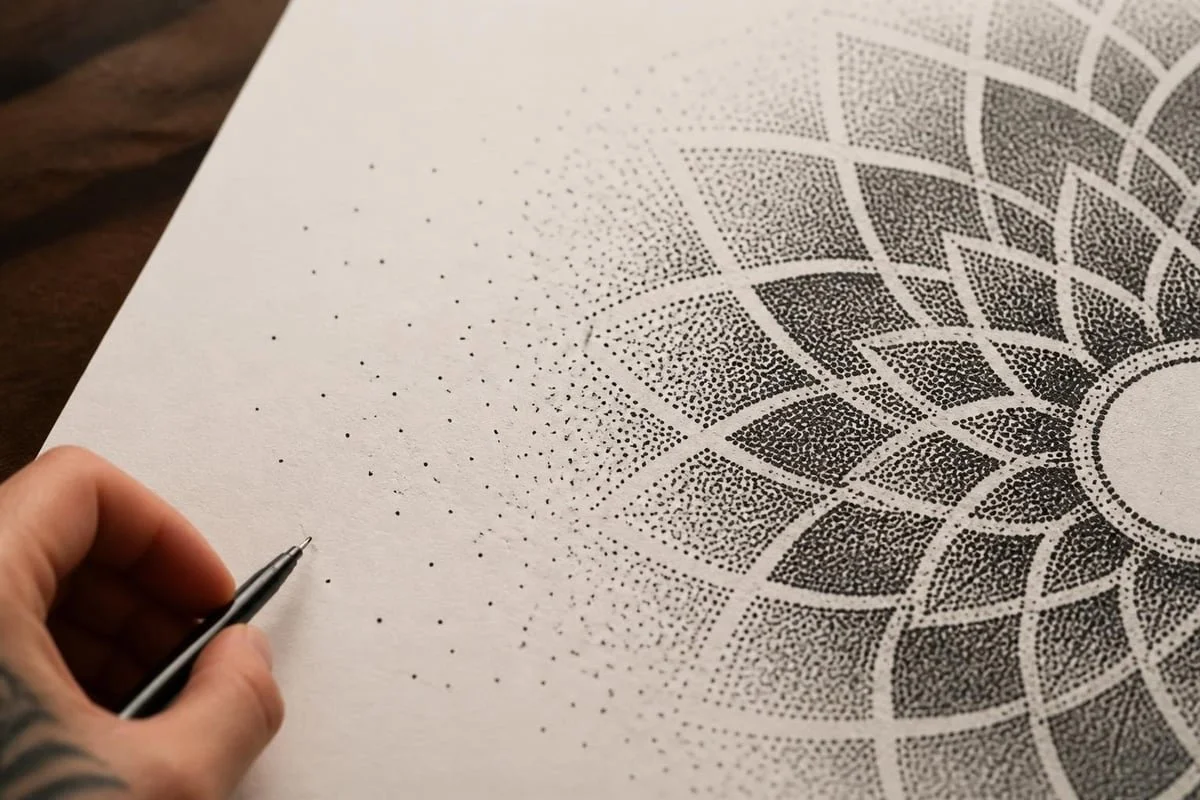
Dotwork shading gradient
Design Applications and Style Integration
Tattoo dots function both as standalone designs and as integral components within larger compositions. Their versatility allows seamless integration across multiple tattoo styles, from traditional to contemporary approaches. Many clients discover that dots enhance existing tattoos or serve as connective elements within larger body art narratives.
Geometric and Sacred Patterns
Geometric dotwork represents one of the style's most visually striking applications. These designs rely on mathematical precision and spatial awareness to create mesmerizing patterns. The intersection of fine line techniques with dotwork produces remarkably detailed results that showcase technical mastery.
Common geometric dotwork elements:
Mandala compositions radiating from central points
Sacred geometry incorporating platonic solids
Tessellating patterns creating optical effects
Architectural structures emphasizing perspective
The precision required for these designs demands artists with specialized training and steady hands. Choosing the right tattoo artist becomes crucial when pursuing complex dotwork, as technical competency directly impacts the final result's quality and longevity.
Organic and Nature-Inspired Designs
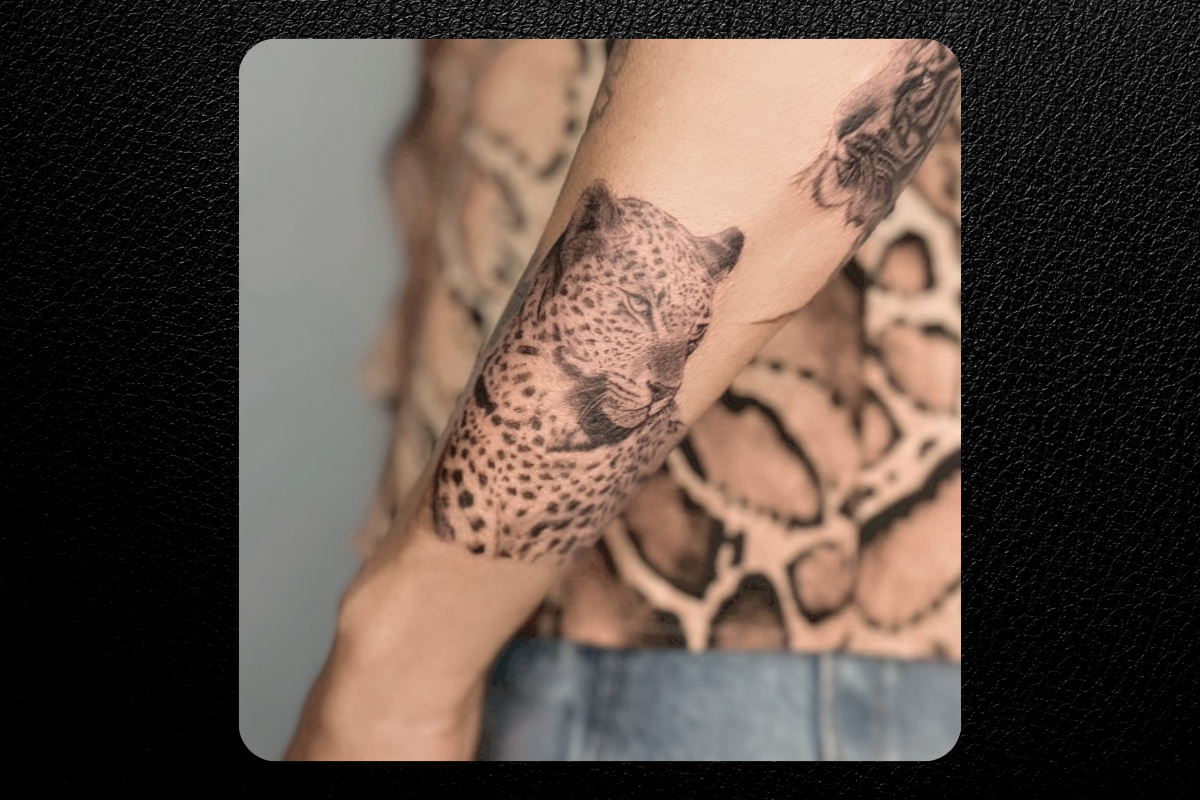
Beyond geometric applications, tattoo dots excel at rendering natural subjects with unique visual texture. Artists use varied dot patterns to suggest movement, dimension, and organic complexity. This approach works beautifully for botanical subjects, celestial themes, and animal portraits.
The symbolism behind tattoo designs often draws from natural world imagery, making dotwork an ideal technique for expressing these connections. Whether creating delicate flower petals or dramatic landscapes, the stippled effect adds depth and character unavailable through solid fills.
Placement Considerations for Maximum Impact
Strategic placement amplifies tattoo dots' visual and symbolic impact. Different body areas offer varying advantages depending on design scale, visibility preferences, and pain tolerance. Understanding these factors helps clients make informed decisions aligned with their lifestyle and aesthetic goals.
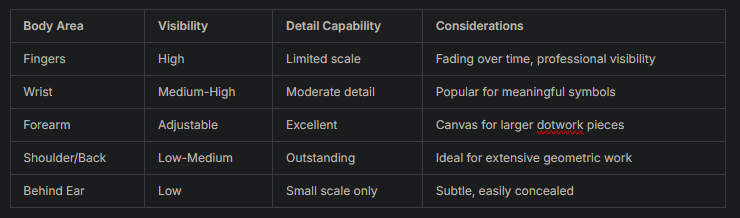
The decision about tattoo placement should account for professional requirements, personal comfort, and long-term satisfaction. Discussing these factors during consultation ensures alignment between artistic vision and practical reality.
Body placement guide
Finger and Hand Placements
Small dot arrangements on fingers have become particularly popular for their subtlety and personal significance. These placements work well for clients seeking meaningful tattoos that remain relatively private. However, finger tattoos require special consideration regarding longevity and touch-up requirements due to skin regeneration rates in these high-friction areas.
Preparing for Your Dotwork Session
Proper preparation ensures optimal results when receiving tattoo dots, particularly for extensive dotwork pieces requiring multiple sessions. Understanding what happens during a tattoo session helps manage expectations and contribute to successful outcomes.
Essential preparation steps include:
Researching artists specializing in dotwork techniques
Gathering reference images and inspiration
Scheduling adequate time for detailed work
Following pre-session skin care recommendations
Planning for proper aftercare commitment
The time investment for quality dotwork often exceeds standard tattooing due to the meticulous nature of dot placement. Clients should expect longer sessions and potentially multiple appointments for larger pieces. This extended timeline reflects the technique's precision requirements rather than inefficiency.
Collaboration and Customization
Luxury tattoo experiences prioritize collaborative design development. Working closely with your artist ensures the final dotwork design captures your vision while incorporating their technical expertise. Exploring various tattoo styles during consultation helps identify complementary elements that enhance your dotwork piece.
Professional artists welcome client input while providing guidance on technical feasibility and aesthetic balance. This partnership approach produces superior results that satisfy both artistic integrity and personal meaning.
Aftercare and Longevity
Proper aftercare proves essential for preserving tattoo dots' crisp definition and visual impact. The tattoo aftercare essentials apply equally to dotwork, though some specific considerations deserve attention.
Critical aftercare practices:
Gentle cleaning without aggressive scrubbing
Appropriate moisturization maintaining skin elasticity
Sun protection preventing premature fading
Avoiding activities that stress healing skin
Following artist-specific recommendations
Dotwork tattoos generally heal well due to reduced skin trauma compared to solid shading. The individual dot placement allows skin to recover between points, potentially leading to more comfortable healing experiences. However, extensive dotwork covering large areas still requires diligent aftercare commitment.
Long-Term Maintenance
Well-executed tattoo dots maintain their clarity for years when properly cared for. The technique's inherent properties actually favor aging, as individual dots hold definition better than some shading methods. Periodic touch-ups may enhance contrast over time, particularly for pieces in high-sun-exposure areas.
Combining Dotwork with Other Techniques
Advanced tattoo compositions frequently integrate dotwork with complementary techniques, creating dynamic visual interest through textural contrast. This hybrid approach allows artists to leverage multiple methods' strengths within unified designs.
Effective technique combinations include:
Dotwork shading with fine line outlines
Stippled backgrounds behind solid imagery
Geometric dots transitioning to organic elements
Dotwork accents within black and grey compositions
The artistic possibilities expand exponentially when combining techniques thoughtfully. Experienced artists understand how different methods interact, ensuring seamless integration that enhances rather than conflicts with overall composition.
Creating Depth and Dimension
Layering dotwork with varying densities creates remarkable dimensional effects. Artists manipulate perspective through careful dot sizing and spacing, producing imagery that appears to rise from or recede into the skin. This sophisticated approach demonstrates the technique's full artistic potential when executed by skilled practitioners.
Contemporary Trends and Innovation
The tattoo industry continuously evolves, with dotwork experiencing particular innovation in recent years. Artists push technical boundaries while honoring traditional foundations, resulting in fresh interpretations that appeal to modern aesthetic sensibilities. Understanding current tattoo trends helps clients make choices that feel contemporary yet timeless.
Emerging dotwork trends include:
Micro-dotwork creating photorealistic effects
Colorful dots expanding beyond traditional black
Abstract compositions emphasizing negative space
Integration with digital design aesthetics
Biomechanical dotwork suggesting technological themes
These innovations demonstrate tattoo dots' continuing relevance and adaptability. The technique's fundamental principles remain constant while applications expand to meet changing artistic visions and client preferences.
Making Your Decision
Choosing tattoo dots represents a significant commitment deserving thoughtful consideration. Evaluate your motivations, aesthetic preferences, and long-term satisfaction potential before proceeding. The detailed insights into dotwork tattoos provide additional perspective for informed decision-making.
Consulting with experienced artists offers invaluable guidance tailored to your specific vision. Professional practitioners assess design feasibility, recommend optimal placement, and set realistic expectations regarding time investment and results. This consultative approach ensures alignment between aspirations and achievable outcomes.
Key decision factors:
Personal meaning and symbolism
Aesthetic compatibility with existing tattoos
Professional and social considerations
Budget and time availability
Artist expertise and portfolio quality
The investment in quality dotwork yields lasting rewards when approached with proper research and realistic expectations. Prioritizing artist skill over cost considerations typically produces superior results that justify the initial investment.